Jobs After Sales: 13 Career Changes for Salespeople (With 2026 Salary Data)
By
Amy Green | 07/8/2026
There is a career after sales, and most of it runs on the skills you already have. Relationship-building, negotiation, persuasion, and the discipline to manage a messy pipeline are exactly what hiring managers want in customer success, marketing, operations, and a dozen other roles.
You don't have to start over, and you usually don't have to take the pay cut you are dreading. Below are 13 jobs after sales worth a look, grouped by how big the leap is, with real 2026 salary data and a simple plan to make the transition.
The short version
Closest moves: customer success manager, account manager, customer experience manager, sales trainer. Your skills barely need translating.
Natural pivots: marketing specialist, recruiter, consultant, real estate agent, retail. Same muscles, new field.
Bigger leaps: operations manager, product manager, corporate strategist, business owner. More retraining, higher ceiling.
The move: get clear on why you are leaving, audit your transferable skills, target roles that fit, then reframe your resume around outcomes instead of quotas.
How To Know It's Time To Leave Sales
Plenty of people in sales toy with leaving on a bad quarter, then stay for years. The signal that matters is a pattern, not a single rough month. These are the ones worth taking seriously:
Your pay is capped. You have hit the ceiling on commission, asked for more, and the base salary won't move.
There is nowhere to grow. You have learned the job, and your company offers no next step you actually want.
You have lost interest. Closing a deal stopped feeling like a win a long time ago.
You have no autonomy. A manager runs your whole sales process, and you are tired of being micromanaged.
The quotas aren't realistic. The targets keep climbing while the support and resources don't.
You are burned out. Sales reps hit burnout faster than most roles because of the constant pressure and long hours.
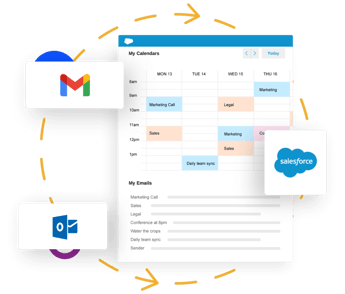
Here is the honest caveat we'd add. Sometimes the problem isn't sales at all. It's the grind around it: the manual CRM logging, the activity reports, the hours lost to admin instead of selling. If that is what is draining you, automating the busywork with a tool like Cirrus Insight, which syncs your email and meetings to Salesforce for you, can buy back real hours before you make a bigger decision. Try that first, then decide.
The Sales Skills That Transfer to Almost Any Job
Before you look at job titles, take inventory of what you are actually good at. Most salespeople undersell their own transferable skills because the work felt routine. It isn't. These are the people skills companies pay for across every industry:
Relationship-building. You remember details, follow up, and keep people happy over the long term.
Listening. You know what to listen for and ask thoughtful questions that uncover problems and process knowledge.
Negotiation. You are comfortable with tension, trade-offs, and closing the gap between two positions.
Resilience. You take rejection all day and keep going, which is rarer than it sounds.
Organization and pipeline discipline. You juggle dozens of accounts, deadlines, and follow-ups without dropping them.
Data and CRM literacy. You read a funnel, track activity, and make decisions from numbers.
Korn Ferry makes the same point in its guidance onbuilding a career after sales: the skills you picked up on sales calls map directly onto other jobs and industries, often in ways you haven't connected yet.
13 Jobs After Sales, Grouped by How Big The Leap Is
We have sorted these by adjacency. The first group needs almost no retraining. The last group asks for new skills but pays for the effort. Salary figures are US average total pay from Glassdoor in 2026 and vary widely by experience, industry, and location.
Closest moves (your sales skills barely need translating)
1. Customer Success Manager, around $100K (up to $145K total). You keep existing customers happy, drive renewals, and find upsell opportunities. It is relationship-building and account ownership without the cold-outreach grind. A natural home for reps who liked the client side more than the chase.
2. Account Manager, around $95K (up to $145K). You own and grow a set of accounts instead of constantly hunting new ones. The negotiation and relationship skills carry over almost one-to-one. Good fit if you enjoyed nurturing clients more than prospecting.
3. Customer Experience Manager. You improve the whole buyer journey using everything you learned on the front line about what frustrates and delights customers. Pay tracks with operations and CX seniority. Strong fit if you are the rep who always had opinions about how the company treated buyers.
4. Sales Trainer or Coach. You teach newer reps the craft you already mastered. Compensation depends on whether you go in-house or independent, but demand is steady. Ideal if mentoring was the part of the job that energized you.
Natural pivots (same muscles, new field)
5. Marketing Specialist, around $75K. You move from delivering the message to shaping it. Your read on customer behavior and objections is exactly what lead generation and campaign work need. A common first stop for reps who liked the strategy behind the pitch.
6. Recruiter or Talent Acquisition Specialist, around $60K to $90K base; recruitment consultants average about $134K total. Instead of selling a product, you sell candidates on roles and companies on candidates. Persuasion, pipeline management, and follow-up are the whole job. Easy translation if you liked matching needs to solutions.
7. Consultant. You advise companies on sales process, go-to-market, or customer journeys using hard-won frontline experience. Pay ranges widely with specialty and independence. Best for reps with a strong point of view and the confidence to charge for it.
8. Real Estate Agent. A sales-heavy role with more independence and commission-based income. The work is familiar; the autonomy and schedule are the draw. Worth a look if you liked selling but wanted to run your own book.
9. Retail Salesperson. A lateral move with lower pressure, more predictable hours, and a product-focused floor. Pay is generally lower, so treat this as a lifestyle trade rather than a step up. Reasonable for a reset, not a long-term ceiling.
Bigger leaps (more retraining, higher ceiling)
10. Product Manager, around $150K. You turn customer insight into what the company builds next. Sales gives you a direct line to what buyers actually want, which is a real advantage. Expect to learn the technical and roadmap side, but the ceiling is high.
11. Operations Manager, around $102K. You streamline processes and align teams across departments. The organization and pipeline discipline you built in sales transfer well to running systems instead of selling. Good fit if you prefer order over the chase.
12. Corporate Strategist. You shape high-level business strategy using frontline insight into market trends and customer needs that most strategists never get. Compensation rises with seniority and industry. A strong path for reps who always thought about the bigger picture.
13. Business Owner or Entrepreneur, averaging around $126K but highly variable. You leverage your network and selling ability to build something of your own. The autonomy is total and so is the risk. The best fit for reps with grit, a strong network, and a clear idea worth chasing.
Jobs After Sales at a Glance
If you want to compare the most popular destinations side by side, here is the short list with pay, the sales skill each one leans on, and who it suits.
Role
Typical US pay (2026)*
Sales skill it leans on
A good fit if you...
Customer Success Manager
~$100K
Relationship-building, upsell
want client work without the quota
Account Manager
~$95K
Negotiation, relationships
liked nurturing accounts over cold outreach
Marketing Specialist
~$75K
Messaging, customer insight
enjoy the strategy behind the pitch
Recruiter / Talent Acquisition
~$60K-$90K base
Persuasion, pipeline
like matching people to roles
Operations Manager
~$102K
Organization, process
prefer building systems to selling
Product Manager
~$150K
Customer insight, communication
want to shape what gets built
Business Owner / Entrepreneur
~$126K avg
Grit, networking, closing
want full autonomy and own the risk
*US average total pay,Glassdoor (2026). Figures vary by experience, industry, and location.
How to Transition Out of Sales in 6 Steps
A clean exit beats a panicked one. Work through these in order before you start applying.
Get clear on why you are leaving. Write down what you dislike and what you actually want next. Moving toward something beats running away from a bad quarter, and it keeps you from landing in a job with the same problems.
Run a transferable-skills audit. List your strongest skills and circle the ones that travel: communication, negotiation, relationship-building, organization. These become the spine of your resume and your pitch.
Narrow to roles that fit. Use the three groups above. Start with the closest moves if you want speed, or the bigger leaps if you are ready to retrain for a higher ceiling.
Research pay, demand, and requirements. Check what is available, what it pays, and what it asks for. If there is a skill or credential gap, decide whether you are willing to close it and how.
Reframe your resume around outcomes. Swap quota language for results a non-sales manager understands: revenue grown, accounts retained, teams influenced. Mirror the wording of the jobs you want.
Network and ask for informational interviews. Tell people what you are aiming for. A 20-minute informational interview with someone already in the role teaches you more than a week of job-board scrolling and often leads to the job more quickly.
Common Mistakes Salespeople Make When They Leave
We see the same avoidable errors over and over. Skip these, and your transition gets a lot smoother.
Chasing “away from” instead of “toward.” Quitting to escape burnout without a target usually lands you in a role you dislike for new reasons.
Assuming you must start at the bottom. Many sales-adjacent roles value your experience and pay accordingly. Don't talk yourself into an entry-level salary you don't need to take.
Underselling your numbers. Your quantified wins are your best asset. “Grew a territory 40 percent” beats a vague duty statement every time.
Ignoring the comp structure shift. Moving from commission to base salary changes your cash flow and your ceiling. Run the math before you accept.
Quitting in a burnout spike. Decisions made at your lowest point rarely hold up. Stabilize first, then choose.
Frequently Asked Questions
What jobs can I transition into after sales?
The most common careers for sales professionals are customer success manager, account manager, marketing specialist, recruiter, consultant, operations manager, product manager, and business owner. They all lean on the communication, persuasion, and relationship-building you already use every day.
How do I get out of sales without starting over?
Target sales-adjacent jobs that reuse your existing skills, such as customer success, account management, or recruiting. These roles treat your sales background as an asset, so you keep your seniority and most of your earning power instead of resetting to zero.
What are the best sales-adjacent jobs?
Customer success manager, account manager, customer experience manager, and sales trainer are the closest fits. They use the same relationship and negotiation skills, so the transition is fast, and the learning curve is short.
How do I explain a career change from sales in an interview?
Lead with transferable skills: resilience, client communication, hitting targets, and reading data. Connect each one to the role you want, and be honest that you are after new challenges or a different kind of growth. Frame the move as deliberate, not an escape.
Is it okay to leave sales if I'm good at it but unhappy?
Yes. Being good at something doesn't make it the right long-term fit. Job satisfaction and your own goals matter as much as raw performance, and plenty of careers welcome a strong sales background where your strengths still shine.
What sales skills are transferable?
Communication, negotiation, persuasion, organization, problem-solving, and teamwork transfer to almost any job. They are the people skills that make someone employable across many different industries, which is why sales experience opens so many doors.
When is it time to leave a sales job?
Watch for a pattern: capped pay you can't negotiate up, no path to grow, lost interest, no autonomy, unrealistic quotas, or prolonged burnout. One bad month is normal. A steady run of these is the signal to start planning your transition.
Before you leap
There is a real career after sales, and your experience is worth more outside the role than you probably think. Just make sure you are leaving the work and not the friction around it. If the daily admin and CRM busywork are the real drain, fixing that first can change how you feel about the whole job. Either way, audit your skills, pick the group that fits, and start the conversations. The hardest part is deciding to move.
Eliminate CRM Friction
Cirrus Insight free you from trivial CRM tasks and wasted opportunities.


.png?width=18&height=18&name=Vector%20(5).png)