I have spent the last few years buying, ripping out, and re-buying sales tools for B2B teams, and 2026 is the first year the AI in them actually changes the work rather than adding a chatbot to the sidebar. So I did the unglamorous thing. I tested what I could, sat through demos for the rest, and cross-checked pricing and features against vendor pages and recent reviews across prospecting, outreach, conversation intelligence, and CRM.
A quick honesty note up front: most of these are not "AI tools" in a pure sense. They are sales platforms with AI baked in, which is exactly what a real B2B team buys. Here are the 15 that earned a place, grouped by the job they do best.
[Stat to verify before publishing: Salesforce’s 2026 State of Sales report is widely cited as finding that roughly 87 percent of sales organizations now use some form of AI. Confirm the exact figure and link against the primary Salesforce report, or drop it.]
|
How I picked these, and a disclosure
This list is published by Cirrus Insight, which is one of the 15 tools on it. I judged every tool, Cirrus included, against the same five criteria below, and I kept honest cons on all of them. I have not been paid by the other vendors to appear here. Pricing and features were checked against vendor pages and 2026 third-party reviews; confirm current pricing with each vendor before you buy.
|
What Is an AI Tool for B2B Sales?
An AI tool for B2B sales is software that uses machine learning and generative AI to do part of a rep’s job: finding and scoring prospects, drafting and prioritizing outreach, analyzing calls, or keeping the CRM current. The point is not to replace reps. It is to take the repetitive work off their plate so they spend more time in real conversations.
The 15 tools below fall into five sub-types. Most teams end up with one or two from each, not all five.
AI CRM and inbox productivity. Tools that keep the CRM clean, capture activity automatically, and prep reps for meetings from inside the inbox or the CRM itself.
AI prospecting and sales intelligence. Contact and account databases with AI enrichment, intent signals, and list building that tell reps who to contact and why now.
AI SDR and outbound agents. Autonomous or semi-autonomous agents that research prospects, write outreach, and work pipeline with limited human input.
AI conversation intelligence and forecasting. Platforms that record and analyze calls, score deals, and forecast revenue from real interaction data instead of rep guesses.
AI sales engagement and email. Sequencing engines and writing assistants that prioritize outreach and help reps send sharper, better-timed messages.
How I Evaluated Each Tool
Five criteria, applied to every entry:
- AI depth. Is AI ai in sales core to the product, or a surface feature bolted onto an older tool?
- B2B fit. Does it solve a real B2B sales problem, from prospecting through forecasting?
- Integration. Does it work with the CRM, inbox, and stack the team already runs?
- Value. What does it actually cost once credits, seats, and add-ons are counted, not just the sticker price?
- Ease of adoption. Will reps use it, or will it stall at week three?
The Best AI Tools for B2B Sales at a Glance
|
Tool
|
Best for
|
Standout feature
|
Starting price
|
Website
|
|
Cirrus Insight
|
Salesforce teams that want inbox-native activity capture and meeting prep
|
Two-way Salesforce sync inside the inbox
|
From $14/user/mo
|
Visit Cirrus Insight
|
|
Salesforce
|
Enterprise teams standardizing AI inside the CRM of record
|
Agentforce autonomous agents plus Einstein scoring
|
From $25/user/mo
|
Visit Salesforce
|
|
HubSpot
|
SMB and mid-market teams that want AI CRM they can adopt fast
|
Breeze Copilot and outcome-priced AI agents
|
Free; from $7/seat/mo
|
Visit HubSpot
|
|
Apollo.io
|
All-in-one prospecting on a startup budget
|
270M+ contact database with built-in sequencing
|
Free; from $49/user/mo
|
Visit Apollo.io
|
|
ZoomInfo
|
Enterprise account intelligence and intent data
|
ZoomInfo Copilot maps the buying committee
|
Custom (from ~$15k/yr)
|
Visit ZoomInfo
|
|
Cognism
|
Compliant European outbound and phone-verified mobiles
|
Human-verified Diamond Data mobile numbers
|
Custom (fee + seats)
|
Visit Cognism
|
|
Clay
|
RevOps teams building enriched, automated prospect lists
|
Waterfall enrichment across 100+ data sources
|
Free; from $167/mo
|
Visit Clay
|
|
6sense
|
Account-based teams that need predictive buying intent
|
Predictive intent for the dark funnel
|
Free; custom
|
Visit 6sense
|
|
Amplemarket
|
Outbound teams that want data and multichannel outreach in one place
|
Duo AI copilot across data and channels
|
Custom (from ~$600/mo)
|
Visit Amplemarket
|
|
Qualified
|
Inbound pipeline generation on your website
|
Autonomous AI SDR that works your website
|
Custom
|
Visit Qualified
|
|
Regie.ai
|
Scaling AI-assisted outbound sequences
|
Brand-trained AI agents plus AI dialer
|
Custom. Pro $35/mo
|
Visit Regie.ai
|
|
Gong
|
Conversation intelligence and deal insight
|
Deepest call and deal intelligence
|
Custom
|
Visit Gong
|
|
Clari
|
Revenue forecasting and pipeline inspection
|
Forecasting plus Clari Copilot conversation AI
|
Custom
|
Visit Clari
|
|
Outreach
|
Structured, AI-prioritized sales engagement
|
AI-prioritized sequences with Kaia CI
|
Custom
|
Visit Outreach
|
|
Lavender
|
Coaching reps to write better cold emails
|
Real-time email scoring and coaching
|
Free; from $27/mo
|
Visit Lavender
|
The 15 Best AI Tools for B2B Sales
Jump to a tool:
- Cirrus Insight for Salesforce inbox capture and meeting prep
- Salesforce for AI inside your CRM of record
- HubSpot for AI CRM that is fast to adopt
- Apollo.io for all-in-one prospecting on a budget
- ZoomInfo for enterprise account intelligence
- Cognism for compliant European outbound
- Clay for automated list enrichment
- 6sense for predictive buying intent
- Amplemarket for data plus multichannel outreach
- Qualified for inbound pipeline from your website
- Regie.ai for AI-assisted outbound at scale
- Gong for conversation intelligence and deal insight
- Clari for revenue forecasting
- Outreach for AI-prioritized sales engagement
- Lavender for coaching better cold emails
AI CRM and Inbox Productivity
Best for Salesforce Inbox Capture and Meeting Prep
Category: AI CRM and inbox productivity
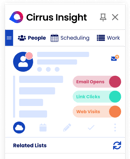
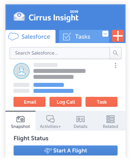
I put Cirrus Insight first because it solves the least glamorous but most common B2B sales problem: reps not logging their work in Salesforce. It lives inside Gmail and Outlook, so activity capture happens where reps already spend their day instead of in a separate CRM tab. Full disclosure: this list is published by Cirrus Insight, and I say more about that in the trust box above. I judged it on the same criteria as everything else here, cons included.
Where a data tool like Apollo or ZoomInfo helps you find prospects, Cirrus works the other end of the funnel. It syncs emails, calendar events, and call notes back to Salesforce automatically, tracks opens and clicks, and its Meeting AI pulls prior interactions and CRM history into a prep summary before a call. The Smart Scheduler handles booking with lead routing, and email blasts plus templates cover repeatable outreach without leaving the inbox.
Cirrus is not a prospecting database or an email finder. If you need contact data or intent signals, it pairs with a tool from the intelligence section rather than replacing one. Reviewers also flag that the most useful tracking and scheduling features sit on the higher tiers, so the entry price is rarely the price a team actually pays.
Key Features
- Two-way Salesforce sync of emails, meetings, and tasks from Gmail and Outlook
- Meeting AI prep summaries built from CRM and email history
- Smart Scheduler with meeting booking and lead routing
- Email and link tracking with open, click, and reply data
- Templates and email blasts for repeatable outreach
Pros
- Deep Salesforce sync inside the inbox
- Automatic activity capture, no manual logging
- Meeting prep from CRM and email history
Cons
- Best features gated to higher tiers
- Not a data or email-finding tool
- Reviewers flag occasional sync glitches
Cirrus Insight pricing: Sync ($14/user/month), Pro ($21/user/month), Expert ($49/user/month), plus a Custom tier. Billed annually. Free trial, no permanent free plan.
Best for AI Inside Your CRM of Record
Category: AI CRM and inbox productivity
If Salesforce is already your CRM, its native AI is the path of least resistance. Einstein handles the predictive layer (lead and opportunity scoring, forecasting, conversation insights) while Agentforce adds autonomous agents that can research accounts, draft outreach, and act on multi-step workflows. It is the deepest CRM plus AI integration on this list, which is exactly why it also carries the most cost and setup.
Unlike a point tool such as Lavender or Cirrus Insight, Salesforce is the system of record everything else syncs into. That is its advantage and its trap: the AI is powerful, but it is easy to overpay by bundling Agentforce or Einstein 1 across seats that never use it.
Key Features
- Einstein predictive lead and opportunity scoring plus forecasting
- Einstein generative email and call summaries
- Agentforce autonomous agents for research and outreach
- Built-in conversation intelligence and Data Cloud
Pros
- Deepest CRM and AI integration
- Agentic automation across the sales process
- Scales to enterprise complexity
Cons
- Expensive and complex to implement
- Easy to overpay bundling AI across all seats
- Real value needs mature Salesforce expertise
Salesforce pricing: Sales Cloud from Starter Suite ($7/user/month) to Enterprise (about $150/user/month) and the AI-included Agentforce 1 tier (about $195 to $550/user/month). Einstein add-ons run about $50 to $75/user/month; Agentforce is also consumption-priced (about $2/conversation). Billed annually.
Best for AI CRM That Is Fast to Adopt
Category: AI CRM and inbox productivity
HubSpot is the easiest of the big CRMs to stand up, and its Breeze AI layer reflects that same design bias toward simplicity. Breeze Copilot is an in-app assistant that drafts emails and surfaces prospect research, while Breeze Agents (like the Prospecting Agent) research accounts and recommend outreach. Compared with Salesforce, HubSpot trades depth for speed to value, which is why smaller teams land here.
The catch shows up in the pricing math. The jump from Starter to Professional is steep, mandatory onboarding fees apply on the paid tiers, and Breeze agents are metered with HubSpot Credits, so heavy AI usage adds a variable line item on top of seats.
Key Features
- Breeze Copilot in-app assistant for research and drafting
- Breeze Agents (Prospecting, Content) with outcome-based pricing
- Breeze Intelligence for contact and company enrichment
- Sequences, forecasting, and conversation intelligence
Pros
- Fast to adopt with a genuine free tier
- AI agents feel integrated, not bolted on
- Unified CRM across sales and marketing
Cons
- Steep Starter to Professional price jump
- Mandatory onboarding fees on paid tiers
- Breeze credit usage adds up at volume
HubSpot pricing: Free; Starter ($15/seat/month); Professional ($100/seat/month, plus a one-time onboarding fee); Enterprise ($150/seat/month, plus onboarding). Billed annually. Breeze agents are metered separately with HubSpot Credits.
AI Prospecting and Sales Intelligence
Best for All-in-One Prospecting on a Budget
Category: AI prospecting and sales intelligence
Apollo bundles a large B2B contact database, an email finder, sequencing, and a dialer under one affordable seat, which is why it is the default first prospecting tool for so many small teams. For the price of a single ZoomInfo seat you can put a whole SDR pod on Apollo, and the sequences and AI email assist keep outreach in the same place as the data.
The sticker price hides the credit math. Email, mobile numbers, and exports all draw from a credit pool, and active outbound teams routinely spend well past the headline figure once overages hit. Phone data is also less reliable than email data, so treat Apollo as a strong volume-and-value play rather than a precision one, and lean on a tool like Cognism when verified mobiles matter.
Key Features
- Database of 270M+ B2B contacts with waterfall enrichment
- Email finder, sequences, and A/B testing
- Built-in dialer with call recording (Professional and up)
- AI email assistance and intent topics
Pros
- All-in-one prospecting at a low entry price
- Large contact database
- Sequencing and dialer built in
Cons
- Credit system burns fast with overages
- Phone and mobile data less reliable
- Per-seat cost multiplies as teams grow
Apollo.io pricing: Free; Basic ($49/user/month); Professional ($79/user/month); Organization ($119/user/month, three-seat minimum). Annual billing; monthly runs roughly 20 percent higher. Credit-based usage.
Best for Enterprise Account Intelligence
Category: AI prospecting and sales intelligence
ZoomInfo is the enterprise standard for B2B data. Its database is deep, its intent signals are real, and ZoomInfo Copilot layers AI on top to summarize accounts, identify who sits on the buying committee, and draft outreach. For large teams that live on account intelligence, it does things Apollo cannot at the same depth.
It is also one of the most expensive line items in a sales stack. Pricing is quote-based and opaque, credit overages and add-ons stack quickly, and auto-renewal terms catch teams that forget the notice window. The Copilot AI sits in the top Elite tier, so the AI features most buyers want come at the top of the price range.
Key Features
- Deep B2B contact and company database with intent data
- Org charts and buying-committee mapping
- ZoomInfo Copilot for account summaries and outreach drafting
- Chorus conversation intelligence available in the bundle
Pros
- Broadest enterprise data and intent
- Copilot surfaces the buying committee
- Strong CRM integrations
Cons
- Opaque, expensive quote-based pricing
- Credit overages and add-ons stack
- Auto-renewal terms catch teams out
ZoomInfo pricing: Free Lite tier; paid plans are quote-based. Reported entry around $15,000/year for Professional (three-seat minimum), with ZoomInfo Copilot included in the Elite tier (reported about $35,000 to $45,000+/year).
Best for Compliant European Outbound
Category: AI prospecting and sales intelligence
Cognism is the data platform I reach for when the pipeline runs into Europe. Most providers cannot legally sell EU mobile numbers; Cognism can, and its Diamond Data set is phone-verified by humans rather than scraped. Add Bombora intent and DNC screening across 15+ countries, and it becomes the compliance-first alternative to ZoomInfo for phone-led outbound.
The trade-offs are cost and scope. Pricing is quote-based with a platform fee on top of per-seat costs, there is no free plan, and the platform gives you contact data and basic intent but no built-in outreach. Accuracy is also strongest in EMEA, so US-heavy teams sometimes get more value from Apollo or ZoomInfo.
Key Features
- Database of 400M+ contacts with Diamond Data verified mobiles
- GDPR and CCPA compliance with DNC screening across 15+ countries
- Bombora buyer-intent data
- Cortex AI data validation and Chrome extension
Pros
- Best-in-class compliant EU data
- Phone-verified mobiles lift connect rates
- Strong for cold-calling motions
Cons
- Opaque, expensive quote-based pricing
- No free plan and annual contracts
- Contact data only, no built-in outreach
Cognism pricing: quote-based. Reported platform fee of about $15,000 to $25,000/year plus per-seat costs of roughly $1,500 to $2,500/user/year across the Grow and Elevate tiers. No free plan.
Best for Automated List Enrichment
Category: AI prospecting and sales intelligence
Clay is a data orchestrator, not a database. It connects 100+ providers and runs enrichment as a waterfall, checking source after source until it fills a field, then lets Claygent (its AI research agent) write custom context per prospect. Work that used to take an analyst a full day runs automatically, which is why RevOps teams building targeted lists for the SDRs love it.
Clay rewards setup and punishes casual use. The learning curve is real; it charges credits even for failed lookups, and costs climb at volume. Reps rarely touch Clay directly; they see the output as an enriched, prioritized list that then feeds a sequencer like Outreach or the CRM.
Key Features
- Waterfall enrichment across 100+ data providers
- Claygent AI research agent for custom context
- AI message writing and CRM integrations (Growth and up)
- Webhooks and any-HTTP-API integration
Pros
- Powerful automated enrichment and orchestration
- Consolidates many separate data tools
- AI research agent for custom context
Cons
- Steep learning curve, needs RevOps setup
- Charges credits for failed lookups
- Costs escalate at high volume
Clay pricing: Free; Launch ($185/month); Growth ($495/month); Enterprise (custom). Usage-based with unlimited seats; repriced in March 2026 (legacy Starter, Explorer, and Pro plans are grandfathered).
Best for Predictive Buying Intent
Category: AI prospecting and sales intelligence
6sense earns its place for one thing most tools cannot do: it surfaces the dark funnel, the research a company does before it ever fills out a form. It tracks which accounts in your territory are in-market, how long they have been researching, and where they sit in the buying journey, then prioritizes the handful worth working this week. Paired with a data tool for contacts, it tells reps where to spend time.
The power comes with implementation weight. Mapping intent signals to territories and rep workflows needs a capable RevOps function, and for teams under a couple dozen reps it is usually overkill. Pricing is custom, which makes total cost hard to judge without a full demo cycle.
Key Features
- Predictive intent and buying-stage prediction
- Account prioritization from dark-funnel signals
- AI email agent for engaging in-market accounts
- Forecasting and pipeline prioritization
Pros
- Surfaces in-market accounts before competitors
- Strong predictive account prioritization
- Unifies marketing and sales targeting
Cons
- Significant implementation and RevOps needed
- Overkill for small teams
- Custom pricing is hard to evaluate
6sense pricing: free plan available; paid plans are custom and quote-based.
AI SDR and Outbound Agents
Best for Data Plus Multichannel Outreach
Category: AI SDR and outbound agents
Amplemarket folds data, multichannel sequences, and an AI copilot (Duo) into a single outbound platform, so a team can find prospects, verify contacts, and run email plus LinkedIn plus phone touches without stitching tools together. It shows up in most B2B lead-generation shortlists for exactly that reason, and it is one of the competitor pages I benchmarked against for this list.
The trade-off with any all-in-one is that some modules trail the best-of-breed point tools, and pricing is quote-based, which can sting smaller teams. If your motion is purely inbound, Qualified fits better; if you need brand-trained content at scale, Regie.ai is closer.
Key Features
- B2B contact data with verification and deliverability tools
- Multichannel sequences across email, LinkedIn, and phone
- Duo AI copilot for research and copywriting
- Buying-intent signals
Pros
- Data plus multichannel outreach in one platform
- AI copilot speeds research and copy
- Built-in deliverability tooling
Cons
- Quote-based pricing, opaque for small teams
- All-in-one means some modules trail point tools
- Best value at outbound scale
Amplemarket pricing: quote-based (reported from roughly $600/month). Confirm current tiers with the vendor.
Best for Inbound Pipeline from Your Website
Category: AI SDR and outbound agents
Qualified takes the AI SDR idea and points it at inbound. Piper, its agent, engages website visitors in real time, qualifies them, books meetings, and routes hot leads to reps, all synced to Salesforce. Where Amplemarket and Regie.ai chase outbound, Piper turns existing site traffic into pipeline, which is a different and complementary motion.
That focus is also the constraint. Piper works the inbound website channel, so it only pays off if you already have meaningful traffic, and it is Salesforce-native, so it fits that ecosystem best. Pricing is custom.
Key Features
- Piper AI SDR engages and qualifies website visitors in real time
- Automated meeting scheduling and intelligent lead routing
- Inbound email engagement (Piper Email)
- Native Salesforce sync
Pros
- Autonomous inbound pipeline from your website
- Real-time visitor qualification and routing
- Salesforce-native
Cons
- Focused on inbound, not outbound
- Needs real website traffic to pay off
- Custom pricing
Qualified pricing: custom and quote-based.
Best for AI-Assisted Outbound at Scale
Category: AI SDR and outbound agents
Regie.ai focuses on the content engine behind outbound. Its AI agents generate and personalize sequences at scale, trained on your brand voice, and it now pairs that with an AI dialer. For teams sending a lot of outbound where writing volume is the bottleneck, Regie is the closest fit among the SDR agents here.
It sits at the enterprise end of the price range, the AI-generated content still needs human review to stay on-message, and the newer agentic features are still maturing. Teams that want a lighter coaching layer rather than a full agent tend to prefer Lavender.
Key Features
- AI SDR agents that build and personalize sequences
- Brand-trained content generation at scale
- AI dialer for outbound calling
- Personalization from prospect research
Pros
- Scales AI-assisted outbound content
- Brand-trained copy stays on message
- Combines content and dialer
Cons
- Enterprise pricing
- AI content still needs human QA
- Newer agentic features maturing
Regie.ai pricing: quote-based. Reported from about $35,000/year for the AI Agent plus AI Dialer package. Confirm current tiers with the vendor.
AI Conversation Intelligence and Forecasting
Best for Conversation Intelligence and Deal Insight
Category: AI conversation intelligence and forecasting
Gong defined conversation intelligence and is still the reference point. It records and analyzes calls, emails, and meetings, then surfaces what is actually happening in deals: who joined, what objections came up, whether next steps are set. Managers coach on real interactions instead of rep notes, and the deal and forecast modules flag risk across the pipeline.
Gong is priced at enterprise level. There is a per-seat license plus a platform fee that many buyers miss until it appears in the contract, and it is overkill for very small teams. If your motion is mostly short calls rather than full discovery, a lighter tool makes more sense, but for serious deal cycles Gong is hard to beat.
Key Features
- Conversation intelligence across calls, emails, and meetings
- AI call summaries and coaching feedback
- Deal and forecast intelligence with risk signals
- Ask Anything AI across recorded interactions
Pros
- Deepest conversation intelligence
- Strong coaching and deal-risk signals
- Improves forecast accuracy
Cons
- Enterprise pricing plus a platform fee
- Overkill for very small teams
- Meaningful setup effort
Gong pricing: quote-based.
Best for Revenue Forecasting
Category: AI conversation intelligence and forecasting
Clari comes at revenue from the forecasting side. Its Waterfall, Flow, and Pulse views track how pipeline moves and where deals slip, and Clari Copilot (formerly Wingman) adds conversation intelligence so call signals feed the same deal picture. Where Gong starts from the conversation, Clari starts from the forecast and builds outward.
Clari merged with Salesloft in December 2025, so the combined platform now spans forecasting, conversation intelligence, and sales engagement, but that integration is still being unified. And the configuration surface is complex; getting Clari into the state a CFO wants typically takes a 90 to 120 day implementation. Copilot transcription also trails Gong.
Key Features
- Forecasting and pipeline inspection (Waterfall, Flow, Pulse)
- RevAI deal-risk and pipeline analytics
- Clari Copilot conversation intelligence (formerly Wingman)
- Sales engagement via the Salesloft merger
Pros
- Strong forecasting and pipeline analytics
- Conversation and engagement under one roof
- Good fit for RevOps-led teams
Cons
- Complex config, 90 to 120 day setup
- Post-merger platform still unifying
- Copilot transcription trails Gong
Clari pricing: quote-based. Reported core platform around $1,200 to $1,500/user/year, with the Clari Copilot conversation-intelligence add-on at roughly $60 to $110/user/month.
AI Sales Engagement and Email
Best for AI-Prioritized Sales Engagement
Category: AI sales engagement and email
Outreach is the sales execution platform SDR teams reach for when outbound needs structure. It runs sequences, tracks follow-ups, and uses AI to prioritize which prospects to work and generate email variants, with Kaia handling conversation intelligence on the calls. It is the engagement backbone that a data tool like Clay or Cognism feeds into.
Pricing is custom and lands at the higher end for a sequencer, and the platform is heavier than a small team needs. It is built for desk-based outbound at scale, so a two-rep shop will feel the weight before the payoff.
Key Features
- AI-prioritized email sequences and follow-ups
- Smart email assistance and variant generation
- Kaia conversation intelligence
- Deal and forecast insights
Pros
- Structured, AI-prioritized engagement at scale
- Strong for dedicated SDR teams
- Conversation intelligence built in
Cons
- Custom pricing at the higher end
- Heavier than small teams need
- Built for desk-based outbound
Outreach pricing: quote-based (reported from roughly $100/user/month). Confirm current tiers with the vendor.
Best for Coaching Better Cold Emails
Category: AI sales engagement and email
Lavender is the most focused tool on this list, and that focus is its strength. It scores your email in real time as you write, flags what hurts replies (length, reading level, weak personalization), and coaches you toward a better version. Its own benchmark across a large sample found A-graded emails earned meaningfully higher reply rates. It pairs naturally with a sequencer like Outreach or a database like Apollo.
Lavender only coaches writing. It does not find leads, send emails, or run sequences, so it is a layer on top of the stack rather than a platform. A high Lavender score also does not guarantee a reply, since list quality and timing matter more than word choice, and senior reps sometimes find the suggestions constraining.
Key Features
- Real-time email scoring and rewrite suggestions
- AI writing assistant with personalization prompts
- Mobile preview and reading-level analysis
- Team coaching analytics
Pros
- Fast, affordable email coaching
- Measurable reply-rate lift in testing
- Especially strong for junior reps
Cons
- Coaching only, does not send email
- Gmail and Outlook only
- High score does not guarantee replies
Lavender pricing: Free (5 emails/month); Starter ($27/month); Pro ($45/month); Teams ($89/user/month). Annual billing saves roughly 20 percent. The separate Ora AI SDR agent is priced from about $500/agent/month.
Honorable Mentions
A few tools that earn a spot in the right stack but did not make the main 15:
- Salesloft for AI-assisted engagement. Its Rhythm signal-to-action engine and Drift conversation intelligence overlap with Outreach; it now sits inside the Clari platform after the December 2025 merger.
- Chorus by ZoomInfo for conversation intelligence bundled into the ZoomInfo stack, a fit if ZoomInfo is already your data platform.
- LinkedIn Sales Navigator for social selling and decision-maker research, with AI-assisted account and lead recommendations.
- Instantly for high-volume AI cold email and deliverability, popular with SMB and agency outbound teams.
How to Choose the Right AI Tool for Your Team
There is no single best AI tool for B2B sales, and any list that crowns one is selling you something. The right pick depends on four things: your budget once credits and add-ons are counted, your team size, the specific job you are trying to fix, and the CRM and inbox you already run.
A rough map. If reps are not logging activity and you run Salesforce, start with an inbox tool like Cirrus Insight. If the gap is finding and targeting prospects, start in the intelligence group with Apollo, ZoomInfo, Cognism, Clay, or 6sense depending on budget and region. If your pain is coaching and forecasting, that is Gong or Clari. If it is outbound volume, look at the SDR agents and engagement tools. Pilot with a small group, measure adoption at 30 days, then scale.
If the problem you keep hitting is that meetings and emails never make it into Salesforce, that is the exact gap Cirrus Insight was built to close: it captures activity, preps reps for meetings, and keeps the CRM current from inside Gmail and Outlook, so the rest of your AI stack runs on clean data.
FAQ: AI Tools for B2B Sales
What Is the Best AI Tool for B2B Sales?
There is no single best. The strongest pick depends on the job: prospecting (Apollo, ZoomInfo, Cognism, Clay, 6sense), inbound (Qualified), outbound (Amplemarket, Regie.ai), conversation intelligence (Gong, Clari), engagement (Outreach, Lavender), or CRM and inbox hygiene (Cirrus Insight, Salesforce, HubSpot).
How Is AI Used in B2B Sales?
AI scores and prioritizes leads, drafts and personalizes outreach, analyzes sales calls for coaching, forecasts pipeline, and keeps CRM records current automatically. It handles the repetitive work so reps can focus on conversations and closing.
What Are the Best AI Tools for B2B Lead Generation?
For finding and enriching leads, Apollo and Clay suit budget-conscious and RevOps-led teams, ZoomInfo and Cognism suit enterprise and compliance-heavy motions, and 6sense adds predictive intent for account-based teams.
Can AI Handle B2B Sales Automation End to End?
Not fully. AI SDR agents like Qualified’s Piper, Amplemarket, and Regie.ai can run large parts of prospecting and outreach, but reps still own discovery, negotiation, and relationships. Treat AI as automation for the busywork, not a replacement for the seller.
How Much Do AI Sales Tools Cost?
Entry tools like Lavender start around $29/month and Apollo from $49/user/month. CRM AI runs from HubSpot’s free tier up to Salesforce’s $500-plus AI tiers. Enterprise data and conversation-intelligence platforms (ZoomInfo, Cognism, Gong, Clari, 6sense) are quote-based and often run into five figures a year. Confirm current pricing with each vendor.


.png?width=18&height=18&name=Vector%20(5).png)