.png?width=18&height=18&name=Vector%20(5).png)



Sales reps spend nearly 30% of their time on administrative tasks.
Not selling.
Not building relationships.
Not closing deals. Just more admin.
Now ask yourself:
How much of that time happens when they’re away from their desk?
How many follow-ups are delayed because notes weren’t logged in the moment?
That’s the gap mobile CRM apps were built to close.
The best mobile CRM apps don’t just give you access to data; they give you momentum. They let reps update opportunities in real time. Track email engagement instantly. Log calls before details fade. Move deals forward from anywhere.
The Best Mobile CRM Apps in 2026
After you finish our list, you will undoubtedly find the perfect app for you. Once you start using it, you will soon realize that you can close more deals.
1. Cirrus Insight
Available on iOS and Android.
Price: Free*
Best for: Salesforce-driven sales teams that want full CRM functionality inside their inbox.
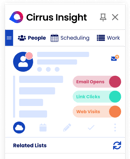
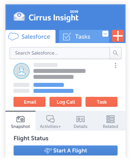
Cirrus Insight brings Salesforce, Gmail, and Outlook together in one seamless mobile workflow, eliminating manual updates and reducing admin time for reps on the go. Instead of switching between apps, sales teams can manage CRM activity directly from their inbox.
For more detail, explore our salesforce apps guide.
Features:
- Bring the full power of Salesforce (and more) to your mobile
- Automate Salesforce updates
- Share your calendar with customers and sync up meetings with Salesforce
- Track customer email opens, attachment downloads, website clicks, and more
- Manage all of your customer data, contacts, and opportunities right from your mobile
- Organize tasks and reminders in one place
- Log calls into Salesforce right from your cell phone
Check out Cirrus Insight here.
*While the mobile app itself is free, you need to sign up with Cirrus Insight to access advanced functionalities. Paid plans with Cirrus Insight go for as low as $14 per user per month.
Spend More Time Focused on Revenue Generation
Test drive Cirrus Insight free for 14 days. No credit card required.

2. HubSpot
Available on Android and iOS
Best for: Growing SMB teams looking for an easy-to-use, free CRM mobile app.
HubSpot’s mobile CRM app is ideal for teams that want simple contact management and built-in marketing tools. It combines sales and marketing features in one platform, making it attractive for early-stage companies.
Price: Free*
Features:
- Create email campaign sequences using a mobile CRM.
- Design and share email templates with customer service teams.
- Set up task reminders and notifications with this agile CRM.
- The app provides automated data entry and activity logging.
- Schedule meetings with one click directly from the app.
*While the mobile app itself is free, you need to sign up with HubSpot to access its functionalities. HubSpot offers a basic package for free, and their paid plans go for as low as $50 per user per month.
3. Salesforce
Available on both Android and iOS
Best for: Enterprise organizations needing full CRM customization and ecosystem depth.
Salesforce’s mobile app extends its powerful desktop CRM into the field. It offers extensive customization and AI-driven insights, though it may require additional integrations to unlock advanced functionality.
Price: Free*
Features:
- The app lets you get recommendations about sales strategy.
- You can use the CRM to track clients as they move through the customer journey.
- The mobile app allows you to customize the sales process for each client.
- Enhance functionalities by integrating with additional apps.
*While the mobile app itself is free, you need to sign up with Salesforce to access its functionalities. Pricing for Salesforce differs based on your organization or team's needs and is available upon request.
4. Zendesk
Available on both Android and iOS
Price: Free*
Best for: Sales teams that want CRM functionality alongside customer support tools.
Zendesk Sell offers strong reporting and pipeline visibility, making it useful for organizations that blend sales and service workflows.
Features:
- The app allows you to see your pipeline at a glance to enforce ease of use.
- Create Smart Lists to group customers and improve contact management.
- Enjoy features like receiving over 30+ reports.
- Easily integrate it with other sales and automation tools.
*While the mobile app itself is free, you need to sign up with Zendesk to access its functionalities. Zendesk Sell, the brand's sales-focused platform, has paid plans for as low as $19 per month for up to three users. They also have other CRM solutions and a Zendesk Suite for added functionality.
5. Salesflare
Available on Android and iOS (mobile & tablet)
Best for: Teams that want heavy automation and minimal manual data entry.
Salesflare emphasizes automation, tracking engagement automatically and reducing repetitive CRM tasks for mobile reps.
Price: Free*
Features:
- Access 100% of your CRM's features from your phone.
- Keep a to-do list and track your sales pipeline.
- Receive live notifications to stay up to date on your customers.
- Track email opens, link clicks, and website visits.
- Send, analyze, and optimize email campaigns/sequences.
- Automate all your data input.
*While the mobile app itself is free, you need to sign up with Salesflare after the trial to access its functionalities. You can subscribe to Salesflare for as low as $29 per user per month.
6. Freshsales
Available on Android and iOS
Best for: Budget-conscious sales teams that want core CRM functionality.
Freshsales provides essential CRM mobile capabilities without a steep price tag, making it a strong entry-level option.
Price: Free*
Features:
- Contact clients via the app directly.
- Prospect for new leads.
- Track email opens, link clicks, and more.
- See deals as they progress through the pipeline.
*While the mobile app itself is free, you need to sign up with Freshsales to access its functionalities. Freshsales prices the CRM starting at $12 per user per month.
7. Insightly
Available on both Android and iOS
Best for: Mid-sized teams needing workflow automation and structured lead routing.
Insightly blends CRM and project management features, offering useful automation and customizable dashboards.
Price: Free*
Features:
- The route leads to the right sales rep.
- Automate workflow and daily tasks.
- Monitor emails after they've been sent.
- Capture different kinds of client information.
- Design a custom mobile dashboard for your team.
*While the mobile app itself is free, you need to sign up with Insightly to access its functionalities. Insightly CRM has three pricing plans, the cheapest of which is $29 per user per month, billed annually.
8. Zoho CRM
Available on both Android and iOS
Best for: Teams looking for AI-powered insights at a competitive price.
Zoho CRM integrates AI features and multichannel communication tools, making it attractive for teams focused on engagement visibility.
Price: Free*
Features:
- Pull client information via an AI-powered sales assistant.
- Open up multiple sales channels (email, chat, social media, etc.).
- Set up a notification system for client interactions.
- Streamline sales processes.
- Integrate with other tools and apps.
*While the mobile app itself is free, you need to sign up with Zoho CRM to access its functionalities. Zoho's paid plans start at $12 per user per month, but they also have a limited free plan for up to three mobile users.
9. Pipedrive
Available on both Android and iOS
Best for: Pipeline-focused teams that prioritize visual deal tracking.
Pipedrive is built around pipeline visibility and forecasting, helping reps stay focused on moving deals forward.
Price: Free*
Features:
- Manage and track sales through the pipeline.
- Prioritize leads, emails, and activities.
- Identify opportunities in lost deals.
- Forecast revenue.
- Send and receive emails inside the app.
- Customize your dashboard.
*While the mobile app itself is free, you need to sign up with Pipedrive to access its functionalities. You can subscribe to Pipedrive for as low as $12.50 per user per month.
10. Capsule
Available on both Android and iOS
Price: Free*
Best for: Small teams that want simple contact management without complexity.
Capsule offers a clean, lightweight CRM experience that’s easy to adopt for smaller organizations.
Features:
- Add and edit client information.
- View other team members' activity.
- Make phone calls, emails, and chats via the app.
- Manage tasks and meetings.
- Find sales opportunities.
*While the mobile app itself is free, you need to sign up with Capsule to access its functionalities. There's a simple free version for up to two users, and paid plans start at $18 per user per month.
11. Agile
Available on both Android and iOS
Best for: Cost-sensitive teams looking for gamification and project tracking features.
Agile CRM blends CRM, marketing, and gamification tools to keep teams engaged while managing sales activities on mobile.
Price: Free*
Features:
- Access all contact information on a single page.
- Track deals and milestones throughout the sales process.
- Set up call scripts and one-click calling.
- Share your calendar and book meetings.
- Manage your projects via the drag-and-drop interface.
- Encourage sales reps with a "gamification" system.
*While the mobile app itself is free, you need to sign up with Agile to access its functionalities. Agile offers a basic free plan for up to ten users, or you can choose from their paid plans starting at $8.99 per user per month.
Mobile CRM Apps Comparison (2026)
Choosing the right mobile CRM app isn’t just about features; it’s about mobility, automation, and integration depth. Here’s how the top mobile CRM apps compare for sales teams in 2026.
|
Tool |
Starting price |
Salesforce integration |
Email & activity tracking |
Best for |
|
Cirrus Insight |
$11/user/month |
Native, automated sync |
Advanced email & engagement tracking |
Salesforce-driven sales teams |
|
HubSpot CRM |
Free ($50+ paid) |
Limited |
Email tracking & sequences |
Growing SMBs |
|
Salesforce |
Custom pricing |
Native |
Add-ons required |
Enterprise organizations |
|
Zendesk Sell |
$19/month |
Integration available |
Email tracking & reporting |
Sales + support teams |
|
Salesflare |
$29/user/month |
Integration available |
Email & website tracking |
Automated CRM workflows |
|
Freshsales |
$12/user/month |
Integration available |
Email tracking |
Budget-conscious teams |
|
Insightly |
$29/user/month |
Native integration |
Email monitoring |
Mid-sized businesses |
|
Zoho CRM |
$12/user/month |
Native integration |
AI-powered engagement tracking |
AI-driven sales teams |
|
Pipedrive |
$12.50/user/month |
Integration available |
Email tracking |
Pipeline-focused teams |
|
Capsule CRM |
$18/user/month |
Limited |
Basic tracking |
Small sales teams |
|
Agile CRM |
$8.99/user/month |
Integration available |
Email tracking & calling |
Cost-sensitive teams |
Why Mobile CRM Adoption Fails (And How to Fix It)
Mobile CRM apps promise flexibility. Real-time updates. Productivity on the go.
But here’s the reality: many sales teams download the app… and stop using it within weeks.
Why?
Because most mobile CRM apps feel like a smaller version of a desktop dashboard, cluttered, manual, and disconnected from how reps actually work.
Here’s where adoption typically breaks down:
- Too much manual data entry: Reps don’t want to type detailed notes into tiny mobile fields
- Disconnected workflows: Switching between email, calendar, and CRM slows everything down
- Delayed updates: Notes get entered hours later (or never), leading to inaccurate pipeline data
- No clear productivity gain: If it doesn’t save time, reps won’t use it
- Complex interfaces: Desktop-heavy features don’t translate well to mobile
The result? Incomplete records. Outdated pipeline data. Frustrated reps. Poor visibility for managers.
How to Fix Mobile CRM Adoption
Improving adoption isn’t about adding more features. It’s about removing friction.
High-performing sales teams focus on three things:
Simpler Workflows
Mobile CRM should reduce steps, not add them.
If logging a call takes five clicks, it won’t happen. The best solutions streamline updates into quick, intuitive actions that reps can complete between meetings.
Inbox-Based CRM
Sales happens in the inbox.
Reps live in Gmail and Outlook. If CRM requires leaving that environment, productivity drops.
When CRM is embedded directly inside the inbox, updates feel natural, not forced.
Automation Over Manual Entry
Manual updates are the biggest adoption killer.
Automation solves that by:
- Logging emails automatically
- Syncing meetings in real time
- Tracking engagement without extra effort
- Updating records in the background
When reps don’t have to think about CRM updates, adoption increases dramatically.
Where Cirrus Insight Fits In
Cirrus Insight was built to solve exactly these adoption challenges.
Instead of asking reps to open another mobile app and manually update Salesforce, Cirrus brings CRM functionality directly into their email workflow.
- Emails sync automatically
- Meetings log instantly
- Calls are captured in real time
- Salesforce updates happen behind the scenes
No extra tabs. No duplicate data entry. No post-meeting admin scramble.
That’s the difference between a mobile CRM app people download, and one they actually use.
Because adoption isn’t about access.
It’s about simplicity.

What Is a CRM Supposed To Be?
"CRM" stands for customer or content relationship management, and it is usually a system, tool, or technology that helps you manage your clients. Most CRM systems have a contact database and some phone, email, or chat functionality that lets you increase customer interactions and get valuable customer information.
A CRM promises to help salespeople sell more and better, yet the real-life experience with most mobile CRM applications leaves much to be desired. Although feature-rich, they have complicated interfaces and demand a significant time investment keying CRM data in with little in return for sales teams in the field. Many CRM features are practically inaccessible from mobile devices.
The best mobile CRMs, like the ones on this list, offer additional features that improve the mobile experience. CRMs designed for sales professionals or teams can also integrate meeting scheduling, email tracking, data reporting and analytics, and marketing campaigns into the system.
How To Choose The Best Mobile CRM For You
Here are the top five factors to consider when you're making a choice for CRM mobile apps.
Supported Devices
Most people are looking for a mobile app for Android or iPhone devices, so finding a CRM app that is compatible with your smartphone shouldn't be too much of an issue. However, if you're using a phone with an older operating system or if you (for reasons we cannot comprehend) still have a Windows phone, then your choice of CRM for mobile might be more limited. A solid tip is to look for a tool that also features a desktop version.
Functionalities & Features
These tools generally have the same mobile CRM features. When you access your CRM, you can make phone calls, manage contacts, schedule meetings, stay organized with tasks, and update your client's information using the app. There are also CRMs that can do more or focus on one particular part of the sales process, like lead generation. No matter what you need, you're sure to find a CRM that provides enough basic and advanced features.

Integrations & Add-Ons
Sometimes, when you choose a CRM, it doesn't actually need to have all the standard CRM mobile functionalities. Instead, it can offer seamless integrations with other tools. Lots of CRMs (for example, Salesforce) support integration with the most common sales tools like Gmail, Outlook, and more. These integrations are native to apps like Cirrus Insight. By connecting all your tools, you don't have to open multiple apps and manually update each of them. You'll have access to customer data, make data-driven decisions, and do so much more from one app.
Customer & Tech Support
Even the highest-rated apps can suffer from occasional downtime or glitches. While you can't avoid such problems with various mobile CRM apps, you can minimize the impact on your sales team by choosing an app with a good customer service reputation. You'll be able to contact their support team when things go wrong and get it fixed before it starts hurting your numbers and ruining your customer experience metrics.

App Pricing
The apps we'll feature on our list are mostly free to download, but you won't be able to access all CRM features unless you sign up and pay. Depending on the features you want, the price can range from a few bucks per user to hundreds of dollars every month. Even though the price might sound a bit steep to some of you, most of these CRMs will increase your productivity and boost your sales, which makes them a great investment.
Now that we have covered the best practices for selecting a CRM, let's hop into our list of the 11 best CRM apps designed for mobile devices.
Choosing the Best Mobile CRM App for Your Sales Team
Mobile CRM apps aren’t just about convenience, they’re about momentum.
But not all mobile CRM apps are built for revenue teams.
Some simply mirror desktop dashboards. Others actually eliminate admin work and help reps sell smarter in the field.
That’s where Cirrus Insight stands apart.
Cirrus Insight transforms your phone into a revenue-driving command center by delivering:
- Full Salesforce power on mobile: Access and update records without switching apps
- Automatic activity logging: Emails, calls, and meetings sync instantly to Salesforce
- Real-time email tracking: Know exactly when prospects engage so you can follow up at the right moment
- Seamless Gmail and Outlook integration: Work inside the inbox where you already sell
- Instant call and meeting logging: Capture details while they’re fresh, not hours later
- Reduced admin time: Spend more time selling and less time updating CRM records
Salesforce gives you the system of record. Cirrus Insight helps you activate it, wherever you are.
Because the best mobile CRM app doesn’t just travel with you. It helps you close from anywhere.
Start turning mobile moments into revenue today and try Cirrus Insight for free.
Mobile CRM Apps: FAQs
What are mobile CRM apps?
Mobile CRM apps are customer relationship management tools designed for smartphones and tablets. They allow sales reps to access contacts, update deals, log calls, track emails, and manage tasks from anywhere. The best mobile CRM apps provide full CRM functionality without requiring reps to return to their desks.
What is the difference between CRM mobile apps and desktop CRM software?
CRM mobile apps are optimized for on-the-go access, while desktop CRM platforms are typically used for deeper reporting and administrative tasks. The best CRM mobile apps offer real-time syncing, email tracking, and pipeline updates so field reps can manage opportunities without missing critical data.
What are the best mobile CRM apps for sales teams?
The best mobile CRM apps for sales teams include Cirrus Insight, Salesforce, HubSpot, Zoho CRM, and Pipedrive. Top-performing apps offer automation, email tracking, CRM syncing, meeting scheduling, and pipeline visibility directly from a mobile device.
Are there free mobile CRM apps available?
Yes, many CRM mobile apps are free to download. Platforms like HubSpot, Zoho CRM, and Agile offer limited free plans. However, advanced features such as workflow automation, reporting, and integrations typically require paid subscriptions.
What should I look for in the best CRM for mobile apps?
When choosing the best CRM for mobile apps, prioritize:
- Real-time data syncing
- Email and call tracking
- Task and calendar management
- CRM automation
- Offline access
- Salesforce or CRM integration
The right mobile CRM should reduce admin work and increase selling time.
Do CRM mobile apps integrate with Salesforce?
Many CRM mobile apps integrate with Salesforce, but integration depth varies. Some apps simply display data, while others like Cirrus Insight provide native Salesforce syncing, automated updates, and activity logging directly from your mobile inbox.
How do mobile CRM apps improve sales productivity?
Mobile CRM apps improve productivity by allowing reps to log calls, update opportunities, track emails, and schedule meetings in real time. Instead of waiting to enter notes later, sales teams can capture data instantly, improving accuracy and pipeline visibility.
Can CRM for mobile apps track emails and calls?
Yes. Many CRM for mobile apps include built-in email tracking, call logging, and activity monitoring. Advanced solutions allow reps to see when prospects open emails, download attachments, or click links, giving teams better timing for follow-ups.
Are mobile CRM apps secure?
Most leading mobile CRM apps use encrypted connections, secure login protocols, and role-based permissions. Enterprise-grade platforms also support multi-factor authentication and remote device management to protect sensitive customer data.
Why are mobile CRM apps important for field sales teams?
Mobile CRM apps are essential for field sales teams because they provide access to customer data, pipeline updates, and communication tools in real time. This allows reps to prepare for meetings, update records immediately after calls, and respond to opportunities faster.
Spend More Time Focused on Revenue Generation
Test drive Cirrus Insight free for 14 days. No credit card required.