.png?width=18&height=18&name=Vector%20(5).png)
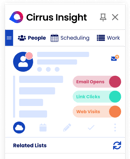
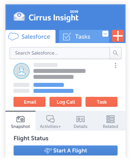


Salesforce reports that reps spend only 28% of their time actually selling. The rest? Admin work, updates, follow-ups, and chasing information across tools.
That’s where deals start slipping.
Whether you’re managing a sales pipeline, private equity deal flow, or venture capital investments, success depends on visibility, speed, and execution, not just tracking stages in a CRM.
The right deal management software doesn’t just show you where a deal sits. It helps you move it forward.
In this guide, we’ll break down:
- What deal management software actually means
- The difference between sales deal management and deal flow management software
- The best deal management software in 2026
- How private equity and venture capital tools differ
- And how modern revenue teams are using automation and AI to prevent deals from slipping through the cracks
What Is Deal Management Software?
Deal management software is a platform that helps teams track, organize, and move deals from first interaction to close, with visibility, structure, and automation built in.
At its core, deal management software answers three critical questions:
- Where does every deal stand right now?
- What needs to happen next to move it forward?
- Are we on track to hit our forecast?
For sales teams, this usually means managing opportunities inside a CRM, tracking rep activity, automating follow-ups, and improving forecast accuracy.
For private equity and venture capital firms, deal management often looks more like deal flow management software, tracking sourced opportunities, managing due diligence, collaborating with investment committees, and monitoring portfolio performance.
The key difference? Sales teams focus on pipeline velocity and revenue execution. PE and VC teams focus on deal sourcing, evaluation, and capital allocation.
Modern deal management software goes beyond visual pipelines.
It includes:
- Automated activity tracking
- Workflow triggers and task creation
- Buyer or stakeholder engagement insights
- AI-powered summaries and forecasting signals
- CRM integrations for structured reporting
In short, it’s not just about seeing your deals. It’s about systematically increasing the likelihood they close or move forward efficiently.
12 Best Deal Management Software Tools in 2026
Choosing deal management software isn’t just about picking a tool with a pipeline board. It’s about choosing how your team will move deals forward, automate execution, and improve forecast confidence.
Here are the best platforms doing that in 2026.
1. Cirrus Insight
Most deal management software shows you where a deal sits. Cirrus Insight makes sure it actually moves.
If your team runs on Salesforce but struggles with incomplete records, missed follow-ups, or forecast gaps, Cirrus acts as a Salesforce-native deal execution layer that keeps every opportunity advancing, automatically.
Best For: Salesforce-driven revenue teams that want to improve deal velocity and forecast accuracy
Flexible pricing; you only pay for the features you actually want
Instead of replacing your CRM, Cirrus strengthens your deal management system by eliminating the friction between sales activity and pipeline visibility.
How It improves deal Management inside Salesforce
- Automatic email & meeting sync ensures every interaction is logged in real time
- AI-powered meeting summaries (Conversational Insights) generate post-call notes and action items automatically
- Prioritized next steps reduce stalled opportunities
- Buyer signals & engagement tracking surface deal momentum shifts
- Smart Scheduler accelerates meeting routing
- Sales cadences automate structured follow-ups
- Live coaching nudges guide reps during active deals
Why It matters for deal management:
Deals rarely stall because of missing stages. They stall because of missing execution.
Cirrus helps by:
- Reducing manual CRM data entry
- Improving forecast reliability through complete activity capture
- Preventing follow-up gaps
- Increasing deal velocity without adding dashboard complexity
Limitations:
- Designed specifically for Salesforce users
- Not a standalone CRM or investment deal flow platform

2. Salesforce Sales Cloud
Salesforce is the backbone of enterprise deal management, the system of record where pipeline, forecasting, and automation live.
Best For: Enterprise sales organizations
Pricing:
- Starter: $25/user/month
- Professional: $80/user/month
- Enterprise: $165/user/month
- Unlimited: $330/user/month
Salesforce provides structured pipeline management at scale.
Strengths:
- Customizable deal stages
- Advanced reporting & forecasting
- Workflow automation (Flows)
- Einstein AI add-ons
Limitations:
- Requires disciplined data entry
- Add-ons significantly increase cost
3. HubSpot CRM
HubSpot is often the first step for growing teams that want a clean, easy-to-use deal management platform without enterprise complexity.
Best For: SMB and mid-market sales teams
Pricing:
- Free plan available
- Sales Hub Starter: $20/user/month
- Professional: $90/user/month
- Enterprise: $150/user/month
It blends marketing and sales visibility into one system.
Strengths:
- Simple onboarding
- Visual pipeline boards
- Email automation & tracking
Limitations:
- Less customizable for complex enterprise forecasting
4. Pipedrive
Pipedrive is built for salespeople who want a straightforward, activity-focused way to manage deals.
Best For: Sales-focused SMB teams
Pricing:
- Essential: $14.90/user/month
- Advanced: $24.90/user/month
- Professional: $49.90/user/month
- Enterprise: $99/user/month
It emphasizes action over analytics.
Strengths:
- Intuitive interface
- Automation templates
- Activity-based reporting
Limitations:
- Limited advanced AI forecasting
- Not ideal for PE/VC workflows
5. Monday CRM
Monday CRM feels more like a flexible operations hub than a traditional CRM, ideal for teams that want total workflow customization.
Best for: Cross-functional and workflow-heavy teams
Pricing:
- Basic: $10/user/month
- Standard: $14/user/month
- Pro: $24/user/month
It’s highly visual and adaptable.
Strengths:
- Customizable boards
- Strong collaboration tools
- Workflow automation
Limitations:
- Forecasting not as robust as revenue-focused CRMs
6. Clari
Clari isn’t trying to replace your CRM, it’s trying to make your forecast more predictable.
Best for: Enterprise revenue forecasting
Pricing: Estimated $1,000–$1,600 per user/year (custom contracts)
Clari overlays AI-driven revenue intelligence on CRM data.
Strengths:
- Forecast risk detection
- Pipeline inspection tools
- Revenue analytics dashboards
Limitations:
- Expensive
- Dependent on CRM data quality
7. Gong
Gong focuses on what’s happening inside your deals, specifically, the conversations driving them.
Best for: Conversation intelligence
Pricing: Estimated $1,200–$1,600 per user/year
It records, analyzes, and scores sales calls.
Strengths:
- AI call analysis
- Coaching dashboards
- Deal risk signals
Limitations:
- Not a CRM
- Adds cost on top of CRM systems
8. Affinity
Affinity is purpose-built for venture capital and relationship-driven deal flow.
Best For: VC firms & relationship-heavy teams
Pricing: Custom pricing (often $2,000+/user/year)
It tracks relationship data automatically.
Strengths:
- Email sync & relationship mapping
- Investment pipeline tracking
- Capital markets focus
Limitations:
- Not optimized for sales forecasting
9. DealCloud (Intapp)
DealCloud is enterprise-grade deal flow software for private equity and investment firms.
Best For: Private equity & institutional investors
Pricing: Custom enterprise pricing
It supports full investment lifecycle management.
Strengths:
- Investment pipeline management
- Portfolio analytics
- Committee workflows
Limitations:
- Complex implementation
- High cost
10. Dynamo Software
Dynamo blends deal flow tracking with fund administration.
Best For: Institutional investment management
Pricing: Custom pricing
It’s built for capital markets operations.
Strengths:
- Fund accounting integrations
- Portfolio reporting
- Investor relations tools
Limitations:
- Not sales-focused
- Steeper learning curve
11. Zoho CRM
Zoho is a cost-effective option for teams that want automation without enterprise pricing.
Best For: Budget-conscious teams
Pricing:
- Standard: $14/user/month
- Professional: $23/user/month
- Enterprise: $40/user/month
It offers strong automation at a lower price point.
Strengths:
- Affordable
- Workflow automation
- Custom dashboards
Limitations:
- Smaller ecosystem than Salesforce
12. Zapier
Zapier isn’t a deal management platform, but it quietly powers automation between them.
Best For: Workflow automation across tools
Pricing:
- Free tier
- Paid plans from ~$19.99/month
It connects your CRM, email, and scheduling tools.
Strengths:
- Flexible integrations
- No-code automation
- Quick deployment
Limitations:
- Not a forecasting or pipeline tool itself
Strategic Comparison: Deal Management Software (2026)
|
Tool |
Primary use case |
Automation sophistication |
Ideal buyer persona |
|
Cirrus Insight |
Salesforce-native deal execution |
High (real-time activity sync + AI summaries) |
Revenue teams wanting automation + forecasting alignment |
|
Salesforce Sales Cloud |
CRM & pipeline infrastructure |
High (workflows, approvals, flows) |
Enterprise sales orgs needing system of record |
|
HubSpot CRM |
SMB deal tracking + marketing alignment |
Moderate |
Growing sales & marketing teams |
|
Pipedrive |
Activity-based sales management |
Moderate |
SMB sales teams prioritizing simplicity |
|
Monday CRM |
Custom workflow deal tracking |
Moderate |
Cross-functional or operations-heavy teams |
|
Clari |
Revenue forecasting & pipeline inspection |
High (AI forecast modeling) |
Enterprise RevOps & CROs |
|
Gong |
Conversation intelligence |
Moderate (post-call analysis) |
Coaching-focused sales orgs |
|
Affinity |
Relationship-driven deal flow (VC) |
Moderate (email relationship mapping) |
Venture capital firms |
|
DealCloud |
Private equity lifecycle management |
High (investment workflows) |
PE firms & institutional investors |
|
Dynamo |
Fund & investment operations |
High |
Institutional capital managers |
|
Zoho CRM |
Budget-friendly CRM deal management |
Moderate |
SMB & cost-sensitive teams |
|
Zapier |
Cross-platform automation bridge |
Variable (depends on setup) |
Teams stitching tools together |
How to Choose the Best Deal Management Software
Choosing the best deal management software isn’t about picking the tool with the longest feature list. It’s about choosing the platform that matches how your team actually closes deals.
Here’s how to think about it strategically.
Start With Your Deal Type
Not all deals are created equal.
- Sales teams need pipeline visibility, forecasting accuracy, and follow-up automation.
- Private equity firms need structured deal flow management, diligence workflows, and portfolio tracking.
- Venture capital teams need relationship intelligence and sourcing visibility.
If you’re running a sales organization, prioritize CRM integration and execution automation. If you’re managing investments, prioritize lifecycle management and committee workflows.
Evaluate CRM Dependency
Ask yourself:
- Is this replacing a CRM or strengthening one?
- Does it require perfectly clean data to work?
- Will reps need to manually update records?
The best deal management software improves data hygiene automatically.
If your tool depends on perfect rep discipline, forecasting accuracy will suffer.
Look at Automation Depth (Not Just Dashboards)
Many platforms visualize deals. Fewer actually move them forward.
Strong automation includes:
- Automatic activity capture
- Task creation and next-step prompts
- AI-generated meeting summaries
- Workflow triggers
- Engagement-based alerts
If your software only shows pipeline stages without execution automation, it’s a reporting tool, not a deal accelerator.
Consider Forecasting Impact
Your deal management software should directly improve forecast reliability.
Ask yourself:
- Does it surface deal risk signals?
- Does it track real engagement, not just stage movement?
- Does it reduce “ghost deals” in pipeline reports?
Better deal management equals fewer end-of-quarter surprises.
Factor in Implementation & Scalability
Some tools are:
- Lightweight and fast to deploy
- Enterprise-grade and complex
- Built for SMB velocity
- Designed for institutional capital workflows
Choose based on your revenue complexity, not just your current team size.
Align With Your Revenue Stack
Finally, consider your broader stack:
- Are you already using Salesforce?
- Do you need conversation intelligence?
- Do you want scheduling and engagement automation in the same system?
- Are you trying to reduce tool sprawl?
The best deal management software doesn’t just fit your pipeline. It fits your entire revenue motion.
.png?width=550&height=553&name=Solution%204.1%20(1).png)
Why Cirrus Insight Is the Smartest Deal Management Upgrade for Salesforce Teams
Most deal management software helps you see your pipeline.
Cirrus Insight helps you move it.
If you're already using Salesforce, you likely don’t need another dashboard layered on top of your CRM. What you need is cleaner data, faster execution, and fewer deals stalling because of missed follow-ups or incomplete activity tracking.
That’s exactly where Cirrus fits.
Instead of replacing your CRM, Cirrus strengthens it by automating the operational layer of deal management:
- Automatic email & meeting sync keeps Salesforce 100% up to date
- AI-powered meeting summaries generate action items instantly
- Conversational Insights surface deal signals inside your pipeline
- Buyer engagement tracking highlights momentum shifts
- Smart Scheduler accelerates deal progression
- Sales cadences ensure structured follow-up
- Live coaching nudges guide reps during active deals
The result?
- Fewer stalled opportunities
- More accurate forecasts
- Cleaner pipeline visibility
- Hours saved per rep every week
For Salesforce-driven revenue teams, Cirrus isn’t just another tool in the stack. It’s the automation engine that turns deal tracking into deal acceleration.
Deal Management Software FAQs
What is deal flow management software?
Deal flow management software is typically used by private equity and venture capital firms to track sourced opportunities, manage due diligence, and monitor portfolio investments. Unlike sales-focused tools, deal flow software is built for investment lifecycle management and capital allocation decisions.
What is the best deal management software?
The best deal management software depends on your use case. Sales teams often prioritize CRM integration and automation, while PE and VC firms need investment tracking and committee workflows. The right platform should improve deal visibility, automate follow-ups, and enhance forecasting accuracy.
How does deal management software improve forecasting?
Deal management software improves forecasting by ensuring opportunity data is accurate and up to date. Automated activity capture, AI-powered meeting summaries, and engagement tracking reduce manual errors and surface deal risk signals before the end of the quarter.
Is Salesforce considered deal management software?
Yes, Salesforce Sales Cloud functions as deal management software by tracking opportunities, pipeline stages, and revenue forecasts. However, many teams enhance Salesforce with automation and intelligence tools to improve data accuracy and deal execution.
What features should I look for in deal management software?
Look for features such as:
- CRM integration
- Automated activity logging
- Workflow automation
- AI-powered meeting summaries
- Buyer engagement tracking
- Forecasting dashboards
The best tools combine visibility with execution automation.
What is private equity deal management software?
Private equity deal management software helps firms manage deal sourcing, due diligence processes, investment committee approvals, and portfolio monitoring. These tools are built for institutional investment workflows rather than traditional sales pipelines.
What is venture capital deal management software?
Venture capital deal management software focuses on startup sourcing, founder relationship tracking, investment evaluation, and portfolio reporting. It often includes relationship intelligence and collaboration tools tailored to VC firms.
Can deal management software reduce manual CRM work?
Yes. Modern deal management platforms automate email and meeting logging, generate AI meeting summaries, and create next-step tasks automatically. This reduces administrative workload and keeps CRM data accurate without relying solely on manual rep input.
Is Cirrus Insight a deal management software?
Cirrus Insight is not a standalone deal management software, but it directly enhances deal management within Salesforce. Instead of replacing your CRM, Cirrus automates the activity tracking, meeting summaries, follow-up tasks, and buyer engagement signals that keep deals moving forward.
By automatically syncing emails and meetings, generating AI-powered action items, and updating opportunity records in real time, it ensures your pipeline stays accurate without manual data entry. In short, Cirrus Insight strengthens Salesforce deal management by reducing admin work and improving forecast visibility.