.png?width=18&height=18&name=Vector%20(5).png)


Calendly may have pioneered easy booking, but in 2025, just slotting a meeting isn’t enough.
That’s why sales-driven teams are looking beyond Calendly. The best alternatives don’t just schedule meetings, they power your entire sales workflow.
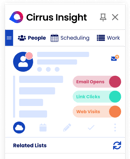
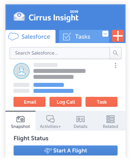
Cirrus Insight tops our list because it combines scheduling with Salesforce sync, engagement tracking, and automation, all from your inbox. But it’s not the only player in the game.
From inbound-routing leaders like Chili Piper to budget-friendly tools like Zoho Bookings, we’ll break down the 10 best Calendly alternatives in 2025 and who each one is best for.
10 Best Calendly Alternatives in 2025
In today’s sales environment, booking meetings is just the start. If your scheduling tool doesn’t connect to your CRM, track engagement, or route leads intelligently, you're leaving revenue on the table.
Quick Comparison Table
|
Tool |
Best For |
CRM Integration |
Engagement Tracking |
Lead Routing |
Starting Price |
|
Cirrus Insight |
Sales-driven teams |
Salesforce (native) |
✅ Yes |
✅ Yes |
~$14/user/mo |
|
Chili Piper |
Inbound conversion |
Salesforce, HubSpot |
Limited |
✅ Yes |
$30+/user/mo |
|
OnceHub |
Complex workflows |
Salesforce, HubSpot |
❌ No |
Partial |
$10+/user/mo |
|
Acuity Scheduling |
Services/Coaching |
Zapier-based |
❌ No |
❌ No |
$16+/mo |
|
YouCanBookMe |
Individuals |
Google, Microsoft |
❌ No |
❌ No |
$10+/user/mo |
|
Cal.com |
Custom workflows |
API/Integrations |
❌ No |
Partial |
Free–$12/user/mo |
|
Doodle |
Group scheduling |
Minimal |
❌ No |
❌ No |
Free–$7/user/mo |
|
Zoho Bookings |
Zoho users |
Zoho CRM |
❌ No |
❌ No |
$6+/user/mo |
|
Microsoft Bookings |
Microsoft 365 orgs |
Outlook only |
❌ No |
❌ No |
Included w/ 365 |
|
HubSpot Meetings |
HubSpot users |
HubSpot CRM |
Partial |
Partial |
Free–$20+/user/mo |
1. Cirrus Insight
Tired of juggling scheduling tools, CRMs, and email tracking? Cirrus Insight brings them all together in your inbox so reps can focus on selling, not switching tabs.
Key features:
- Smart scheduler with lead routing logic: Automatically route meetings based on availability, territory, or deal stage
- Full Salesforce sync: Emails, meetings, tasks, and even custom objects sync automatically
- Engagement tracking: Track opens, clicks, replies, and attachments in real time
- Inbox context: View Salesforce data right inside Gmail or Outlook via a sidebar
- Meeting AI: Prepare faster by surfacing relevant insights before each call
- Email blast: Send bulk, tracked emails directly from your inbox
Pricing: Flexible; only pay for the features you actually want to use
Best for: Teams that want scheduling + CRM + sales insights in one tool

2. Chili Piper
If speed-to-lead is your #1 priority, Chili Piper ensures prospects never slip through the cracks by routing inbound meetings instantly to the right rep.
Why many choose it:
- Excellent for real-time lead routing and inbound conversion, it can route meeting requests automatically to the right rep
- Supports “Instant Booker” embedded forms for lead-to-meeting conversion
- Deep CRM integrations and advanced meeting workflows for B2B teams
Cons:
- More expensive than many tools; some routing features require higher plan tiers.
- Steeper learning curve when dealing with complex rules or form-based booking flows.
- Implementation sometimes requires developer or administrator support.
- Interface and customization can become complex for non-technical users.
- Some users report delayed support or slower response with advanced configurations
3. OnceHub (ScheduleOnce)
For teams with complex booking rules and multi-step workflows, OnceHub turns complicated scheduling into a seamless, automated process.
Why it’s appealing:
- Strong support for complex scheduling flows (multi-step booking, availability windows, conditional logic)
- Good CRM and marketing tool integrations
- Flexible meeting types (round robin, group, one-on-one)
Cons:
- UI has been criticized for being less modern compared to newer tools
- More expensive as you unlock advanced features or more users
Requires configuration for rules and logic, can be time-consuming - May lack deep email tracking features compared to sales-first tools
- Some features (like auto-routing) may need additional setup or addons
4. Acuity Scheduling
Running a service-based business? Acuity makes it simple to book sessions, take payments, and customize client forms, all in one clean interface.
Why it's used:
- Great for service-oriented businesses, integrates payments, forms, rescheduling features
Customizable booking pages and strong user interface - Easier and more intuitive for non-sales teams
Cons:
- Less built for sales teams; lacks deep lead-routing or CRM automation
- No native Salesforce sync (you’ll need integration or add-ons)
- Email engagement tracking is limited compared to specialized sales tools
- Some users report crashes or interface quirks (e.g. scheduling intervals)
- Scaling to large team use can introduce complexity and cost
5. YouCanBookMe
When you just need a no-fuss, reliable way to book meetings, YouCanBookMe keeps it simple without overwhelming you with extras.
Why it works:
- Simple and reliable for individual scheduling needs
- Good support for notifications, reminders, and rescheduling
- Decent calendar integration (Google, Microsoft)
Cons:
- Limited when it comes to CRM or sales workflow integration
- No built-in lead routing or sales automation
- Engagement tracking (opens, clicks, replies) not a core capability
- Lacks deeper analytics or dashboarding for sales teams
- Customization and automation options are more limited than in Cirrus Insight
6. Cal.com
For teams that want ultimate flexibility, Cal.com’s open-source platform lets you customize scheduling to fit your exact workflow.
Why people like it:
- Very flexible and modern scheduling tool
- Supports round-robin, workflows, payments, and custom booking logic
- More customization options, including open-source components in some cases
Cons:
- CRM integration and routing logic may require setup or configuration
- Less out-of-the-box sales-specific features like buyer signals or sidebar context
- Email tracking and engagement logging not as deep as sales-focused tools
- Some feature complexity may overwhelm smaller teams
- Support and usability may vary depending on plan and configuration
7. Doodle
Coordinating across large groups or multiple time zones? Doodle’s easy polls make finding a time everyone agrees on refreshingly painless.
Why it's useful:
- Excellent for organizing group availability or meeting polls.
- Easy interface and low learning curve.
- Good for internal or cross-team scheduling.
Cons:
- Not designed for sales workflows, no lead routing, CRM sync, or buyer signals.
- No native engagement tracking (opens, clicks) tied to contacts
- No route logic or assignment based on territories or deal stage
- Minimal automation or revenue-related features
- No deep analytics or insights built for selling
8. Zoho Bookings
Zoho Bookings slots right in, offering an affordable way to handle scheduling without leaving Zoho’s suite.
Why teams use it:
- Integrates well with the Zoho suite, good for organizations already using Zoho tools.
- Affordable with features for basic scheduling, reminders, etc.
Cons:
- Not built with Salesforce in mind, so integration or consistency gaps may arise.
- Doesn’t include strong email tracking or sales automation.
- No sophisticated routing rules tied to CRM data.
- Analytics geared toward service bookings, not sales engagement.
- Scaling can become limited if you need advanced features.
9. Microsoft Bookings
For companies living in Outlook and Microsoft 365, Microsoft Bookings keeps scheduling simple and directly tied to the tools your team already uses.
Why it might work:
- Built into Microsoft 365/Office suite and ties into Outlook calendars
- Good option for teams already deeply in Microsoft ecosystem
Cons:
- No native Salesforce integration or CRM features
- Basic scheduling only, lacks advanced lead routing or sales automation
- Engagement tracking is minimal
- No advanced analytics or buyer signal feature
- Not designed with sales teams’ productivity in mind
10. HubSpot Meetings
If your marketing and sales already run on HubSpot, HubSpot Meetings gives you a built-in way to capture prospects and sync appointments directly to your CRM.
Why it’s valuable:
- Directly tied to HubSpot CRM, auto-logs meetings and contacts
- Personalized booking links with custom branding
- Includes meeting round robin for sales teams
Cons:
- Requires HubSpot CRM, not ideal if your team uses Salesforce or another CRM
- Pricing escalates quickly once you need advanced Sales Hub features
- Limited compared to standalone scheduling tools when it comes to customization

Why Cirrus Insight is the #1 Calendly Alternative for Sales Teams
Calendly and similar tools focus solely on booking. Cirrus Insight does that and so much more. By combining scheduling, CRM sync, engagement tracking, and AI features, Cirrus becomes your sales command center, not just a booking link.
- No data loss: Every meeting, email, and task logs to Salesforce
- Smarter routing: Leads go to the right rep automatically
- Increased adoption: Teams use one tool instead of juggling separate systems
Complete visibility: Know who’s engaged, when, and how
Frequently Asked Questions
Can Cirrus Insight or Calendly be customized to fit specific business needs?
Yes, but Cirrus Insight offers more admin control, sync filters, and CRM object mapping. Calendly customization is mostly limited to booking pages and calendar views.
Which alternatives are best for non-sales teams?
If you’re outside of sales (e.g., coaching, consulting, wellness, or education), tools like Acuity Scheduling and Doodle might be a better fit. Acuity shines for service providers because of its built-in payments and forms, while Doodle is perfect for coordinating group availability without the sales-focused overhead.
Which solution is easier to implement and adopt for teams?
Cirrus Insight. Works inside your inbox with minimal ramp-up. Calendly requires separate logins, setup, and integrations to support Salesforce workflows.
Can I try before committing?
Yes. Most Calendly alternatives offer free trials or limited free plans.
- Cirrus Insight: Free trial available, then flexible pricing model
- Cal.com: Has a free open-source version
- HubSpot Meetings: Free with HubSpot CRM (scales up with paid Sales Hub)
- YouCanBookMe: Free plan with limited features
Pro tip: Test with a small team first to see how well the tool integrates with your CRM and workflows before rolling out company-wide.