.png?width=18&height=18&name=Vector%20(5).png)

Forecast calls shouldn’t feel like therapy sessions.
You know the ones. A long pipeline review. A few “commit” deals that feel optimistic. A couple of “best cases” that everyone hopes will land. And somewhere in the middle of it all, a quiet question hanging in the air:
Do we actually trust this number?
Clari has become a major name in revenue intelligence for exactly this reason. It promises visibility, forecasting clarity, and data-driven confidence. And for many enterprise teams, it delivers.
But it’s not always the right fit.
Some teams find it too complex. Others struggle with the implementation lift. For mid-market companies, the cost can feel heavy.
And in many cases, the real problem isn’t forecasting dashboards, it’s incomplete CRM data, inconsistent activity tracking, and reps who are too busy selling to manually log everything.
In this guide, we’ll break down:
- The best Clari alternatives in 2026
- Which tools work best for SMB vs enterprise teams
- When you don’t actually need Clari-level complexity
- And how CRM-native automation can improve forecast accuracy before you ever open a dashboard
Because forecasting isn’t just about better analytics.
What Is Clari?
Clari is a revenue intelligence and forecasting platform designed to help sales leaders improve pipeline visibility, forecast accuracy, and deal execution.
In simple terms:
Clari helps revenue teams answer one big question: “Are we actually going to hit our number?”
What Does Clari Do?
Clari connects to your CRM (usually Salesforce) and analyzes pipeline data, deal activity, and sales signals to improve forecasting confidence.
Core capabilities include:
- Pipeline inspection: See which deals are real vs. at risk
- Revenue forecasting: AI-driven projections based on deal activity
- Deal risk alerts: Flags stalled or unhealthy opportunities
- Activity tracking: Monitors engagement signals (calls, emails, meetings)
- AI insights: Identifies patterns that impact forecast accuracy
Clari is primarily used by:
- CROs
- VP of Sales
- RevOps teams
- Sales managers
10 Best Clari Alternatives in 2026
Not every revenue team needs a heavyweight forecasting engine. Sometimes you need deeper intelligence. Sometimes you need cleaner CRM data. And sometimes, you just need fewer moving parts.
Here are the strongest Clari alternatives, with clear positioning so you can quickly see what fits your revenue motion.
1. Cirrus Insight
If your forecast problems start with incomplete CRM data, not dashboards, this is where you look first.
Best for: Salesforce-driven revenue teams that want automation + forecasting visibility
Core strength: Automatic CRM sync combined with AI meeting intelligence and real-time pipeline activity capture
CRM integration depth: Deep Salesforce-native sync (email, meetings, tasks, opportunity updates)
AI / Automation Capabilities:
- Automatic email & calendar sync
- Conversational Insights (AI meeting summaries)
- Action item extraction
- Buyer signals & engagement tracking
- Smart Scheduler lead routing
- Automated sales cadences
Pricing Tier: Mid-market to enterprise
Pros:
- Lightweight compared to Clari
- Faster implementation
- Reduces manual CRM data entry
- Improves forecasting accuracy by capturing activity automatically
- Operational automation vs dashboard-only analytics
Limitations:
- Most valuable for Salesforce-centric teams
- Not built as a standalone enterprise analytics suite

2. Gong
If you want to know what was said in every deal and why it matters, Gong provides detailed analysis of it.
Best for: Enterprise revenue teams prioritizing conversation intelligence
Core strength: Advanced deal analytics and coaching insights
CRM integration depth: Strong Salesforce and enterprise CRM integrations
AI / automation capabilities:
- Call recording & transcription
- Deal risk alerts
- Coaching dashboards
- Competitive insights
Pricing tier: Enterprise
Pros:
- Best-in-class conversation analytics
- Powerful coaching layer
- Enterprise scalability
Limitations:
- High cost
- Heavy implementation
- Focused more on analysis than automation
3. BoostUp
When your leadership team wants AI-driven forecast predictions, not just reports, BoostUp enters the chat.
Best for: RevOps teams focused on predictive forecasting
Core strength: AI-based revenue modeling
CRM integration depth: Salesforce pipeline analysis
AI / automation capabilities:
- Predictive forecast scoring
- Risk modeling
- Pipeline health tracking
Pricing tier: Enterprise
Pros:
- Strong forecasting AI
- Built for RevOps visibility
Limitations:
- Requires clean CRM data
- Less focused on activity automation
4. People.ai
If your CRM suffers from activity gaps, People.ai aims to fix the visibility layer.
Best for: Enterprises wanting automated activity capture
Core strength: Revenue activity intelligence
CRM integration depth: Deep Salesforce activity logging
AI / automation capabilities:
- Automated engagement capture
- Attribution modeling
- Pipeline activity insights
Pricing tier: Enterprise
Pros:
- Strong data completeness focus
- Improves CRM hygiene
Limitations:
- Complex deployment
- Enterprise pricing
5. InsightSquared
When leadership wants reporting clarity more than workflow automation, InsightSquared shines.
Best for: Teams seeking strong pipeline analytics dashboards
Core strength: Sales performance reporting
CRM integration depth: Salesforce reporting integration
AI / automation capabilities:
- Forecast dashboards
- Trend analysis
- Pipeline visualization
Pricing tier: Mid-to-enterprise
Pros:
- Clear visual reporting
- Easy executive summaries
Limitations:
- Limited automation
- Dependent on CRM accuracy
6. Revenue.io
If your sales team lives in dialers and outbound motion, Revenue.io blends engagement with insight.
Best for: Outbound-heavy revenue teams
Core strength: Engagement + intelligence
CRM integration depth: Salesforce & HubSpot
AI / Automation capabilities:
- Call analytics
- Guided selling prompts
- Engagement scoring
Pricing tier: Mid-market to enterprise
Pros:
- Strong outbound focus
- Integrated coaching
Limitations:
- Less forecasting-focused
- More engagement-centric
7. HubSpot Revenue Forecasting
For HubSpot-native teams, sometimes the simplest path is staying in your ecosystem.
Best for: HubSpot CRM users
Core strength: Native revenue forecasting
CRM integration depth: Fully native
AI / automation Capabilities:
- Deal tracking
- Workflow automation
- Forecast dashboards
Pricing Tier: Based on HubSpot plan
Pros:
- Seamless integration
- Easy deployment
Limitations:
- Less advanced AI forecasting
- Not ideal for Salesforce teams
8. Pipedrive Forecasting
If you want forecasting without enterprise complexity, Pipedrive keeps it clean and simple.
Best for: SMB sales teams
Core strength: Visual pipeline forecasting
CRM integration depth: Native within Pipedrive
AI / Automation Capabilities:
- Basic workflow automation
- Sales assistant suggestions
Pricing tier: Affordable SMB
Pros:
- User-friendly
- Quick setup
Limitations:
- Limited predictive AI
- Not enterprise-grade
10. Clari Copilot (Wingman)
If you’re already inside the Clari ecosystem, Copilot enhances it rather than replaces it.
Best for: Existing Clari users
Core strength: Real-time call intelligence
CRM integration depth: Works best with Clari
AI / automation capabilities:
- Live call coaching
- Conversation insights
Pricing tier: Enterprise
Pros:
- Enhances Clari workflows
Limitations:
- Not a standalone Clari replacement
- Tied to Clari environment
11. Salesforce Native Forecasting + Automation Stack
Sometimes the most practical alternative is already in your CRM, it just needs better automation layered on top.
Best for: Salesforce-centric teams
Core strength: Built-in sales forecasting tools
CRM Integration Depth: Native
AI / Automation Capabilities:
- Forecast categories
- Reporting dashboards
- Workflow rules
Pricing tier: Included within Salesforce plans
Pros:
- No additional vendor
- Customizable
Limitations:
- Requires strong CRM discipline
- Limited predictive AI without add-ons
Clari Alternatives: Strategic Comparison Overview
|
Tool |
Implementation speed |
Primary value driver |
Data dependency level |
|
Cirrus Insight |
Fast (weeks, not quarters) |
CRM activity automation + forecast visibility |
Low as it improves data automatically |
|
Gong |
Moderate to heavy |
Conversation intelligence & coaching analytics |
Medium, needs call volume |
|
BoostUp |
Heavy enterprise rollout |
AI predictive forecasting |
High as it depends on clean CRM |
|
People.ai |
Heavy |
Automated activity intelligence |
Medium |
|
InsightSquared |
Moderate |
Executive forecasting dashboards |
High, relies on CRM accuracy |
|
Revenue.io |
Moderate |
Engagement optimization |
Medium |
|
HubSpot Forecasting |
Fast (native) |
CRM-based pipeline tracking |
Medium |
|
Pipedrive Forecasting |
Very fast |
Visual pipeline management |
Medium |
|
Clari Copilot |
Moderate |
Call intelligence within Clari |
Medium |
|
Salesforce Native Forecasting |
Fast (if already live) |
Built-in reporting & forecast categories |
High, requires strong rep discipline |
What to Look for in a Clari Alternative
Not all Clari alternatives solve the same problem. Some focus on sales forecasting analytics. Others fix the data gaps that make forecasting unreliable in the first place.
Before choosing a tool, step back and evaluate what your team actually needs.
1. Does It Improve Data Accuracy or Just Analyze It?
If your reps aren’t logging emails, meetings, and follow-ups consistently, adding more dashboards won’t fix the root issue.
Look for a Clari alternative that:
- Automatically captures sales activity
- Syncs email and meeting data to your CRM
- Reduces manual data entry
Forecast accuracy starts with data completeness.
2. How Deep Is the CRM Integration?
“Integrates with Salesforce” can mean a lot of things.
Ask:
- Does it update opportunities automatically?
- Does it create tasks from meeting insights?
- Does it sync in real time?
- Does it enrich records or just display data?
The deeper the CRM sync, the more impact the tool will have on pipeline visibility.
3. Is It Built for Your Revenue Motion?
Different teams need different levels of complexity:
- SMB teams may need lightweight automation and visibility.
- Mid-market teams need scalable forecasting and activity capture.
- Enterprise teams often require predictive modeling and governance controls.
Choose based on your revenue structure, not just feature lists.
4. How Long Will Implementation Take?
Some revenue intelligence platforms require:
- Dedicated RevOps ownership
- Long onboarding cycles
- Heavy configuration
If you need faster impact, prioritize tools that can deploy in weeks and not quarters.
Forecast With Confidence Using Cirrus Insight
At the end of the day, most teams don’t buy Clari because they love dashboards.
They buy it because they want fewer surprises at the end of the quarter.
But here’s the hard truth: forecasting problems rarely start in the forecast. They start in the CRM.
Incomplete activity logs. Meetings that never get recorded. Follow-ups that live in inboxes instead of opportunities. Pipeline updates that rely on memory instead of data.
You can’t forecast what you can’t see.
That’s where Cirrus Insight takes a fundamentally different approach to being a Clari alternative.
Instead of layering analytics on top of imperfect data, Cirrus focuses on making the underlying data accurate automatically.
Why Cirrus goes beyond Clari Copilot:
While Clari Copilot focuses primarily on in-call intelligence, Cirrus Insight supports the entire revenue workflow:
- Before the call: Meeting AI automatically surfaces pre-call research, CRM activity, opportunity updates, and engagement insights.
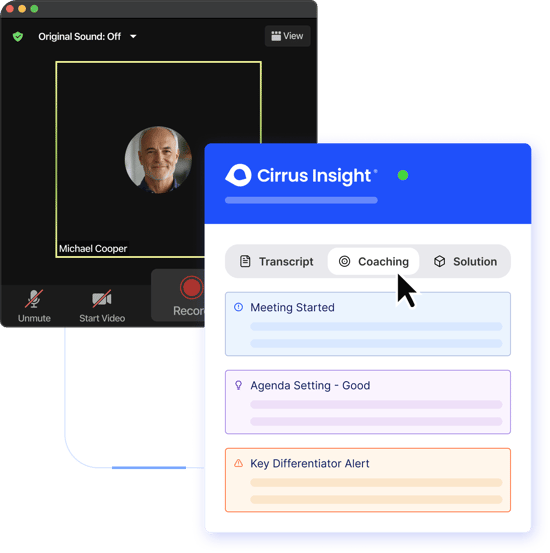
- During the call: Conversational Insights provides live coaching nudges and context-aware guidance.
- After the call: AI summaries, action item extraction, and automatic CRM updates ensure nothing gets lost.
With Cirrus Insight, you also get:
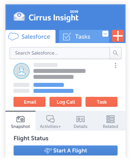
- Automatic email and meeting sync with Salesforce: Every interaction logs to the correct lead, contact, or opportunity
- Automated task creation and follow-up tracking: Action items don’t get forgotten
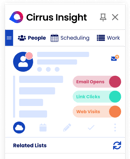
- Buyer Signals and email tracking: See who opened emails, clicked links, or engaged with attachments, and prioritize accordingly
- Smart Scheduler with intelligent routing: Eliminate scheduling friction while keeping CRM data clean
- Sales Cadences built inside your inbox: Structured follow-up without switching tools.
The result? Reps spend less time updating Salesforce. Managers gain clearer pipeline visibility. Forecast calls become shorter and more accurate.
Clari Alternatives FAQs
What is the best Clari alternative in 2026?
The best Clari alternative depends on your team’s needs. Enterprise teams often choose sales forecasting tools like Gong or BoostUp for predictive forecasting, while Salesforce-driven teams prefer CRM-native automation platforms, like Cirrus Insight, that improve data accuracy and pipeline visibility without heavy implementation.
Is there a free Clari alternative?
There are no true free alternatives that match Clari’s enterprise forecasting depth. However, some CRM platforms offer built-in forecasting features, and lighter automation tools can improve pipeline visibility at a lower cost.
What is cheaper than Clari?
Many CRM automation tools and forecasting platforms are more affordable than Clari, especially for SMB and mid-market teams. Native CRM forecasting features combined with automation tools can often deliver improved visibility without enterprise-level pricing.
What tools compete with Clari?
Top Clari competitors include Gong, BoostUp, People.ai, InsightSquared, Revenue.io, and CRM-native forecasting platforms. The right alternative depends on whether you prioritize predictive analytics, activity automation, or conversation intelligence.
How do Clari alternatives improve forecasting accuracy?
Clari alternatives improve forecasting accuracy by either enhancing predictive modeling or ensuring CRM data is automatically captured and updated. Tools that reduce manual data entry and improve activity logging often address the root cause of inaccurate forecasts.
Do I need Clari if I already use Salesforce?
Not necessarily. Salesforce includes native forecasting tools, and many teams improve forecast reliability by adding CRM automation solutions that ensure email, meeting, and pipeline activity are logged automatically.
What is the best Clari alternative for mid-market sales teams?
Mid-market teams often benefit from tools that balance automation and visibility without enterprise complexity. CRM-native automation platforms can provide forecasting clarity while reducing manual administrative work.
How long does it take to implement a Clari alternative?
Implementation timelines vary. Enterprise revenue intelligence platforms may take months to configure, while CRM-native automation tools can often be deployed in weeks.