I have spent years living inside Gmail and Salesforce, and the single change that moved my numbers most was knowing the moment a prospect opened a proposal. So when a tool promises to tell me what happens after I hit send, I want to know if it actually delivers.
To build this list, I compared 11 email tracking tools for Gmail and Outlook against five criteria: tracking depth, inbox support, CRM integration, deliverability, and price. I leaned on the products themselves, vendor documentation, and hands-on reviews. Here are the ones worth your time, grouped by who gets the most from each.
|
TRY CIRRUS INSIGHT
See what happens after you hit send. Track opens, clicks, and attachment views inside Gmail and Outlook, with every email logged to Salesforce. Start a free 14-day trial.
|
What is Email Tracking Software?
Email tracking software tells you what happens after you send: when a recipient opens your email, which links or attachments they click, and how often they come back to it. Sales reps use that signal to follow up at the right moment. Most tools live inside Gmail or Outlook and turn each open or click into a real-time notification.
The 11 tools below fall into five types:
CRM-native trackers. Tracking that logs itself to your CRM record automatically, so activity is never re-keyed. Cirrus Insight, HubSpot, Yesware, and Streak sit here.
Inbox productivity suites. Send-later, reminders, and sequences bundled with tracking inside the inbox. Mixmax, Mailbutler, Right Inbox, and Boomerang.
Sales engagement platforms. Sequence-first outbound systems where tracking is one component of a larger cadence. Outreach is the example here.
Writing-plus-tracking assistants. Email coaching tools that add basic open and click data. Lavender.
Standalone open trackers. Simple read-receipt tools that do one thing well. Mailsuite (formerly Mailtrack).
How Email Tracking Works
Most trackers drop a one-pixel invisible image into your email. When your recipient's client loads that pixel, the server logs the time, the device, and an approximate location, then pushes you an alert. Tracked links work the same way: each click pings the server and records the engagement.
One caveat worth knowing. Since Apple introduced Mail Privacy Protection in 2021, Apple Mail can pre-load that pixel whether or not the recipient actually reads your email. That inflates open rates for anyone reading in Apple Mail. I weigh clicks, replies, and repeat opens over time more heavily than a single open when I judge real interest.
How I Evaluated These Tools
I graded every tool, including our own, against the same five things:
Tracking accuracy and depth. Opens, clicks, attachment views, and re-open timelines, not just a one-time read receipt.
Gmail and Outlook support. Whether tracking lives natively in the inbox you already use, or runs on a separate platform.
CRM integration. Whether activity syncs to your CRM on its own instead of by manual entry.
Deliverability. Whether the tool's tracking domains raise your risk of landing in spam. A cheap tracker that sends your email to the junk folder is not a bargain.
Pricing and free plan. Transparent pricing and how much real tracking you get before you have to pay.
|
HOW THIS LIST IS PUT TOGETHER
This roundup is published by Cirrus Insight, and Cirrus Insight is one of the 11 tools reviewed. I judged every tool, ours included, against the same five criteria above, and I kept the trade-offs on our own entry. Pricing reflects each vendor's published rates at the time of writing and is worth confirming before you buy.
|
The 11 Best Email Tracking Tools at a Glance
|
Tool
|
Best for
|
Standout feature
|
Gmail / Outlook
|
CRM integration
|
Starting price
|
|
Cirrus Insight
|
Salesforce sales teams
|
One-click Salesforce logging
|
Gmail, Outlook
|
Native Salesforce
|
Free trial; ~$7 to $20/user/mo
|
|
HubSpot Sales
|
Free email tracking
|
Free opens + CRM logging
|
Gmail, Outlook
|
HubSpot Smart CRM
|
Free; Sales Hub from ~$7/seat/mo
|
|
Yesware
|
Outbound sequences
|
Multi-step sequences
|
Gmail, Outlook
|
Native Salesforce
|
Free; from $19/user/mo to yearly (enterprise only) $65 per user
|
|
Streak
|
Gmail-based pipelines
|
Pipeline CRM inside Gmail
|
Gmail
|
Built-in CRM
|
Free; Pro from $49/user/mo
|
|
Outreach
|
Enterprise outbound
|
Tracking inside cadences
|
Via platform
|
Salesforce + CRMs
|
Custom enterprise
|
|
Mixmax
|
Interactive email
|
Polls + calendar embeds
|
Gmail
|
Salesforce, HubSpot
|
Free; from $29/user/mo
|
|
Mailbutler
|
Mixed email clients
|
Gmail, Outlook + Apple Mail
|
Gmail, Outlook, Apple Mail
|
Zapier / manual
|
Trial; from $7/user/mo
|
|
Right Inbox
|
Gmail reminders
|
Send-later + reminders
|
Gmail
|
None
|
Free; from $9.95/mo
|
|
Boomerang
|
Scheduling + timing
|
Send-later + inbox pause
|
Gmail, Outlook
|
None
|
Free (10 emails); from ~$4.98/mo
|
|
Lavender
|
Solo sellers + writing
|
AI writing + tracking
|
Gmail & Outlook
|
CSV export only
|
Free (5 emails); from $27/mo
|
|
Mailsuite
|
Simple open tracking
|
Double check-mark opens
|
Gmail & Outlook
|
None
|
Free; Pro from ~$6.99/mo
|
The 11 Best Email Tracking Tools
1. Cirrus Insight for Salesforce-based sales teams
2. HubSpot Sales for free email tracking
3. Yesware for outbound sales sequences
4. Streak for turning Gmail into a CRM
5. Outreach for high-volume enterprise outbound
6. Mixmax for interactive emails and automation
7. Mailbutler for mixed email clients
8. Right Inbox for Gmail reminders and send-later
9. Boomerang for scheduling and inbox timing
10. Lavender for solo sellers who want writing help
11. Mailsuite for simple open tracking in Gmail
Best for Salesforce-Based Sales Teams
Category: CRM-native tracker.
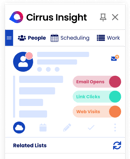
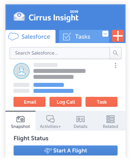
Cirrus Insight is the tool I reach for when a team runs on Salesforce. Rather than sitting apart as a standalone tracker, it embeds open, click, and attachment tracking directly in Gmail and Outlook, then logs the activity to Salesforce automatically. Reps see what is happening; managers get clean data without chasing anyone.
What sets it apart from a simple tracker like Mailsuite further down this list is the one-click logging to Salesforce Leads, Contacts, Opportunities, and custom objects. On top of that, Smart Scheduler links cut the back-and-forth on booking meetings, and team templates plus engagement analytics show which messages actually convert. It also folds in conversation intelligence, so meeting summaries and transcriptions land alongside your email activity.
PROS
- Native Salesforce sync from Gmail and Outlook
- Real-time open, click, and attachment alerts
- Smart Scheduler and team templates built in
CONS
- Needs Salesforce to deliver its full value
- Overkill for individual users or freelancers
- Per-user pricing adds up across a large team
Cirrus Insight pricing: 14-day free trial; paid plans typically start around $7 to $20 per user per month.
Best for Free Email Tracking
HubSpot Sales (Gmail, Outlook, Office 365)
Category: CRM-native tracker.
If you want to start tracking without paying, HubSpot is the clearest pick on this list. Its free email tracking notifies you the moment a lead opens a message or clicks a link, and it logs that activity to the HubSpot Smart CRM contact record so the whole history sits in one place. Like Cirrus Insight at the top, it works across Gmail, Outlook, and Office 365 rather than a single client.
The free tier is genuinely useful for a solo rep or a small team. Where it gets expensive is the jump to paid Sales Hub, which is what unlocks sequences, deeper analytics, and team reporting. In hands-on testing, the free plan also caps how many tracking notifications you receive, so heavy senders will feel the ceiling quickly.
PROS
- Genuinely free open and click tracking to start
- Logs activity to the HubSpot Smart CRM automatically
- Works across Gmail, Outlook, and Office 365
CONS
- Free tier caps tracking notifications
- Sequences and deeper analytics need a paid Sales Hub plan
- Costs climb steeply on higher Sales Hub tiers
HubSpot Sales pricing: Free plan available; paid Sales Hub plans start around $7 per seat per month (lower billed annually).
Best for Outbound Sales Sequences
Yesware (Gmail, Outlook)
Category: CRM-native tracker.
Yesware layers tracking, templates, and multi-step sequences into Gmail and Outlook, which makes it a natural fit for reps running steady outbound. It sends the same open and click signals as the tools above, but its real value is the cadence: build a sequence, watch template analytics tell you what lands, and drop in meeting-book links.
It carries a native Salesforce connector, so activity flows back to the CRM without manual logging. If you want the same sequence power at the enterprise scale, Outreach below goes further, but Yesware keeps everything inside the inbox, which most reps prefer.
PROS
- Multi-step outbound sequences inside the inbox
- Template analytics that show what converts
- Native Salesforce connector
CONS
- Costs climb quickly across larger teams
- Free plan capped at ten recipients a month
Yesware pricing: Free for up to ten recipients a month; paid plans from $19 per user per month.
Best for Turning Gmail Into a CRM
Streak (Gmail)
Category: CRM-native tracker.
Streak turns Gmail itself into a pipeline. Instead of syncing to an outside CRM the way Cirrus Insight or HubSpot do, Streak is the CRM, with stages, boxes, and dashboards living entirely inside your inbox. Real-time open tracking comes along for the ride, even on the free plan.
That all-in-one approach is the draw and the catch. You never leave Gmail, but there is no external CRM sync because Streak owns the record, and the interface can feel busy to a new user. For a small Gmail-first team that does not already run Salesforce, it is a tidy setup.
PROS
- A full pipeline CRM that lives inside Gmail
- Real-time open tracking on the free plan
- No separate CRM to maintain
CONS
- Doubles as the CRM, so there is no external sync
- Interface can feel busy for new users
Streak pricing: Free plan available; Pro from $49 per user per month.
Best for High-Volume Enterprise Outbound
Outreach (Via platform)
Category: Sales engagement platform.
Outreach is a sales engagement platform first, and email tracking is one component built into its structured sequences and cadences. For a team running high-volume prospecting, that is the point: open and click tracking sits inside every sequence, engagement analytics span whole campaigns, and follow-ups and tasks fire automatically.
The trade-off is that this is not an inbox-native tracker like Yesware. Tracking is tied to sequences rather than one-off emails, it runs through the Outreach platform, and it needs ongoing admin and sales ops support to keep humming. That is a fair price at enterprise scale and heavy for anyone below it.
PROS
- Tracking built into structured outbound cadences
- Engagement analytics across whole campaigns
- Connects to Salesforce and other major CRMs
CONS
- Tracking is tied to sequences, not one-off emails
- Not inbox-native, so it runs through the platform
- Setup and upkeep need admin and sales ops support
Outreach pricing: Custom enterprise pricing, typically contract-based.
Best for Interactive Emails and Automation
Mixmax (Gmail)
Category: Inbox productivity suite.
Mixmax adds interactive elements most trackers skip. Alongside solid open and click tracking, you can drop polls and calendar picks straight into the email body, then layer on advanced sequencing and automation. It syncs directly with both Salesforce and HubSpot, which is rarer than it sounds.
All that depth can overwhelm a casual sender, and the best value sits on the higher paid tiers. But for an agency or a team that wants tracking plus real automation without moving to a full engagement platform, it hits a useful middle ground.
PROS
- Interactive polls and calendar embeds inside the email
- Advanced sequencing and automation
- Direct sync with Salesforce and HubSpot
CONS
- Feature depth can overwhelm casual senders
- Best value sits on higher paid tiers
Mixmax pricing: Free starter tier; paid plans from $29 per user per month.
Best for Mixed Email Clients
Mailbutler (Gmail, Outlook, Apple Mail)
Category: Inbox productivity suite.
Mailbutler is the one to reach for when your team is split across clients. It brings the same real-time open and click logs to Gmail, Outlook, and Apple Mail, which none of the other tools here cover together. Connect it to your other apps through Zapier, and it slots into most stacks.
There is no native CRM sync, so activity moves by Zapier or manual export, and many of the richer tracking extras live in higher-priced bundles. For a mixed-client team that just wants dependable tracking everywhere, that is a fair compromise.
PROS
- Works in Gmail, Outlook, and Apple Mail
- Real-time open and click logs
- Connects to other apps through Zapier
CONS
- No native CRM sync (Zapier or manual export)
- Many tracking extras sit in higher bundles
Mailbutler pricing: 14-day free trial, then from $4 per user per month.
Best for Gmail Reminders and Send-Later
Right Inbox (Gmail)
Category: Inbox productivity suite.
Right Inbox adds send-later, recurring reminders, and lightweight link-click tracking directly inside Gmail's compose window. It is not trying to be a CRM or a sequence engine. It is a tidy set of inbox upgrades with tracking bolted on, and a free core plan makes it easy to try.
Reporting is basic, and there is no Outlook version, so it stays firmly in the Gmail-only, solo-seller lane. If you want the same timing controls in both clients, Boomerang below covers Outlook too.
PROS
- Send-later and recurring reminders in Gmail
- Lightweight link-click tracking
- Free core plan to start
CONS
- Gmail only, no Outlook
- Reporting is basic
Right Inbox pricing: Free core plan; paid plans from $9.95 per month.
Best for Scheduling and Inbox Timing
Boomerang (Gmail, Outlook)
Category: Inbox productivity suite.
Boomerang is all about timing. Schedule a send, pause your inbox, and get simple open alerts, all from one add-on that works in both Gmail and Outlook. While Right Inbox stays Gmail-only, Boomerang ships separate extensions for each client.
That split is also its quirk: the feature set differs a little between Gmail and Outlook, and it lacks the deep analytics a sales team eventually wants. For timing-focused users who mostly need send-later and a nudge when someone opens, it is plenty.
PROS
- Send-later and inbox pause in one add-on
- Simple open alerts
- Works in both Gmail and Outlook
CONS
- Feature set differs between the two clients
- Lacks deep analytics
Boomerang pricing: Free for up to ten tracked emails a month; paid plans from about $4.98 per month.
Best for Solo Sellers Who Want Writing Help
Lavender (Gmail)
Category: Writing-plus-tracking assistant.
Lavender is really an AI email coach that happens to include tracking. As you write, it suggests improvements to your subject line and body, and it sends instant open and click notifications through a native Gmail Chrome extension. For a solo seller polishing outreach, that pairing is the appeal.
Be clear-eyed about the trade: tracking is the secondary act here, not the main one, and there is no direct CRM sync, only CSV export. If your priority is deep tracking, a CRM-native tool serves you better. If it is writing better emails with basic engagement data attached, Lavender fits.
PROS
- AI writing suggestions alongside tracking
- Instant open and click notifications
- Native Gmail Chrome extension
CONS
- Tracking is secondary to the writing coach
- No direct CRM sync (CSV export only)
Lavender pricing: Free for up to five tracked emails a month; paid tiers from $27 per month.
Best for Simple Open Tracking in Gmail
Mailsuite (Gmail)
Category: Standalone open tracker.
Mailsuite, formerly Mailtrack, keeps things about as simple as tracking gets: double check-marks that light up the moment someone opens your Gmail message. There is nothing to learn. Install the Chrome extension, send, and watch the marks turn.
It is the opposite end of the list from Cirrus Insight or HubSpot. There is no CRM, and click tracking and team dashboards require a paid upgrade. But the free plan is robust, and the entry price is low, which is exactly why it endures as a starter tracker.
PROS
- Simple double check-mark open tracking
- Robust free plan
- Very low entry price
CONS
- Click tracking and team dashboards need a paid upgrade
- Gmail only, no CRM
Mailsuite pricing: Robust free plan; Pro tier from about $1.99 per month.
Which Tool Fits Your Use Case?
Freelancers and solo sellers: Mailsuite, Right Inbox, or Lavender are cheap Gmail add-ons that install in minutes. If you want CRM-backed tracking for free, start with HubSpot.
Sales teams: Yesware and Streak add sequences and CRM-ready data without leaving the inbox. HubSpot is the free starting point.
Salesforce teams: Cirrus Insight, for native two-way sync from Gmail and Outlook.
Agencies and mixed stacks: Mixmax for automation, or Mailbutler when your team spans Gmail, Outlook, and Apple Mail.
Enterprise outbound: Outreach, when tracking needs to live inside high-volume cadences.
What Email Tracking Actually Gets You
Follow up at the right moment. A real-time alert when a prospect opens or clicks lets you reach out while the topic is fresh.
Prioritize the warmest leads. Someone who opened your email three times and clicked the proposal is warmer than someone who never looked. Tracking sorts your call list by genuine interest.
Write better emails over time. Compare open and click rates across subject lines and templates and the patterns show up fast.
Cut wasted follow-ups. If a contact never opened your first note, you can change the approach instead of firing off another "just checking in."
So Which Email Tracker Should You Use?
There is no single best email tracker. The right one depends on the inbox you live in, the CRM behind it, your team size, and your budget. If you send a handful of emails a week, a free Gmail add-on like Mailsuite is plenty. If you run outbound at scale, a sequence platform earns its price.
And if your team runs on Salesforce, tracking that logs itself to the record without tab-switching is worth more than any single feature. That is where Cirrus Insight fits: real-time open, click, and attachment alerts inside Gmail and Outlook, every email and meeting synced to Salesforce in the background, and AI meeting prep before each call. You can try it free for two weeks and compare it against anything else on this list.
Email tracking software: FAQs
How do I track an email?
Install an email tracking add-on such as Cirrus Insight, HubSpot, or Mailsuite. It inserts a one-pixel image into each message. When your recipient's client loads that pixel or clicks a tracked link, the server records it and sends you an alert.
What is the best email tracking option for Gmail?
For basic open alerts, Mailsuite's free Chrome extension is a solid starter. If you need opens, clicks, templates, scheduling, and automatic Salesforce logging, most teams move up to Cirrus Insight because it stays inside Gmail and keeps CRM data clean.
Is email tracking legal?
Email tracking is legal in most regions, but you have to follow privacy rules. Add a clear disclosure to your emails or privacy policy, respect unsubscribe requests, and avoid collecting sensitive data without consent. GDPR, CCPA, and similar laws apply.
Does email tracking work with Salesforce?
Yes. Most teams add a mailbox tool such as Cirrus Insight so every open, click, or attachment view logs automatically to Leads, Contacts, or custom objects, with no manual entry.
Which email tracking tools are free?
You can start at no cost with HubSpot (free opens and clicks), Mailsuite (open tracking), Lavender (five tracked emails a month), Boomerang (ten a month), and Yesware (ten recipients). Each lets you test tracking before upgrading.
What is the most reliable email tracker for Gmail?
It depends on your workflow. Mailsuite is dependable for simple opens, while Cirrus Insight and Yesware are trusted for deeper analytics and CRM sync. Remember that Apple Mail Privacy Protection can inflate open counts, so weigh clicks and replies too.


.png?width=18&height=18&name=Vector%20(5).png)