.png?width=18&height=18&name=Vector%20(5).png)

Most sales teams don’t struggle because they lack talent. They struggle because their outreach is inconsistent.
One week the follow-ups are tight. The next week, deals go cold because someone forgot a task, missed a reminder, or never saw that a prospect opened an email three times.
Meanwhile, reps spend hours switching between inboxes, CRMs, LinkedIn, spreadsheets, and calendar tools, all just to run what should be a simple, structured outreach process.
That’s where sales engagement platforms come in.
Instead of relying on memory, sticky notes, or “I’ll follow up later,” these platforms turn outreach into a repeatable system. They automate sequences, track engagement signals, sync with your CRM, and make sure no opportunity slips through the cracks.
In this guide, we’ll cover:
- What sales engagement platforms actually do
- The best sales engagement platforms in 2026
- How to compare features, pricing, and CRM integrations
- And how to choose the right platform for your sales motion
Because closing more deals isn’t about sending more emails. It’s about sending the right message, at the right time, every single time.
What Are Sales Engagement Platforms?
Sales engagement platforms are software tools designed to structure, automate, and optimize how sales teams communicate with prospects across multiple channels.
Instead of relying on scattered emails, sticky notes, or memory, these platforms create repeatable outreach workflows, often called cadences or sequences, that guide reps on what to do, when to do it, and how to follow up.
At a practical level, most sales engagement platforms help teams:
- Automate email sequences and follow-ups
- Log and track calls
- Schedule meetings without friction
- Create task reminders
- Track prospect engagement (opens, clicks, replies)
- Sync activity back to the CRM
The result? Fewer dropped leads. More consistent outreach. Clearer visibility for managers.
Sales Engagement Platforms vs CRM
A CRM stores your data with accounts, contacts, and opportunities.
A sales engagement platform drives execution when it’s needed the most.
It tells reps:
- Who to contact
- When to follow up
- What message to send next
12 Best Sales Engagement Platforms in 2026
Sales engagement platforms aren’t just about sending sequences anymore. They’ve evolved into full execution system, automating outreach, tracking buyer intent, syncing CRM data, and helping teams move deals forward without manual chaos.
Here’s how the leading platforms compare in 2026.
1. Cirrus Insight
Cirrus Insight feels less like a separate engagement tool and more like a workflow accelerator for Salesforce teams.
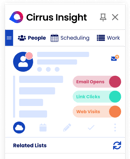
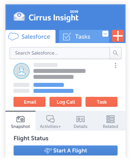
It connects email tracking, buyer engagement signals, scheduling automation, and AI meeting intelligence directly inside Salesforce, eliminating the disconnect between outreach and pipeline visibility.
Best for: Salesforce-native revenue teams that want engagement, execution, and CRM automation in one system.
Core strength: CRM-native engagement + pipeline visibility.
Channels supported: Email, meetings, scheduling workflows.
Automation capabilities: Sales cadences, Smart Scheduler lead routing, automatic email & meeting sync.
CRM integration depth: Fully native Salesforce integration with real-time activity capture.
AI features: Conversational Insights (AI summaries + transcripts), buyer signals, live coaching nudges.
Pricing tier: Flex model, so you only pay for the features you actually use.
Pros:
- Eliminates manual CRM updates
- Tracks buyer engagement automatically
- AI-powered meeting summaries
- Strong Salesforce-native alignment
Limitations:
- Best suited for Salesforce users
- Not built as a high-volume cold dialer platform
Positioning: A lightweight alternative to Salesloft and Outreach with stronger Salesforce-native execution.

2. Salesloft
Salesloft helped define the enterprise sales engagement category.
It focuses heavily on multi-channel cadences, structured outbound workflows, and coaching visibility for managers.
Best for: Mid-market to enterprise SDR teams running structured outbound campaigns.
Core strength: Multi-touch sequence automation at scale.
Channels supported: Email, phone, LinkedIn, SMS.
Automation capabilities: Advanced cadence builder, task automation, pipeline tracking.
CRM integration depth: Deep Salesforce integration.
AI features: Conversation intelligence and coaching analytics.
Pricing tier: Enterprise pricing (typically $100–$165+/user/month depending on contract).
Pros:
- Strong cadence builder
- Enterprise-grade reporting
- Built-in dialer
Limitations:
- Higher cost
- Longer onboarding cycles
3. Outreach
Outreach is built for scale, especially large outbound teams.
It combines advanced workflow automation with detailed analytics and real-time coaching.
Best for: Enterprise outbound teams prioritizing structured workflows and analytics.
Core strength: Scalable multi-channel automation.
Channels supported: Email, phone, LinkedIn.
Automation capabilities: Conditional sequences, task prioritization, automated follow-ups.
CRM integration depth: Strong Salesforce integration.
AI features: Outreach Kaia real-time coaching and conversation insights.
Pricing tier: Enterprise pricing (often $120–$180+/user/month).
Pros:
- Strong analytics layer
- Real-time coaching
- Enterprise scalability
Limitations:
- Complex implementation
- Premium pricing
4. Apollo.io
Apollo blends engagement and contact data into one tool, making it attractive for growing teams.
Best for: SMB and mid-market teams needing prospecting + engagement in one platform.
Core strength: Built-in B2B contact database with sequencing.
Channels supported: Email, phone.
Automation capabilities: Email sequences, enrichment workflows.
CRM integration depth: Salesforce and HubSpot integration.
AI features: Email writing assistance and basic scoring.
Pricing tier: Free plan available; paid plans start around $49/user/month.
Pros:
- Affordable
- Prospecting + engagement combined
- Quick setup
Limitations:
- Less advanced coaching features
- Limited enterprise reporting depth
5. HubSpot Sales Hub
HubSpot keeps engagement embedded within its CRM ecosystem.
For inbound-focused teams, this simplifies stack complexity.
Best for: SMB to mid-market teams already using HubSpot CRM.
Core strength: Native CRM-integrated engagement.
Channels supported: Email, phone.
Automation capabilities: Sequences, workflow automation.
CRM integration depth: Native HubSpot CRM.
AI features: Email suggestions and deal scoring.
Pricing tier: Starts around $20–$90/user/month (depending on tier).
Pros:
- Easy adoption
- Unified CRM + engagement
- Strong inbound alignment
Limitations:
- Less multi-channel sophistication
- Limited enterprise scalability
6. Groove (Clari)
Groove integrates tightly with Salesforce and is often bundled within Clari’s ecosystem.
Best for: Salesforce enterprises wanting engagement inside CRM.
Core strength: Salesforce workflow automation.
Channels supported: Email, phone.
Automation capabilities: Sequences and task automation.
CRM integration depth: Deep Salesforce-native experience.
AI features: Conversation insights via Clari.
Pricing tier: Enterprise pricing (custom).
Pros:
- Strong Salesforce alignment
- Good productivity enhancements
Limitations:
- Enterprise-focused
- Limited flexibility outside Clari ecosystem
7. Mixmax
Mixmax is lightweight and inbox-first.
It focuses more on email productivity than enterprise orchestration.
Best for: Gmail-based teams needing simple sequences and scheduling.
Core strength: Email productivity + scheduling.
Channels supported: Email, meetings.
Automation capabilities: Sequences, templates, calendar links.
CRM integration depth: Salesforce and HubSpot integrations.
AI features: Basic automation.
Pricing tier: Starts around $29/user/month.
Pros:
- Easy setup
- Affordable
- Inbox-native
Limitations:
- Limited analytics depth
- Not built for enterprise forecasting
8. Yesware
Yesware is one of the simpler email tracking tools on the market.
Best for: Small teams needing basic email tracking + templates.
Core strength: Email tracking and lightweight sequences.
Channels supported: Email.
Automation capabilities: Simple email sequences.
CRM integration depth: Salesforce integration available.
AI features: Minimal.
Pricing tier: Starts around $15/user/month.
Pros:
- Low cost
- Simple UI
Limitations:
- No true multi-channel engagement
- Limited automation sophistication
9. Reply.io
Reply.io is built for outbound teams that want multi-channel automation without enterprise-level complexity.
Best for: SDR teams running outbound across email, LinkedIn, and calls.
Core strength: Multi-channel automation with built-in prospecting support.
Channels supported: Email, calls, LinkedIn, SMS.
Automation capabilities: Conditional sequences, automated follow-ups, task reminders.
CRM integration depth: Salesforce, HubSpot, and Pipedrive integrations.
AI features: AI email writing assistant and reply detection.
Pricing tier: Starts around $60/user/month.
Pros:
- Strong outbound automation
- AI-generated email support
- Multi-channel flexibility
Limitations:
- UI can feel complex at scale
- Not built for deep revenue forecasting
10. Freshsales (Freshworks)
Freshsales blends CRM and engagement into a single ecosystem, making it appealing for teams wanting fewer tools.
Best for: Growing teams that want CRM + engagement in one platform.
Core strength: Unified CRM with built-in outreach workflows.
Channels supported: Email, phone, chat.
Automation capabilities: Sequences, workflow automation, lead scoring.
CRM integration depth: Native Freshsales CRM (Salesforce integration available).
AI features: Freddy AI for scoring and insights.
Pricing tier: Free plan available; paid plans start around $18–$69/user/month.
Pros:
- Affordable bundled option
- AI lead scoring
- Built-in phone system
Limitations:
- Less advanced sequence logic
- Not ideal for enterprise outbound scale
11. Smartlead
Smartlead focuses heavily on cold email infrastructure and deliverability optimization.
Best for: Agencies and outbound teams running high-volume cold email campaigns.
Core strength: Deliverability optimization and multi-mailbox sending.
Channels supported: Email.
Automation capabilities: Automated sequences, inbox rotation.
CRM integration depth: Basic CRM integrations via API and Zapier.
AI features: Email personalization assistance.
Pricing tier: Starts around $39/month (pricing varies by sending volume).
Pros:
- Strong deliverability focus
- Supports unlimited email accounts
- Affordable scaling
Limitations:
- Email-only platform
- Limited CRM-native depth
12. Close.com
Close combines CRM, calling, and email engagement into a unified interface designed for fast-moving sales teams.
Best for: SMB teams prioritizing calling-heavy sales motions.
Core strength: Built-in calling + CRM + email workflows.
Channels supported: Email, calling, SMS.
Automation capabilities: Sequences, call automation, task workflows.
CRM integration depth: Native Close CRM.
AI features: AI call summaries (newer feature).
Pricing tier: Starts around $49–$99/user/month.
Pros:
- Excellent calling tools
- Simple UI
- Built-in CRM
Limitations:
- Not ideal for Salesforce-native teams
- Limited advanced forecasting
Sales Engagement Platforms: Strategic Comparison
|
Tool |
Implementation speed |
Customization flexibility |
Ideal sales motion |
|
Cirrus Insight |
Fast (native Salesforce setup) |
High within Salesforce workflows |
Salesforce-driven teams prioritizing pipeline growth and visibility |
|
Salesloft |
Moderate to long (enterprise onboarding) |
High for structured outbound cadences |
Enterprise SDR teams with defined outbound playbooks |
|
Outreach |
Moderate to long |
Very high (complex workflow logic) |
Large outbound orgs with layered sales processes |
|
Apollo.io |
Fast |
Moderate |
SMB prospecting + engagement in one tool |
|
HubSpot Sales Hub |
Fast (HubSpot-native) |
Moderate |
Inbound-led teams using HubSpot CRM |
|
Groove (Clari) |
Moderate |
High inside Salesforce ecosystem |
Enterprise Salesforce orgs tied to Clari stack |
|
Mixmax |
Very fast (inbox-first) |
Low to moderate |
Gmail-based SMB teams |
|
Yesware |
Very fast |
Low |
Individual reps or small teams |
|
Reply.io |
Moderate |
High for multi-channel sequences |
SDR-heavy outbound teams |
|
Freshsales |
Moderate |
Moderate |
Teams wanting CRM + engagement bundled |
|
Smartlead |
Fast |
High for email infrastructure |
Cold email agencies / deliverability-focused teams |
|
Close.com |
Moderate |
Moderate |
Call-heavy SMB sales teams |
Key Features to Look for in Sales Engagement Platforms (And How to Choose the Right One)
Not all sales engagement platforms are built the same. Some are outbound machines. Others focus on CRM alignment. A few try to do everything and do it well.
Here’s how to evaluate what actually matters before you commit.
Does It Automate Multi-Channel Outreach?
Modern sales doesn’t live in just one channel. Your platform should support:
- Email automation
- Calling workflows
- LinkedIn touchpoints
- SMS (if relevant to your motion)
If you’re running outbound at scale, multi-channel orchestration isn’t optional, it’s essential.
Can It Personalize at Scale?
Sending 500 identical emails isn’t strategy, it’s spam.
Look for:
- Dynamic merge fields
- Behavioral segmentation
- AI-generated messaging
- Personalization tokens based on CRM data
The best platforms help you personalize efficiently without sacrificing authenticity.
Does It Sync Seamlessly With Your CRM?
This is where many tools break down.
Ask:
- Is sync real-time or delayed?
- Are emails and meetings logged automatically?
- Does activity update pipeline stages accurately?
If your CRM data isn’t trustworthy, your forecasts won’t be either.
Does It Track Buyer Engagement?
Knowing who opened your email isn’t enough anymore.
Advanced platforms track:
- Email opens and clicks
- Attachment engagement
- Website visits
- Reply intent signals
Buyer engagement data helps reps prioritize the right opportunities, not just the loudest ones.
Does It Support Intelligent Scheduling?
Back-and-forth email scheduling slows deals down.
Look for:
- Calendar sharing links
- Round-robin lead routing
- Automated meeting distribution
- Smart scheduling rules
The faster prospects can book time, the faster your pipeline moves.
How to Choose the Best Sales Engagement Platform for Your Team
Now let’s simplify the decision.
SMB or Enterprise?
- SMB teams need speed, simplicity, and affordability.
- Enterprise teams need scale, analytics, governance, and layered workflows.
Choose accordingly.
Outbound-Heavy or Inbound-Heavy?
- Outbound teams prioritize multi-channel sequences and automation depth.
- Inbound teams need CRM-native simplicity and fast follow-up workflows.
Your sales motion should dictate your tool, not the other way around.
Are You Deeply Invested in Salesforce?
If Salesforce is your single source of truth, prioritize platforms with native sync and real-time updates. Overlay tools with shallow integrations often create data gaps.

Why Cirrus Insight Is the Smarter Sales Engagement Choice
Sales engagement shouldn’t create more work. It should remove friction.
If your reps are bouncing between inboxes, scheduling links, CRM updates, coaching tools, and reporting dashboards, your engagement platform isn’t simplifying your workflow, it’s fragmenting it.
That’s where Cirrus Insight stands out.
Instead of acting as just another sequencing tool, Cirrus connects engagement directly to execution inside Salesforce:
- Automatic email and meeting sync (no manual logging)
- Buyer signals and engagement tracking
- Smart Scheduler for intelligent lead routing
- Sales cadences to automate follow-ups
- Conversational Insights with AI meeting summaries
- Live coaching nudges during calls
- Real-time CRM visibility for accurate forecasting
While many platforms focus purely on outbound automation, Cirrus Insight bridges engagement, CRM accuracy, and meeting intelligence, giving Salesforce teams a lightweight alternative to heavy enterprise suites without sacrificing capability.
Sales Engagement Platforms: FAQs
What are sales engagement platforms?
Sales engagement platforms are tools that help sales teams automate, track, and optimize outreach across multiple channels like email, phone, and LinkedIn. They streamline follow-ups, improve personalization at scale, and provide visibility into buyer engagement to increase conversion rates.
What is the best sales engagement platform in 2026?
The best sales engagement platform depends on your team’s size, CRM setup, and outbound strategy. Enterprise teams often choose platforms like Outreach or Salesloft, while Salesforce-driven teams may prefer CRM-native options like Cirrus Insight that combine engagement, automation, and pipeline visibility. For more detail, explore our salesforce sales engagement guide.
How do sales engagement platforms differ from CRM software?
CRM software stores contact and deal data, while sales engagement platforms focus on executing outreach and automating communication workflows. The most effective platforms sync seamlessly with your CRM to ensure accurate pipeline tracking and real-time activity updates.
Are sales engagement platforms worth it for SMB teams?
Yes, sales engagement platforms can significantly improve productivity for SMB teams by automating follow-ups and eliminating manual tasks. Lightweight tools with strong CRM integration and email tracking often provide the best ROI for growing teams.
Do sales engagement platforms support AI-driven personalization?
Many modern sales engagement platforms include AI features such as automated email writing, predictive lead scoring, and real-time coaching insights. AI-driven personalization helps reps send more relevant messages while scaling outreach efficiently.
What should I look for in a sales engagement platform for Salesforce?
If your team relies on Salesforce, look for real-time CRM sync, automatic email and meeting logging, buyer signal tracking, and native workflow automation. Deep integration prevents data gaps and improves forecasting accuracy.
How does Cirrus Insight compare to Salesloft or Outreach?
Cirrus Insight combines sales engagement, CRM automation, scheduling, and AI meeting intelligence inside Salesforce. While Salesloft and Outreach focus heavily on outbound cadence management, Cirrus adds native CRM sync and execution visibility without the complexity of enterprise overlays.