I have watched a lot of good sales emails vanish into an Outlook inbox with zero signal back. Did they read it? Ignore it? Forward it to three people? Outlook's built-in read receipts do not really answer that, and most recipients decline them anyway.
So I compared the email tracking tools that actually work inside Outlook, not just the ones ported over from Gmail. I looked at how deep each tool tracks (opens, clicks, attachments, replies), how it holds up on deliverability, whether it syncs to a CRM, and what the free plan truly gives you. I leaned on hands-on use, vendor documentation, and current pricing pages, and I flagged where a tool is Gmail-first with Outlook bolted on. Here are the eight that earn a place in 2026.
About this list. Cirrus Insight publishes this guide, and Cirrus is one of the eight tools on it. Every tool here is judged on the same five criteria, and the Cirrus entry keeps its real limitations. Where a competitor does something better, I say so.
Want opens, clicks, attachments, and replies rolled into one buyer signal inside Outlook? See how Cirrus Insight's Buyer Signals scores every contact automatically.
Learn how to track opens, clicks, and replies without turning your sales process into guesswork.
What is Outlook Email Tracking?
Email tracking for Outlook is any method of seeing how a recipient interacts with an email you sent: whether they opened it, when, how often, which links they clicked, and sometimes whether they opened an attachment. Most tools do this by inserting an invisible tracking pixel and rewriting links, then reporting the activity back to you.
The tools are split into a few clear types, and each one below is tagged to a type:
All-in-one sales and CRM platforms. Track email as part of a broader sales and CRM workflow, usually with scoring and sync. Cirrus Insight, Yesware, HubSpot, and Mixmax sit here.
Lightweight inbox add-ins. Do opens and clicks with minimal overhead, straight from the inbox. Mailbutler, Boomerang, and Mailsuite.
Cold-outreach platforms. Build tracking into high-volume sequences and campaigns. SalesHandy is the example here.
Native Outlook read receipts. The free, built-in baseline, useful but easy for recipients to decline.
How I Evaluated Each Outlook Email Tracker
Outlook compatibility. Does it run as a real Outlook add-in across desktop and Outlook on the web, or is it a Gmail tool with Outlook bolted on?
Tracking depth. Opens only, or opens plus clicks, attachment views, and replies with clear tracking results? Is engagement over time analytics included?
Deliverability safety. Does it use a dedicated tracking domain, or a shared one that can drag your sender reputation down? Does the free plan add branding?
Salesforce and CRM integration. Does activity log to the CRM you already report on, or stay stranded in the tool?
Value. Is the free plan genuinely useful, and is the starting price fair for what you get?
The Best Outlook Email Tracking Tools At a Glance
|
Tool
|
Best for
|
Standout feature
|
Starting price
|
Website
|
|
Cirrus Insight
|
Outlook + Salesforce teams
|
Buyer Signals engagement scoring
|
$14/user/mo
|
Visit
|
|
Yesware
|
Proposal and attachment engagement
|
Page-level attachment tracking
|
Free; $19/seat/mo
|
Visit
|
|
HubSpot Sales Hub
|
Teams on HubSpot CRM
|
Tracking logged to CRM timeline
|
Free; $15/seat/mo
|
Visit
|
|
Mixmax
|
Tracking + scheduling + automation
|
Rules engine for follow-ups
|
Free; $29/mo
|
Visit
|
|
SalesHandy
|
Cold outreach at volume
|
Free unlimited open tracking
|
Free; ~$25/mo
|
Visit
|
|
Mailbutler
|
Cross-platform (incl. Apple Mail)
|
Tracks across 3 email clients
|
$4.95/mo
|
Visit
|
|
Boomerang
|
Simple read receipts + send-later
|
Send-later and reminders
|
Free; $4.99/mo
|
Visit
|
|
Mailsuite
|
Free unlimited open tracking
|
Double-check open tracking
|
Free; $4.99/mo
|
Visit
|
If you are comparing the best email tracking tools, this list covers everything from simple free email tools to advanced sales platforms with tracking and analytics.
The 8 best Outlook email tracking tools
Cirrus Insight for Outlook and Salesforce sales teams
Yesware for tracking proposal and attachment engagement
HubSpot Sales Hub for teams already on HubSpot CRM
Mixmax for combining tracking with scheduling and automation
SalesHandy for cold email outreach at volume
Mailbutler for cross-platform tracking across Outlook, Gmail, and Apple Mail
Boomerang for simple read receipts and send-later
Mailsuite for free unlimited open tracking
Best for Outlook and Salesforce sales teams
Cirrus Insight (Outlook, Gmail, Web, iOS, Android)
Category type: All-in-one sales and CRM platform
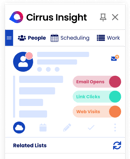
Cirrus Insight is the tool I reach for when a sales team lives in both Outlook and Salesforce. Its tracking feature, Buyer Signals, goes past the single open. It records link clicks and attachment opens too, then scores and ranks every contact so you can see who is actually warming up. When a lead's activity hits an engaged pattern, you get notified that it is time to call.
That is the real separation from the simpler tools further down this list. Where Mailsuite and Boomerang stop at opens, Cirrus rolls opens, clicks, attachment views, and replies into one engagement score. And where HubSpot logs activity to its own CRM, Cirrus syncs directly to Salesforce: emails, attachments, calendar events, and tasks all flow into the org you already report on.
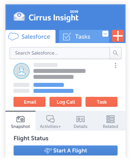
Around the tracking sits the rest of the platform. Smart Scheduler kills the back-and-forth on meeting times, and Flight Plans let reps build email cadences and follow-up sequences without leaving the inbox. It is built for the seller who wants the CRM to stay clean without doing the data entry.
The catch is that most of that value assumes Salesforce. If you are not on Salesforce, a lighter add-in will serve you better, and the deeper features carry more setup than a one-click tracker.
Pros
- Rolls opens, clicks, attachments, and replies into engagement history timelines
- Native Salesforce sync for emails, attachments, events, and tasks
- Attachment and link tracking, plus scheduling and email campaigns in one tool
Cons
- Most of the value depends on using Salesforce
- More setup than a simple inbox add-in
- Premium editions cost more than single-purpose trackers
Cirrus Insight pricing: Pricing for buyer signals can start as little as $10/user/month, with modular feature add-ons. 14-day free trial, no credit card required.
Best for tracking proposal and attachment engagement
Yesware (Outlook, Gmail)
Category type: All-in-one sales platform
Yesware earns its spot on one standout feature: page-level attachment tracking. Send a PDF proposal and Yesware tells you which pages the prospect opened and how long they lingered on each. If you sell on documents, knowing a buyer spent four minutes on the pricing page changes how you open the follow-up call.
Beyond that, it does the core job well inside both Outlook and Gmail: opens, clicks, and reply tracking, plus templates and multi-step campaigns. It also connects to Salesforce, though that sync is lighter than what you get from Cirrus Insight, and the deepest Salesforce features sit on the Enterprise tier.
The limits are worth naming. The free plan only keeps tracking data for the last 24 hours, which is barely enough to evaluate the tool. And the per-seat price climbs quickly once a team scales.
Pros
- Page-level attachment tracking shows which pages a prospect viewed
- Native Outlook and Gmail add-in with templates and campaigns
- Reply tracking alongside opens and clicks
Cons
- Salesforce sync features gated to the Enterprise tier
- Free plan keeps tracking data only 24 hours
- Per-seat cost climbs for larger teams
Yesware pricing: Free (limited); Pro $19/seat/mo, Premium $45/seat/mo, Enterprise $85/seat/mo.
Best for Teams Already on HubSpot CRM
HubSpot Sales Hub (Outlook, Gmail)
Category type: All-in-one sales and CRM platform
If your team already runs on HubSpot, adding email tracking is almost free effort. Install the Outlook add-in and every open and click lands automatically on the contact's timeline, with a real-time notification when a prospect opens your message. Tracking tied to the CRM record is the whole point here.
The comparison with Cirrus Insight is clean: both wire tracking into a CRM, but the CRM is different. Cirrus feeds Salesforce, HubSpot feeds HubSpot. Pick based on where your revenue data already lives.
The free tier is genuinely useful for open tracking, but it caps you at 200 notifications a month and does not include click tracking. To unlock clicks and heavier use, you are onto a paid Sales Hub seat. And if you only need tracking, standing up an entire CRM platform is a lot of overhead.
Pros
- Opens and clicks log straight to the CRM contact timeline
- Free tier includes basic open tracking
- Real-time desktop notifications on open
Cons
- Free plan caps at 200 notifications a month and no click tracking
- Overkill if you only need email tracking
- Click tracking requires a paid Sales Hub seat
HubSpot Sales Hub pricing: Free tier available; paid Sales Hub from $15/seat/mo.
Best for Combining Tracking With Scheduling and Automation
Mixmax (Outlook, Gmail)
Category type: All-in-one sales platform
Mixmax is the pick when you want tracking to trigger action, not just report it. You get real-time open, click, and attachment tracking, and on top of it sequences, calendar scheduling, one-click polls, and a rules engine that automates follow-up steps based on what a recipient does.
It used to be Gmail-first, but it now supports Outlook, which is what puts it on this list. Against Boomerang it offers far more automation, and against Cirrus Insight and HubSpot it is less CRM-native, so think of it as the workflow layer rather than the system of record.
Two caveats. The Outlook version is newer than the Gmail one, so expect the Gmail experience to feel more polished. And the free plan is thin, capping tracked emails and adding Mixmax branding, with cost rising as you add seats.
Pros
- Tracking, scheduling, and workflow automation in one add-in
- Rules engine triggers follow-ups from opens and clicks
- Live notifications on recipient activity
Cons
- Outlook support is newer and less mature than the Gmail version
- Free plan is limited and adds branding
- Cost climbs as you add seats
Mixmax pricing: Free (limited); SMB plans from $29/mo; Salesforce integration around $69/mo.
Best for Cold Email Outreach at Volume
SalesHandy (Outlook, Gmail, SMTP)
Category type: Cold-outreach platform
SalesHandy is built for people running cold email at volume, and its headline is a free plan with unlimited open tracking and no per-email cap. That alone makes it worth a look before you pay for anything.
Where it pulls ahead of a simple tracker is campaigns. Open and click tracking runs across entire sequences, and features like inbox rotation and custom tracking domains protect your sender reputation when you send at scale. Unlike Cirrus Insight or HubSpot, though, it is outreach-first, not a CRM, so it is the wrong shape if you want tracking tied to deal records.
The trade-off is focus. For one-off emails to a handful of prospects, SalesHandy is more machine than you need, and the deeper analytics live behind the paid plans.
Pros
- Free plan with unlimited open tracking, no per-email cap
- Open and click tracking across full campaigns
- Custom tracking domain and inbox rotation for deliverability
Cons
- Not a CRM, so no deal-level context
- Heavier than needed for one-off email tracking
- Deeper analytics require a paid plan
SalesHandy pricing: Free plan available; paid plans from about $25/mo.
Best for Cross-Platform Tracking Across Outlook, Gmail, and Apple Mail
Mailbutler (Outlook, Gmail, Apple Mail)
Category type: Lightweight inbox add-in
Mailbutler is the rare tracking add-in that works across Outlook, Gmail, and Apple Mail, which makes it the natural pick for a team that is not standardized on one client. You get open and click tracking, plus a lightweight CRM layer of contacts, tasks, and notes, send-later, and an AI Smart Assistant, all from the inbox.
It is also the cheapest paid tracking on this list, undercutting even Boomerang and Mailsuite on entry price. If budget is the constraint and you still want click tracking, it is hard to argue with.
The limitations are structural. Mailbutler runs tracking off a shared domain, which makes it more sensitive to deliverability problems if other users abuse it, and its Outlook integration is shallower than an Outlook-first tool like Yesware. Cross-platform breadth costs some depth.
Pros
- Works across Outlook, Gmail, and Apple Mail
- Cheapest paid tracking plan on this list
- Lightweight CRM with contacts, tasks, and notes built in
Cons
- Shared tracking domain raises deliverability sensitivity
- Outlook integration shallower than Outlook-first tools
- Features spread across several plan tiers
Mailbutler pricing: Tracking plan $4.95/mo, Professional $8.95/mo, Smart $14.95/mo, Business $32.95/mo.
Best for simple read receipts and send-later
Boomerang (Outlook, Gmail)
Category type: Lightweight inbox add-in
Boomerang for Outlook is the tool I point people to when they want the basics done cheaply and nothing more. The free plan covers read receipts, click tracking, and response tracking, and Boomerang for Outlook is a genuine add-in, not a Gmail port bolted on.
On top of tracking, it adds send-later scheduling and follow-up reminders, so an email you send today can nudge you if nobody replies by Thursday. Against Mixmax, it is far simpler with no automation engine, and unlike Cirrus Insight, there is no CRM sync at all.
That simplicity is the point and the limit. Analytics are light, there is no pipeline context, and the interface feels dated next to newer tools. For an individual who just wants to know if an email landed, that is a fair trade.
Pros
- Free plan includes read receipts and click tracking
- A genuine Outlook add-in, not a Gmail port
- Send-later scheduling and follow-up reminders included
Cons
- Light analytics with no pipeline context
- No CRM sync
- Interface feels dated
Boomerang pricing: Free plan available; Personal from $4.99/mo.
Best for Free Unlimited Open Tracking
Mailsuite (Outlook, Gmail)
Category type: Lightweight inbox add-in
Mailsuite, which you may remember as Mailtrack, is the simplest tool here and the one to install if all you want is to know whether an email was opened, for free. Its pixel-based tracking is free and unlimited, marked with the double-check UX that anyone who has used a messaging app understands instantly.
The catch on the free plan is a 'Sent with Mailsuite' signature on every email, which can read as unprofessional in a client or sales context. Upgrading removes the branding and unlocks click tracking and open counts, so you can see how many times a message was reopened, not just whether it was.
Set against Cirrus Insight's Buyer Signals, Mailsuite is opens-only with no scoring and no CRM, and like most lightweight trackers it runs on a single tracking domain. It is a starting point, not a sales system.
Pros
- Free and unlimited open tracking
- Simple double-check UX and an Outlook add-in
- Available across Outlook and Gmail
Cons
- Free plan adds a promotional signature to every email
- Click tracking requires a paid plan
- Opens only, with no CRM or scoring
Mailsuite pricing: Free (unlimited opens, with signature); Pro from $4.99/mo.
Honorable Mentions
EmailAnalytics. Connects by API rather than a pixel, so it adds no deliverability risk, and measures team-level metrics like average response time and email volume across Outlook and Gmail. Best for managers who care about reply speed more than individual opens. From $19/inbox/mo.
BananaTag (now Staffbase). Dropped from the main list on purpose. It moved upmarket into internal communications and employee newsletters, so it is no longer an Outlook sales tracker.
The Limits of Email Tracking in Outlook
Even the best tracker has blind spots, and pretending otherwise sets you up to misread your pipeline. A few things to keep in mind:
Opens are not gospel. Previews, spam filters, and corporate security bots can all register an open before a human sees the message. In Outlook-heavy corporate environments, open tracking can run meaningfully inaccurate.
Apple Mail Privacy Protection skews opens. It pre-loads tracking pixels, registering an open whether or not the recipient actually read the email.
Pixels can be blocked. Some recipients run security software or clients that strip tracking pixels entirely.
Shared tracking domains carry risk. If a tool routes everyone through one shared domain and other users send spam, your deliverability suffers too. Dedicated tracking domains on higher tiers fix this.
Replies and attachments often go untracked. Native Outlook will not log a reply to your CRM or tell you an attachment was opened. Tools like Cirrus Insight (Salesforce sync) and Yesware (attachment tracking) will.
The takeaway: use tracking for trends and signals, not absolute truth. Cirrus Insight softens the noise by combining opens, clicks, attachment views, and replies into a single engagement score rather than betting on any one signal.
Why Track Emails in Outlook at All?
Tracking earns its place because it replaces guessing with signals. You can see who read your email and who did not, then write a follow-up aimed at the right person at the right time.
It also teaches you what works. Open and click rates show which subject lines and messages land, so you can do more of what gets replies. Repeat opens flag your warmest leads, the ones worth a call today. And if you send contracts, invoices, or proposals, tracking tells you the moment they get looked at.
Which Outlook Email Tracker Should You Choose?
There is no single best Outlook email tracker. The right one depends on your stack and your budget. If you send proposals, Yesware's page-level attachment tracking is hard to beat. If you just want free opens, Mailsuite does the job. If you run cold outreach at volume, SalesHandy is built for it. Pick for the workflow you actually have.
But if you are an Outlook team running on Salesforce and you want opens, clicks, attachments, and replies rolled into one buyer signal, that is exactly what Cirrus Insight was built for. Start the 14-day free trial, no credit card required.
Outlook Email Tracking FAQs
Can Outlook track emails natively?
Yes, Outlook offers read receipts, but they are limited and depend on the recipient agreeing to them, and most decline. For reliable tracking, professionals use a third-party tool.
Is email tracking legal?
Generally yes, as long as you comply with privacy laws like GDPR and CCPA. Respect opt-outs and be transparent about how you use the data.
Will my recipients know I am tracking emails?
Usually not, since tracking pixels are invisible. Some recipients run blockers, and Apple Mail Privacy Protection can register opens that did not happen, so treat open data as directional.
What is the best free email tracking tool for Outlook?
Mailsuite and Boomerang both offer free plans, and SalesHandy offers free unlimited open tracking. For a sales team that needs scoring and CRM sync, Cirrus Insight gives far more.
Can I track attachments in Outlook emails?
Not natively. Cirrus Insight tracks whether attachments were opened and links clicked, and Yesware adds page-level attachment tracking that shows which pages a prospect viewed.


.png?width=18&height=18&name=Vector%20(5).png)