.png?width=18&height=18&name=Vector%20(5).png)

Sales engagement platforms were supposed to make selling easier.
Instead, for many teams, they’ve become another dashboard to manage, another system to maintain, and another layer sitting on top of Salesforce that still depends on reps updating data correctly.
Salesloft is one of the biggest names in the space and for structured outbound teams, it can be powerful. But as revenue motions evolve, so do expectations. Teams want:
- Smarter automation
- Cleaner CRM data
- Less manual admin
- Better forecasting alignment
- And workflows that actually reduce tool fatigue
That’s why more revenue leaders are searching for Salesloft alternatives, not because Salesloft “doesn’t work,” but because it might not fit how their team actually sells today.
If you’re reassessing your sales engagement strategy, this guide breaks down the 10 best Salesloft alternatives in 2026 and helps you decide which direction makes the most sense for your revenue motion.
Why Teams Look for Salesloft Alternatives
Salesloft is built for structured, high-volume sales engagement. But not every revenue team runs the same motion and that’s usually where friction starts.
Here’s why companies begin exploring alternatives to Salesloft:
- High per-seat pricing that scales quickly as teams grow
- Heavy implementation and admin lift that requires ongoing management
- Feature overlap with CRM, forecasting, or intelligence tools already in place
- Cadence fatigue, where automation starts to feel robotic rather than personalized
- Manual CRM dependency, where reps still have to update Salesforce themselves
- Tool sprawl, especially when teams are also evaluating alternatives to Outreach and Salesloft at the same time
To summarize: Salesloft works well for certain outbound-heavy teams. But if your revenue motion prioritizes automation inside Salesforce, meeting intelligence, or reducing operational complexity, you may need something different.
If you’re running into those friction points, here are the 10 best Salesloft alternatives in 2026 and who each one is actually best for.
1. Cirrus Insight (Salesforce-Native Engagement + Meeting Intelligence)
If Salesloft is engagement-first, Cirrus Insight is workflow-first.
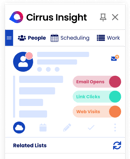
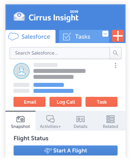
Instead of layering another engagement dashboard on top of Salesforce, Cirrus Insight operates directly inside your inbox and CRM, combining sales engagement, conversational intelligence, and meeting prep in one native environment.
Best for: Salesforce-driven revenue teams that want engagement + automation + meeting intelligence without tool sprawl.
Core strength: CRM-native automation that eliminates manual data entry while enhancing rep execution.
CRM integration depth: Fully Salesforce-native. Automatic sync of emails, meetings, tasks, engagement signals, and opportunity context.
AI / Automation capabilities:
- Automatic email & calendar sync to Salesforce
- AI-powered pre-meeting research (Meeting AI)
- Conversational Insights tied to CRM records
- AI meeting summaries
- Buyer signals (opens, clicks, attachment tracking)
- Smart Scheduler with routing & load balancing
- Sales cadences
- Live coaching nudges
Pricing tier: Mid-market friendly; significantly lighter than enterprise engagement suites.
Pros:
- Covers what Salesloft does, email engagement, scheduling, tracking
- Adds AI meeting prep + CRM-native sync
- Faster implementation
- Reduces admin burden
- Improves forecasting accuracy via clean CRM data
Limitations:
- Not built as a pure outbound sequencing engine at enterprise scale
- Less focused on multi-channel SDR orchestration
Positioning vs Salesloft: Salesloft focuses on engagement volume. Cirrus focuses on execution + automation + Salesforce accuracy.

2. Outreach (Enterprise Engagement Competitor)
Outreach is the most direct enterprise alternative to Salesloft.
Best for: Large outbound teams with structured multi-channel sequences.
Core strength: Advanced sequencing and workflow automation.
CRM integration depth: Strong Salesforce and CRM integrations, but still layered on top.
AI / Automation Capabilities:
- Advanced multi-channel cadences
- Deal risk insights
- Forecasting modules
- AI sequencing suggestions
Pricing tier: Enterprise-level; comparable to Salesloft.
Pros:
- Deep outbound orchestration
- Enterprise scalability
- Strong reporting
Limitations:
- Complex setup
- High cost
- Admin-heavy
3. HubSpot Sales Hub
HubSpot blends CRM + engagement inside one platform.
Best for: Teams already using HubSpot CRM.
Core strength: All-in-one ecosystem
CRM integration depth: Native within HubSpot; lighter for Salesforce users
AI / Automation Capabilities:
- Email sequences
- Meeting scheduling
- Reporting dashboards
- AI writing assistants
Pricing tier: Scales from SMB to enterprise.
Pros:
- Easy onboarding
- Unified platform
Limitations:
- Less advanced engagement than Salesloft
- Not ideal for Salesforce-native teams
4. Apollo.io
Apollo merges prospecting database + sequencing.
Best for: Outbound-heavy SDR teams needing data + engagement.
Core strength: Prospecting at scale
CRM integration depth: Good integrations but not deeply CRM-native
AI / automation capabilities:
- Sequencing
- Lead enrichment
- Basic analytics
Pricing tier: More affordable than enterprise suites.
Pros:
- Strong data access
- Budget-friendly
Limitations:
- Lighter CRM automation
- Less forecasting alignment
5. Groove (Clari-owned)
Groove blends engagement with revenue intelligence alignment.
Best for: Salesforce-heavy teams wanting tighter forecasting integration.
Core strengthftrength: Sales engagement + Clari forecasting ecosystem.
CRM integration depth: Strong Salesforce integration.
AI / Automation Capabilities:
- Sequences
- Call tracking
- Forecast alignment
Pricing tier: Enterprise-leaning
Pros:
- Deep Salesforce compatibility
- Revenue alignment
Limitations:
- Higher cost
- Complexity
6. Mixmax
Inbox-first engagement tool for Gmail users.
Best for: SMBs wanting lightweight sequencing.
Core strength: Email-first productivity.
CRM integration depth: Integrates with Salesforce but not fully native.
AI / Automation Capabilities:
- Email templates
- Scheduling
- Tracking
Pricing tier: Mid-range.
Pros:
- Easy to use
- Fast setup
Limitations:
- Limited forecasting intelligence
- Lighter automation
7. Reply.io
Outbound automation platform.
Best for: High-volume cold outreach teams.
Core strength: Multi-channel sequences.
CRM integration depth: Integrations available; not CRM-native.
AI / Automation Capabilities:
- Automated follow-ups
- AI email suggestions
Pricing tier: SMB to mid-market.
Pros:
- Affordable
- Strong automation
Limitations:
- Less CRM-centric
- Limited meeting intelligence
8. Yesware
Simple email tracking + templates.
Best for: Small teams needing basic tracking
Core strength: Lightweight Gmail add-on
CRM integration depth: Basic Salesforce integration
AI / Automation Capabilities:
- Email tracking
- Templates
Pricing tier: Lower-cost option.
Pros:
- Simple
- Easy adoption
Limitations:
- Limited scaling
- No advanced forecasting
9. Lemlist
Personalized outbound campaigns.
Best for: Creative outbound teams
Core strength: Personalization at scale
CRM Integration Depth: Integration available but not deeply native
AI / Automation Capabilities:
- Image personalization
- Sequences
Pricing tier: Mid-range
Pros:
- Strong personalization
- Outbound-focused
Limitations:
- Not built for CRM-driven forecasting
10. Freshsales
CRM + engagement combined.
Best for: Teams wanting CRM + sales engagement in one system.
Core strength: Integrated platform approach.
CRM integration depth: Native inside Freshsales CRM.
AI / automation capabilities:
- Sequences
- AI lead scoring
Pricing tier: Affordable compared to enterprise engagement suites.
Pros:
- Unified experience
- Lower cost
Limitations:
- Less advanced than enterprise engagement platforms
- Not ideal for Salesforce-heavy organizations
Salesloft Alternatives: Strategic Comparison Overview
|
Tool |
Implementation speed |
Forecasting alignment |
Workflow complexity |
|
Cirrus Insight |
Fast (Salesforce-native, inbox-first setup) |
High, automatic CRM sync improves data accuracy |
Low with minimal tab switching |
|
Salesloft |
Moderate |
Medium, depends on CRM hygiene |
Moderate, cadence management required |
|
Outreach |
Slower (enterprise onboarding) |
Medium to High, RevOps dependent |
High, complex workflows |
|
HubSpot Sales Hub |
Moderate |
High (within HubSpot CRM) |
Moderate |
|
Apollo.io |
Fast |
Low – not forecasting-centric |
Moderate |
|
Groove |
Moderate |
High (Salesforce-aligned) |
Moderate |
|
Mixmax |
Fast |
Low |
Low |
|
Reply.io |
Fast |
Low |
Moderate |
|
Freshsales |
Moderate |
Medium (inside Freshsales CRM) |
Low to Moderate |
How to Choose the Right Salesloft Alternative
Choosing the right Salesloft alternative isn’t about finding a tool with more features, it’s about finding one that fits your revenue motion.
Before switching platforms, step back and ask a simple question:
What’s actually slowing your team down right now?
Here’s a practical way to think through the decision.
1. Define Your Sales Motion
Not every team sells the same way.
- High-volume outbound SDR team? You may need advanced sequencing and multi-channel orchestration.
- Account-based or relationship-driven team? You may benefit more from CRM-native automation and meeting intelligence.
- Enterprise forecasting-heavy org? CRM alignment and pipeline visibility matter more than sheer engagement volume.
The right tool supports how you sell, not how vendors think you should sell.
2. Evaluate CRM Dependency
If you’re running Salesforce, this is critical.
Ask yourself:
- Are reps manually updating CRM fields?
- Is forecasting suffering due to incomplete activity logging?
- Do managers distrust pipeline data?
If CRM hygiene is the problem, a Salesforce-native automation platform may deliver more value than a pure engagement tool.
3. Assess Operational Complexity
Some engagement platforms require:
- Dedicated RevOps management
- Ongoing sequence optimization
- Admin-heavy governance
If your team is lean, complexity can become friction fast.
Sometimes the best alternative is the one that reduces tool sprawl not adds to it.
Why Cirrus Insight Is the Smarter Salesloft Alternative for Salesforce Teams
Salesloft is built to drive structured engagement. For the right outbound-heavy team, that works.
But if your revenue engine runs on Salesforce and your biggest challenges are manual CRM updates, meeting prep gaps, forecasting misalignment, and tool fatigue, you may not need another engagement layer.
You may need automation inside your workflow.
That’s where Cirrus Insight stands apart.
Instead of adding another dashboard, Cirrus operates directly inside your inbox and Salesforce, combining:
- Automatic email and meeting sync with Salesforce: Every interaction logs to the correct lead, contact, or opportunity
- AI-powered meeting summaries tied to deal records: Not stored in another dashboard, embedded inside your CRM
- Automated task creation and follow-up tracking: Action items don’t get forgotten
- Buyer Signals and email tracking: See who opened emails, clicked links, or engaged with attachments, and prioritize accordingly
- Smart Scheduler with intelligent routing: Eliminate scheduling friction while keeping CRM data clean
- Sales Cadences built inside your inbox: Structured follow-up without switching tools.
If Salesloft feels heavy, complex, or disconnected from your CRM reality, Cirrus Insight offers a lighter, faster-to-implement alternative that aligns sales engagement, meeting intelligence, and Salesforce automation in one unified workflow.
Salesloft Alternatives FAQs
What are the best Salesloft alternatives in 2026?
The best Salesloft alternatives include Cirrus Insight, Outreach, HubSpot Sales Hub, Apollo.io, Groove, and Mixmax. The right choice depends on whether your team prioritizes outbound sequencing, CRM-native automation, forecasting alignment, or AI-powered meeting intelligence.
Why do companies look for alternatives to Salesloft?
Teams typically search for Salesloft alternatives due to high per-seat pricing, implementation complexity, heavy admin management, or the need for deeper Salesforce-native automation. Others want better CRM accuracy, meeting intelligence, or a lighter workflow.
What is the best Salesforce-native alternative to Salesloft?
For Salesforce-driven revenue teams, Cirrus Insight is a strong alternative because it combines sales engagement, AI meeting prep, buyer signals, and automatic CRM sync directly inside Salesforce and the inbox. This reduces manual data entry and improves forecasting accuracy.
What are alternatives to Outreach and Salesloft?
Common alternatives to Outreach and Salesloft include Cirrus Insight, Apollo.io, HubSpot Sales Hub, Groove, and Reply.io. CRM-native automation platforms are often chosen by teams looking to simplify their tech stack and reduce tool sprawl.
Is there a cheaper alternative to Salesloft?
Yes, tools like Apollo.io, Mixmax, Reply.io, and Yesware typically offer lower starting price tiers than enterprise engagement platforms like Salesloft. However, lower cost tools may offer fewer enterprise-level features.
What is the difference between Salesloft and CRM-native automation tools?
Salesloft focuses on sales engagement through cadences and sequencing, while CRM-native automation tools prioritize automatic data sync, meeting intelligence, forecasting accuracy, and workflow efficiency inside Salesforce.
Are there free Salesloft alternatives?
Some tools such as Apollo.io and HubSpot Sales Hub offer limited free plans or trials. Fully featured enterprise engagement platforms typically require paid subscriptions.
Which Salesloft alternative is best for SMB sales teams?
SMB teams often benefit from lighter-weight tools like Apollo.io, Mixmax, or CRM-native automation platforms that reduce complexity and implementation overhead while still supporting engagement and scheduling workflows.