.png?width=18&height=18&name=Vector%20(5).png)


What Is Sales Preparation?
Sales preparation is the process of researching prospects, analyzing CRM data, anticipating objections, and planning strategic messaging before a sales call or meeting. Effective sales preparation ensures that reps enter conversations with clarity, confidence, and buyer-relevant insights.
In B2B environments, sales preparation goes beyond basic research. It includes:
- Reviewing CRM interaction history
- Identifying decision-makers and stakeholders
- Analyzing industry trends and competitor positioning
- Preparing responses to likely objections
- Aligning messaging to the prospect’s goals
Modern AI sales preparation tools now enhance this process by automating research, surfacing engagement signals, and summarizing relevant insights before meetings.
Strong pre-sales call preparation doesn’t just improve first impressions; it directly impacts pipeline health, win rates, and revenue predictability.
Phase 1: Build an Intelligence Foundation Before Every Sales Call
Sales preparation begins long before a rep joins a Zoom call or steps into a boardroom.
It starts with intelligence.
Strong pre-sales call preparation is not about glancing at a LinkedIn profile five minutes before a meeting. It’s about gathering strategic insights that shape how the entire conversation unfolds.
High-performing B2B teams treat research as a competitive advantage. They enter meetings already understanding the buyer’s environment, pressures, and priorities, not just their job title.
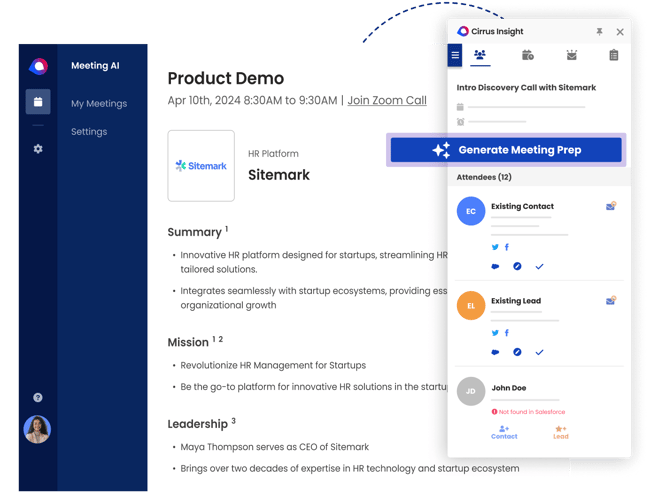
AI-powered tools can streamline this process. Rather than gathering all this data by hand, sales teams can leverage solutions like Meeting AI to automatically compile and deliver crucial insights, reducing the time spent on
Here’s how to build that foundation.
Go Beyond Basic Prospect Research
Too many sales reps stop at surface-level information:
- Company size
- Industry
- Revenue
- Job title
That data is table stakes.
Effective sales call preparation goes deeper.
Before every meeting, reps should aim to uncover:
- Recent company announcements or funding rounds
- Hiring trends that indicate growth or restructuring
- Leadership changes
- Press releases or product launches
- Public earnings reports (for enterprise prospects)
- Regulatory or market pressures affecting the industry
Most importantly, they should identify likely pain points.
Ask:
- What operational inefficiencies might this company face?
- What KPIs is this role accountable for?
- What external forces are shaping their priorities right now?
This level of research transforms a generic pitch into a tailored strategic discussion.
Turn CRM Data Into Strategic Advantage
Sales preparation doesn’t rely only on external research. Your CRM holds a powerful layer of internal intelligence if it’s used correctly.
A CRM like Salesforce contains:
- Historical email conversations
- Previous meeting notes
- Opportunity stage movement
- Lost deal reasons
- Engagement frequency
- Buying patterns across similar accounts
When reviewing a prospect before a call, reps should examine:
- Has this company engaged with us before?
- What objections were raised previously?
- Where have similar companies stalled in the pipeline?
- What content has this contact interacted with?
Beyond individual insights, CRM data can reveal broader industry trends. For example:
- Are companies in this sector slowing deal velocity?
- Are certain job titles converting faster?
- Are pricing objections rising in this segment?
This type of intelligence elevates sales preparation from reactive to strategic.
But there’s a catch.
CRM data is only useful if it’s accurate.
According to Zippia, sales reps spend about 17.9% of their time, roughly 1.6 hours per day, using CRM systems. If half of that time is spent on manual data entry and admin tasks, that’s around 48 minutes lost daily. For a mid-sized team of 50 reps working 250 days per year, this adds up to almost 10,000 hours wasted each year.
Phase 2: Structure the Conversation Before It Happens
Intelligence alone doesn’t close deals.
Execution does.
The difference between average and elite sales preparation is not how much research a rep gathers; it’s how well they convert that research into a structured, intentional conversation.
High-performing B2B sales teams never “wing” discovery calls. They walk in with a clear call architecture, defined objectives, and anticipated friction points.
Here’s how to operationalize strategic sales call preparation.
Map the Buyer Ecosystem Before the First Question
In complex B2B environments, buying decisions are rarely made by one person.
Effective pre-sales call preparation includes mapping the full buyer ecosystem before the meeting begins.
Reps should identify:
- The economic buyer (controls budget)
- The technical evaluator (assesses feasibility)
- The day-to-day user (experiences impact)
- The internal champion (advocates for the solution)
- Potential blockers (risk-averse stakeholders)
This prevents single-threaded deals and reduces late-stage surprises.
Beyond roles, sales reps should clarify:
- What KPIs is each stakeholder measured on?
- What pressures are they facing internally?
- What does success look like for each person?
When you understand the internal dynamics before the conversation begins, your messaging becomes multi-dimensional rather than one-size-fits-all.
That’s the difference between a generic sales pitch and a strategic B2B sales conversation.
Prepare Competitive Positioning Before It’s Raised
One of the biggest failures in sales preparation is reacting to competitive objections instead of anticipating them.
Before every sales call, reps should ask:
- Who else is likely being evaluated?
- Where do we typically win against them?
- Where do we typically lose?
- What objection is most likely to surface?
Competitive positioning analysis should include:
- Feature differentiation
- Pricing comparison awareness
- Integration advantages
- Implementation friction points
- Customer support strength
Sync Salesforce with Your Inbox
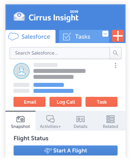
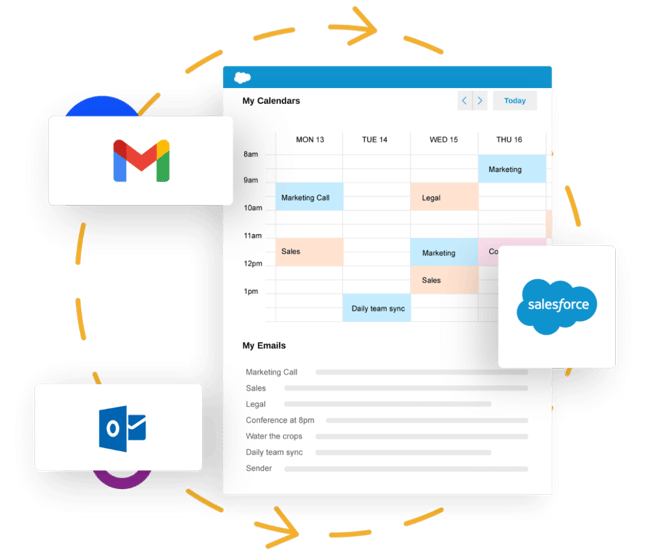
Automate data entry with Salesforce Sync to keep your CRM records up-to-date while freeing up valuable time for your team. This Cirrus Insight solution syncs all your Gmail or Outlook emails, calendar meetings, and tasks with Salesforce, ensuring information on contacts and leads is always accurate and fully recorded.
When a competitor inevitably comes up, prepared reps respond calmly and confidently, because they’ve already rehearsed that moment.
This shifts the dynamic from defensive to authoritative.
Align Messaging to Buyer Personas and Business Outcomes
Data is powerful. But framing drives decisions.
Effective sales preparation requires tailoring messaging to the buyer’s operational and emotional drivers.
Before the meeting, reps should clarify:
- What business objective is this prospect accountable for?
- What would failure look like for them?
- What internal initiative does this project support?
- How does this solution impact their metrics?
Instead of leading with product features, the conversation should begin with outcome alignment.
For example:
Instead of saying, “Our platform automates reporting,”
Say, “Based on your recent growth stage and hiring trends, it looks like reporting scalability may be becoming a bottleneck. Is that accurate?”
Phase 3: Accelerate the Pipeline After the Call
You can execute flawless research and deliver a strong sales conversation, but if your follow-up lacks speed, clarity, or prioritization, pipeline momentum collapses.
Elite sales teams treat post-call execution as a structured extension of sales preparation, not an afterthought.
Here’s how Phase 3 transforms preparation into revenue.
Create a Structured Follow-Up System
One of the most overlooked elements of sales preparation is planning the follow-up before the call even begins.
Reps should never leave a meeting without:
- Confirming next steps
- Clarifying decision timelines
- Identifying additional stakeholders
- Scheduling the next meeting live
Then comes the execution window.
Speed matters.
Research consistently shows that the first company to respond often wins the deal. Delayed follow-ups create space for competitors to reframe the narrative.
Effective follow-up strategy includes:
- Sending a recap email within 24 hours
- Summarizing agreed-upon objectives
- Reinforcing value alignment discussed in the call
- Providing relevant collateral
- Reconfirming the next milestone
Sales preparation includes preparing follow-up templates in advance, so execution is fast, consistent, and personalized.
Momentum compounds.
Silence kills deals.
Prioritize Based on Engagement, Not Assumption
Not all prospects deserve equal follow-up intensity.
This is where engagement data changes everything.
Modern sales teams can analyze behavioral signals such as:
- Email opens
- Link clicks
- Attachment views
- Meeting bookings
- Calendar interactions
- Response speed
These signals reveal buying intent.
Instead of asking, “Who should I follow up with today?”
Reps should ask, “Who is demonstrating intent right now?”
AI-driven engagement scoring systems help sales teams:
- Identify hot leads
- Detect stalled deals
- Surface re-engagement opportunities
- Reduce time wasted on cold prospects
Preparation in Phase 3 means building a system that tells you where to focus, instead of relying on gut feeling.
Use Lifecycle Tracking to Prevent Deal Leakage
One of the biggest pipeline killers is invisible stagnation.
Deals sit in the same stage. Emails go unanswered. Internal approvals stall.
Reps and managers should review:
- Days in stage
- Engagement frequency changes
- Meeting cadence patterns
- Response delays
- Competitive mentions
When activity drops, intervention should happen immediately.
AI-enhanced CRM systems can flag at-risk opportunities automatically, allowing teams to:
- Re-engage with new value propositions
- Escalate conversations
- Introduce additional stakeholders
- Reset urgency
Pipeline acceleration isn’t about pushing harder.
It’s about reacting faster.
Practical Tips For Effective Sales Preparation
Achieving strong outcomes depends on the guidance of sales leaders and account executives, tasked with instilling good habits in their teams.
Let’s explore some key preparation strategies for coaching your reps through the pre-meeting stage. Boost your sales KPIs by turning more hot leads into the company’s newest customers.
In-Depth Client Ecosystem Mapping
Encourage your sales team to map out the organizational structure of prospects that are in the opportunity stage to identify key stakeholders and decision-makers. This process, known as ecosystem mapping, enables your team to strategically target the right people and craft more personalized pitches.
Effective mapping should also explore these individuals’ short- and long-term goals, allowing your reps to tailor their messaging to address specific objectives.
Understanding a prospect’s existing tech stack is also crucial. By showing how your product integrates with their software and systems, you can position it as a natural fit within their current ecosystem and highlight integration points that add value.
Competitive Positioning Analysis
Conduct a SWOT analysis of your competitors to evaluate their strengths, weaknesses, opportunities, and threads (as the acronym suggests). When targeting leads, this type of research empowers sales teams to understand where market opponents excel, and where they fall short.
Armed with this information, sales reps can better position your product to prospects and emphasize how it addresses gaps that the competition can’t fill.
Data-Driven Persona Development & Storytelling
Sales intent is essential, but how that data is presented could make the difference between a successful pitch and a missed opportunity.
Encourage your team to weave data into a compelling narrative that addresses their prospect’s pain points, showing how your solutions are uniquely suited to resolving them. Engaging leads on an emotional level can make your pitch more memorable and impactful.
Using buyer personas can further enhance this process. Developed through audience and market research, these personas are detailed profiles of your ideal customers and key stakeholders, often including demographics, behaviors, interests, and challenges.
Referencing your company’s buyer personas before their calls can help reps in targeting their messaging and strategy.
Scenario Planning & Objective Handling
Pre-call preparation should also involve anticipating objections. To field potential concerns and doubts from leads, try developing a detailed set of sales scripts to cover both good and bad scenarios that might arise.
Encourage your team to practice these scripts in pairs or small groups, focusing not only on objection handling but also on refining their closing techniques. By rehearsing how to transition objections into opportunities for closing the sale, they can build confidence in their ability to secure deals.
Make this a regular exercise, revisiting scripts quarterly or when new scenarios emerge, to ensure these skills remain sharp and top-of-mind during high-stakes conversations.
Bringing Together AI and Your Sales Enablement Tools
Sales teams often complain they don’t have the work hours to properly prepare for their high-volume of calls.
How can you free up more time? Adding AI-driven sales enablement tools to your software stack is one option. Integrating these solutions into your sales process can help automate time-consuming tasks, like data entry and research, allowing for more breathing room to prep between calls.
Indeed, 54.6% of sales researchers that Cirrus Insight surveyed said they planned on implementing AI solutions for their pre-meeting research in the next 12 months.
Follow-Ups: The Unsung Hero When Prioritizing Hot Leads
Many leads quickly go cold from being left without a timely follow-up. After all, we’ve all seen that oft-quoted Lead Connect stat: 78% of prospects buy from the first company that replies to their inquiry.
But many sales teams aren’t equipped for speedy responses. Help mitigate this issue by adopting and following a comprehensive follow-up strategy with your sales team, complete with prepared email templates and clear timelines.
Additionally, implementing a sales lifecycle solution that captures prospect touchpoints and assigns scores to their actions can also be beneficial.
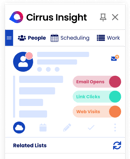
How to Spot High-Value ProspectsCirrus Insight’s Buyer Signals tool can help sales teams prioritize leads based on engagement. Each time a prospect opens an email or books a sales call, their interaction is scored to help reps decide who to follow up with first. |
Sales Preparation Becomes a Competitive Advantage with Cirrus Insight
Sales preparation is no longer optional. It’s the difference between reactive selling and strategic revenue generation.
From intelligence gathering to conversation architecture to post-call acceleration, strong sales preparation builds pipeline clarity, improves conversion rates, and reduces forecast volatility.
But there’s one persistent challenge: time.
When sales reps are buried in manual CRM updates, scattered research, and disconnected tools, preparation becomes inconsistent. And inconsistent preparation leads to inconsistent results.
That’s where Cirrus Insight creates leverage.
Cirrus Insight strengthens every phase of modern sales preparation by:
- Automatically syncing emails, meetings, and tasks to Salesforce
- Eliminating manual CRM data entry
- Capturing real-time engagement signals
- Surfacing buyer intent insights
- Prioritizing high-value prospects
- Delivering AI-powered meeting preparation summaries
- Providing full pipeline visibility inside the inbox
Instead of forcing reps to switch between platforms, Cirrus brings intelligence directly into their workflow, inside Gmail or Outlook.
Sales Preparation: FAQs
What is sales preparation?
Sales preparation is the process of researching prospects, analyzing CRM data, identifying buyer pain points, and planning messaging before a sales call or meeting to increase the likelihood of advancing an opportunity.
Why is pre-sales call preparation important?
Pre-sales call preparation improves credibility, shortens sales cycles, increases buyer trust, and ensures conversations focus on business outcomes instead of generic product pitches.
What are effective B2B sales conversation preparation techniques?
Effective B2B sales conversation preparation techniques include stakeholder mapping, competitive positioning analysis, hypothesis-driven questioning, objection rehearsal, and reviewing CRM engagement history before the meeting.
How does AI improve sales preparation?
AI sales preparation tools automate prospect research, summarize CRM activity, highlight engagement signals, and surface relevant insights, allowing reps to prepare faster and enter meetings with more strategic context.
What is the best AI tool for sales meeting preparation?
The best AI tool for sales meeting preparation integrates directly with CRM and email platforms, captures engagement data automatically, generates research summaries, and prioritizes high-intent prospects before calls.
How long should sales call preparation take?
Sales call preparation time varies by deal complexity, but AI-driven tools can significantly reduce manual research time while maintaining depth, allowing reps to prepare efficiently without sacrificing insight.
What should be included in a sales call preparation checklist?
A strong sales call preparation checklist includes reviewing CRM history, identifying key stakeholders, researching recent company developments, preparing tailored questions, anticipating objections, and defining next-step objectives.
How can CRM data improve sales preparation?
CRM data improves sales preparation by revealing past conversations, engagement patterns, deal progression history, and industry trends that help reps personalize messaging and anticipate buyer needs.
What role does follow-up play in sales preparation?
Follow-up planning is a critical part of sales preparation because defining next steps and response timing before the meeting ensures faster execution and reduces deal stagnation.