AI for sales is not about replacing reps. It is about removing the busywork that slows them down. McKinsey estimates generative AI can drive productivity gains by shifting time away from routine tasks and toward higher-value work.
This is especially true for the work that happens across your inbox, calendar, and CRM.
When AI is embedded where your team already works, it helps you prospect faster and prep smarter for meetings. It also keeps pipeline data accurate without extra clicks. Sell more. Update less.
In this guide, you will learn:
- What AI for sales actually means (without the hype)
- How AI bridges the gap between sales and marketing (For more detail, explore our sales gap analysis guide).
- The five highest-impact use cases across the pipeline
- How to roll out AI without hurting data quality
- What to look for in the best AI sales software for B2B teams
What Is AI for Sales?
AI for sales is the use of artificial intelligence to help sales teams find the right accounts, run better customer conversations, and move deals forward with cleaner pipeline data.
The best AI workflows reduce manual steps. They surface the right context at the right time and push the right activity back into Salesforce so your reporting stays reliable.
Bridging the Gap: AI for Sales and Marketing
When you look at AI for sales and marketing, the ultimate goal is alignment. These two departments historically struggle to share data smoothly. AI changes that by acting as a bridge.
Marketing teams use machine learning to analyze massive datasets, score lead intent, and run targeted campaigns. Sales teams then use that exact same data to execute.
Instead of a rep guessing why a lead was passed over, AI surfaces the context. Natural language processing (NLP) can scan a prospect's past interactions with marketing content and summarize their exact pain points. This means your sales team reaches out with a highly relevant message every single time.
Where AI Impacts the Pipeline Most
AI creates the biggest lift when it supports the moments that usually break momentum. Think about prospect research, meeting follow-up, and pipeline hygiene.
|
Pipeline Moment
|
Without AI
|
With AI
|
|
Prospecting
|
Tabs, tools, copy-paste notes
|
Faster research, better targeting
|
|
First meeting
|
Scramble for context
|
Pre-meeting brief, talking points
|
|
Follow-up
|
Notes get lost, next steps slip
|
Summary, action items, draft follow-up
|
|
Deal progression
|
“Next step” is unclear
|
Signals, reminders, recommended actions
|
|
Forecasting
|
Manual updates, uneven data
|
Cleaner inputs, fewer blind spots
|
How to Use AI for Sales: 5 Practical Workflows
To get real value out of artificial intelligence, you need to apply it directly to the tasks that slow your team down.
Here are five proven workflows to help you do exactly that.
1. AI for Sales Prospecting: Faster Research and Better Targeting
Prospecting is still a human skill. AI just removes the slow parts.
What AI does well here:
- Builds an account snapshot from public signals and your existing CRM history.
- Flags relevant triggers like company growth, product launches, or leadership changes.
- Uses generative AI to help you personalize outreach without starting from a blank page.
Practical workflow: Start with a target account list and your ideal customer profile filters. Use AI to generate a short brief per account. Pull a few tailored talking points you can reuse across email, calls, and meeting prep.
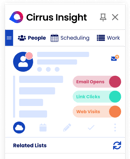
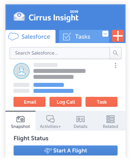
Where Cirrus Insight fits: If your team lives in Gmail or Outlook, AI prospecting works best when the research lands inside the workflow reps already use. This is exactly what Cirrus Insight's Meeting AI does. It automates pre-meeting research directly in your inbox so reps can focus on creating tailored pitches.
2. Predictive Lead Scoring: Focus Reps on the Right Deals
Predictive lead scoring helps you stop treating every lead like a priority. For more detail, explore our predictive sales ai guide.
What AI does well here:
- Uses machine learning to analyze historical conversion patterns.
- Scores leads and accounts based on fit and intent signals.
- Improves routing so high-quality leads do not sit untouched.
Signals that typically improve scoring:
- Engagement: email opens, replies, meeting acceptance, site intent.
- Fit: industry, size, tech stack, region.
- Pipeline behavior: stage velocity, multi-threading, next step dates.
What to watch out for: Lead scoring gets messy when your CRM data is incomplete or inconsistent. If your activity logging and contact data are unreliable, the model learns the wrong lessons.
3. AI Agents for Sales: Automate Follow-Up and Next Steps
Sales AI agents are moving beyond simple suggestions into actual actions. Think of an agent as a digital assistant. It can draft follow-ups based on the last meeting, create tasks, and update CRM fields based on agreed-upon next steps. This agentic direction is becoming a major theme in how sales tech is evolving.
For more detail, explore our ai sales agents guide.
Best use cases for AI agents in real pipelines:
- After discovery: summarize pain points, stakeholders, and success criteria.
- After demo: capture objections, confirm timeline, draft recap email.
- Before next meeting: list open questions and suggested agenda items.
- During stalled deals: flag inactivity and recommend a re-engagement step.
Guardrail: Agents should not be allowed to write to your CRM without clear rules. You want full admin control over what gets logged, where it lands, and who can edit it.
4. Real-Time Buyer Behavior Analysis: Spot Deal Risk Earlier
Most deals do not die in a dramatic way. They stall quietly. Real-time buyer behavior analysis helps you see when prospects engage with content, when engagement drops off, or when a new stakeholder appears late in the cycle.
How to make the most out of it: Focus on timing and relevance, not surveillance. The goal is to follow up when it helps the buyer, not when it pressures them.
High-signal moments worth acting on:
- A prospect views a proposal and forwards it internally.
- A key stakeholder opens the same email multiple times.
- Engagement stops right after pricing is shared.
5. Sales Forecasting and Revenue Prediction: Improve the Inputs
Forecasting problems are usually data problems.
AI can improve forecasting by detecting patterns across pipeline movement and highlighting risk signals. It flags deals with no next step, no champion activity, or single-threaded conversations. It also reduces manual update effort so reps keep opportunities current.
Reality check: Sales forecasting tools are only as good as the underlying activity capture and stage hygiene. If reps are not logging consistently, your forecast will still drift.
How to Roll Out AI for Sales Without Breaking Your CRM
Here is a rollout plan that works well for Salesforce teams:
- Pick one high-friction workflow: Start with meeting prep and follow-up, or lead scoring and routing.
- Define what “good output” looks like: Determine what fields get updated, the required format for summaries, and what should never be auto-logged.
If you need a lightweight governance starting point, the NIST AI Risk Management Framework is a practical reference for managing AI risk while you scale usage.
- Clean the minimum data needed: Dedupe core objects, standardize required fields, and fix obvious activity logging gaps.
- Pilot with a small group: Choose reps who will actually use it. Measure time saved and pipeline movement, not just basic usage metrics.
- Scale with clear admin controls: Keep visibility into what is logged. Avoid shadow databases that cannot be reported cleanly.
What Is the Best AI Sales Software for B2B?
There is no single perfect tool for every organization. However, there are a few requirements that consistently matter when evaluating the best tool for sales
Checklist for the best AI sales software for B2B:
- Works where reps already work (native to Gmail or Outlook).
- Deep Salesforce integration, including custom object support.
- Admin control over sync and logging behavior.
- Clear visibility into what is captured and where it lives.
- Strong adoption UX with no clunky overlays or tab switching.
- Security and compliance readiness.
If your team spends most of the day in email and calendar, inbox-native AI tends to win on adoption. It does not ask reps to change how they work to get value.
Why Cirrus Insight Belongs in Your Sales AI Stack
Cirrus Insight is built around a simple idea. Smarter selling starts in your inbox.
For AI-driven workflows, that matters because reps actually see the insights when they need them. Meeting prep and follow-up happen inside the flow of work. Most importantly, Salesforce data stays accurate because logging is transparent and easy to do consistently. Real Salesforce sync. No shortcuts.
Work faster without changing how you work. Get your 14-day free trial of Cirrus Insight today.
AI for Sales: FAQs
How do I use AI for sales prospecting?
Use AI to create an account brief, pull tailored talking points, and draft outreach that references a real trigger. You can then review and send the message in your own voice.
What are AI agents for sales?
AI agents are digital assistants that can plan and take actions across your workflow. They draft follow-ups, create tasks, and update CRM fields based on rules you control.
Is AI replacing sales reps?
No. AI is best at pattern recognition, data entry, and consistency. Human reps are still essential for relationship building, discovery, negotiation, and complex stakeholder management.
What is the ROI proof that AI for sales works?
Salesforce reports that teams using AI are highly likely to see revenue growth. This is largely because AI reduces time spent on non-selling work and improves rep focus.
How does Cirrus Insight use AI for sales?
Cirrus Insight uses AI to automate meeting prep, summarize conversations, surface buyer engagement signals, suggest next steps, and keep Salesforce data updated automatically. The goal isn’t just insight, it’s execution.
How does AI in Cirrus Insight improve Salesforce data accuracy?
Cirrus Insight automatically logs emails, meetings, and engagement activity into Salesforce. This reduces manual data entry, improves CRM completeness, and ensures sales KPIs reflect real activity.
Can AI automatically create follow-ups after sales meetings?
Yes. AI-powered sales tools can generate recap emails, summarize key points, and recommend follow-up actions immediately after meetings. This improves follow-up speed and keeps deals moving forward.
How do AI meeting insights connect to outbound sales?
When meeting summaries, buyer signals, and CRM updates are integrated, AI can help prioritize leads and personalize outbound messages based on real conversation data, not assumptions.


.png?width=18&height=18&name=Vector%20(5).png)