Most sales forecasts are still built on rep intuition, static stage probabilities, and half-complete CRM data. That gap between the optimistic number and the real one is where quarters get won or lost, and it is exactly the gap AI sales forecasting is built to close.
I have spent enough time inside pipelines to know the pattern: the math is rarely the problem; the inputs are. So this guide does two things. First, it explains how AI forecasting actually works and why it beats manual methods. Then it reviews the 10 tools I would put in front of a sales leader today, judged on forecast method, data inputs, integrations, segment fit, and pricing transparency. There is no single winner. There is a right fit for your team size, your CRM, and your revenue model.
|
How I picked, and a disclosure: This guide is published by Cirrus Insight, and Cirrus is one of the tools reviewed below. Every tool, including Cirrus, is judged on the same five criteria, with honest limitations listed for each. Cirrus is included as a data-foundation layer, not as a forecasting engine, and its entry says so plainly.
|
What Is AI Sales Forecasting?
AI sales forecasting is the use of machine learning and predictive analytics to analyze historical sales data, CRM activity, and customer engagement signals in order to predict future revenue more accurately than manual methods. Instead of asking "what do we think will close this quarter," an AI model asks "based on past outcomes and current engagement, what is statistically likely to close."
Modern AI forecasting systems can:
- Adjust deal probabilities in real time as engagement changes
- Flag at-risk opportunities before they slip
- Highlight high-likelihood wins for prioritization
- Improve quota predictability across a team
- Surface coaching insights for sales managers
The catch is that an AI forecast is only as accurate as the data feeding it. Clean CRM records, automated activity tracking, and engagement signals like email opens and meeting data are what separate a reliable prediction from a confident guess.
How AI Sales Forecasting Works
AI sales forecasting works by learning patterns from your own sales history and applying them to your live sales pipeline. Rather than trusting a fixed probability for each deal stage, the model studies which signals actually preceded wins in the past, then scores current deals against those patterns. As new data arrives, it recalculates. The models pull from several inputs:
- Historical win and loss outcomes across similar deals
- CRM activity: emails, meetings, calls, and task history
- Engagement signals: email opens, link clicks, and replies
- Pipeline velocity and time-in-stage
- Deal-stage movement patterns and buyer behavior
Common approaches include weighted pipeline (probability applied to each stage), time-series models (projecting from historical trends), and machine-learning models that weigh many signals at once. The best tools calculate stage-to-close rates automatically from your data instead of asking you to set them by hand, which removes the optimism bias baked into rep-entered probabilities. These techniques are the backbone of modern predictive sales analytics.
Traditional Forecasting vs AI-Powered Forecasting
AI does not throw out the fundamentals. It upgrades the traditional sales forecasting methods teams already use, replacing static guesses with continuously updated probability.
|
Dimension
|
Traditional forecasting
|
AI-powered forecasting
|
|
Basis
|
Rep intuition and static stage probabilities
|
Historical patterns and real-time engagement signals
|
|
Update cadence
|
Manual, on fixed cycles
|
Continuous, recalculated as data changes
|
|
Risk detection
|
Noticed after a deal stalls or a complaint
|
Flagged early from declining engagement
|
|
Data inputs
|
Spreadsheets and rep-entered fields
|
CRM, activity, conversation, and market signals
|
|
Main weakness
|
Optimism bias and lag
|
Only as good as the CRM data feeding it
|
What AI Changes for Sales Leaders
Smarter Deal Scoring and Pipeline Prioritization
Traditional CRMs treat every deal in a stage the same. AI weighs engagement frequency, time-in-stage, similar past outcomes, and buyer behavior to adjust each deal's likelihood dynamically. A prospect who opens five emails, takes two meetings, and downloads a proposal in a week gets a higher probability; a deal that has gone quiet for 30 days gets flagged.
- Focus reps on high-probability opportunities
- Catch stalled deals before they go cold
- Improve overall forecast accuracy
Earlier At-Risk Detection
Humans tend to notice a deal is slipping only after it slips. AI surfaces the leading indicators, such as declining communication, slowed pipeline progression, and reduced engagement, weeks earlier, so reps and managers can intervene while there is still time.
Better Quota and Performance Visibility
Forecast accuracy feeds quota planning and coaching. By reading rep activity, conversion rates by stage, and deal velocity, AI gives managers forward-looking signals: a prospecting gap shows up as thin early-stage volume, a messaging problem shows up as deals stalling at proposal. Leaders see the miss coming weeks in advance instead of at quarter close.
Expansion and Renewal Signals
The most profitable forecasting does not stop at new business. AI reads product usage, engagement trends, and the behavior of similar accounts to flag likely expansion and early churn risk, so customer-facing teams can act before a renewal is in danger.
Three Types of AI Sales Forecasting Tools
The 10 tools below fall into three groups. Knowing which group you need narrows the list fast:
- CRM-native forecasting. Forecasting built into the CRM you already use (Salesforce, HubSpot, Pipedrive). Lowest friction, no extra integration, accuracy tied to your CRM data.
- Dedicated revenue intelligence. Standalone platforms (Clari, Gong, Aviso, BoostUp/Terret, Salesloft) that layer sophisticated models and deal inspection on top of your CRM. More power, more cost, more setup.
- Data foundation. Tools (like Cirrus Insight) that do not forecast themselves but feed the forecasting engine clean, complete activity data, which is the single biggest driver of accuracy.
How I Evaluated Each Tool
- Forecast method: weighted pipeline, time-series, or machine-learning, and whether probabilities are learned or set by hand
- Data inputs: how much signal (activity, conversation, engagement) the model actually uses
- Integrations: which CRMs and stacks it fits without heavy lifting
- Segment fit: small team, mid-market, or enterprise
- Pricing transparency: published versus quote-only, and total cost with add-ons
AI Sales Forecasting Tools at a Glance
|
Tool
|
Best for
|
Type
|
Starting price
|
Site
|
|
Clari
|
enterprise RevOps forecast accuracy at scale
|
Dedicated revenue intelligence
|
Custom
|
clari.com
|
|
Gong (Forecast)
|
forecasts grounded in real conversation data
|
Dedicated revenue intelligence
|
Custom
|
gong.io
|
|
Aviso
|
AI-native win-probability modeling
|
Dedicated revenue intelligence
|
Custom
|
aviso.com
|
|
BoostUp (now Terret)
|
complex and consumption revenue models
|
Dedicated revenue intelligence
|
~$79/user/mo (est.)
|
boostup.ai
|
|
Salesforce (Revenue Intelligence / Einstein)
|
teams standardized on Salesforce
|
CRM-native forecasting
|
By edition; Unlimited ~$220/user/mo
|
salesforce.com
|
|
HubSpot Sales Hub (Breeze)
|
mid-market teams already on HubSpot
|
CRM-native forecasting
|
Sales Hub from ~$7/seat/mo
|
hubspot.com
|
|
Forecastio
|
HubSpot teams that want dedicated forecasting fast
|
CRM-native forecasting
|
From ~$249-369/mo (2 seats)
|
forecastio.ai
|
|
Salesloft (Forecast)
|
pairing forecasting with sales engagement
|
Dedicated revenue intelligence
|
Platform pricing (quote)
|
salesloft.com
|
|
Pipedrive
|
small teams that want simple, affordable forecasting
|
CRM-native forecasting
|
From ~$14/user/mo
|
pipedrive.com
|
|
Cirrus Insight
|
Guaranteeing the clean activity data every forecast depends on
|
Data foundation
|
See pricing page
|
cirrusinsight.com
|
The 10 Best AI Sales Forecasting Tools
- Clari - best for enterprise RevOps forecast accuracy at scale
- Gong (Forecast) - best for forecasts grounded in real conversation data
- Aviso - best for AI-native win-probability modeling
- BoostUp (now Terret) - best for complex and consumption revenue models
- Salesforce (Revenue Intelligence / Einstein) - best for teams standardized on Salesforce
- HubSpot Sales Hub (Breeze) - best for mid-market teams already on HubSpot
- Forecastio - best for HubSpot teams that want dedicated forecasting fast
- Salesloft (Forecast) - best for pairing forecasting with sales engagement
- Pipedrive - best for small teams that want simple, affordable forecasting
- Cirrus Insight - best for guaranteeing the clean activity data every forecast depends on
1. Clari
BEST FOR: enterprise RevOps forecast accuracy at scale CATEGORY: Dedicated revenue intelligence
WEBSITE: clari.com
Clari is the tool most enterprise CROs treat as the source of truth for the forecast. Its Forecast module rolls the number up from rep to manager to VP, runs thousands of scenario simulations, and keeps a point-in-time history so you can see how the quarter drifted.
After the December 2025 Salesloft merger, Clari now bundles forecasting, deal inspection, conversation intelligence (Copilot, formerly Wingman), and engagement in one platform it calls a Predictive Revenue System. If your forecast question is "are we going to hit the number across ten segments," this is the category leader that answers it.
KEY FEATURES
- Automated rep-to-CRO forecast rollups with commit categories
- Scenario modeling and point-in-time historical analytics
- Deal inspection, health scoring, and risk flags
- Copilot conversation intelligence and activity capture
- Deep bi-directional Salesforce sync
PROS
- + Widely regarded as the most trusted enterprise forecast of record
- + Strong pipeline analytics and scenario planning
- + Broad platform reduces point-tool sprawl after the Salesloft merger
CONS
- - Priced and scoped for large orgs; overkill for small teams
- - Needs a dedicated RevOps function and an 8 to 16 week implementation
- - Pricing is quote-only and total cost climbs with add-on modules
Pricing: Custom / quote-based. Core forecasting reportedly around $100 to $125 per user per month on annual terms; modules add cost.
Best for: enterprise RevOps forecast accuracy at scale
2. Gong (Forecast)
BEST FOR: forecasts grounded in real conversation data CATEGORY: Dedicated revenue intelligence
WEBSITE: gong.io
Gong built its name on conversation intelligence: it records and analyzes calls, extracting hundreds of signals per conversation. Gong Forecast is the add-on that turns those signals plus pipeline data into a probability-based number, with scenario modeling and both top-down and bottom-up methods. It replaces rep-entered CRM opinions with objective evidence of what buyers actually did. It integrates with Salesforce and HubSpot so managers do not leave their CRM. Gong is the revenue-intelligence category leader by mindshare, but Forecast is a paid module on top of an already premium platform.
KEY FEATURES
- Forecast built on 300-plus conversation signals per call
- Pipeline risk surfacing and deal boards
- Top-down and bottom-up scenario modeling
- AI Data Extractor auto-updates CRM fields from calls
- Salesforce and HubSpot integration
PROS
- Forecasts are anchored in observed buyer behavior, not rep guesses
- Best-in-class conversation intelligence feeding the model
- Coaching and deal-review workflows in the same platform
CONS
- Forecast is an add-on; a 2025-26 restructure raised effective cost
- Not SMB-friendly; platform fee plus per-seat plus onboarding
- No self-serve trial; evaluation requires a full sales process
Pricing: Custom / quote-based. Foundation reportedly around $1,400 to $1,600 per user per year; Forecast add-on roughly $1,800 per seat per year, plus platform and onboarding fees.
Best for: forecasts grounded in real conversation data
3. Aviso
BEST FOR: AI-native win-probability modeling CATEGORY: Dedicated revenue intelligence
WEBSITE: aviso.com
Aviso is an AI-first revenue operating system that leans harder into predictive modeling than most of its peers. Its WinScore win-probability model, multi-hierarchy rollups, and deep time-series analytics are among the most sophisticated in the category, and its MIKI assistant handles the generative side.
Aviso claims high forecast accuracy and counts large enterprises like Honeywell, GitHub, and Citi as customers. The interface is dense, and implementation is longer than a plug-and-play tool. Buy Aviso when you want AI depth beyond the category leader and have the RevOps capacity to configure it.
KEY FEATURES
- WinScore win-probability modeling with explanations
- Multi-hierarchy forecast rollups
- Deep multi-quarter time-series revenue analytics
- MIKI generative AI assistant for GTM teams
- Conversation intelligence and deal inspection
PROS
- Among the most sophisticated predictive models in the category
- Strong pipeline analytics and early risk detection
- Handles consumption forecasting for usage-based businesses
CONS
- Dense interface with a steeper learning curve
- Complex, longer implementation
- Quote-only pricing with five-figure platform minimums
Pricing: Custom / quote-based.
Best for: AI-native win-probability modeling
4. BoostUp (now Terret)
BEST FOR: complex and consumption revenue models CATEGORY: Dedicated revenue intelligence
WEBSITE: boostup.ai
BoostUp rebranded to Terret in September 2025 and repositioned from a forecasting tool to a full-stack AI revenue system with a suite of agents. Its differentiator is multi-dimensional forecasting: it supports SaaS subscriptions, usage and consumption revenue, product-led motions, renewals, and expansions, at a price point below Clari and Gong. It also plays nicely with tools you already own, integrating with existing conversation-intelligence platforms by API rather than forcing a rip-and-replace. For mid-market and enterprise teams with modern or mixed revenue models, that flexibility is the draw.
KEY FEATURES
- Multi-dimensional forecasting for SaaS, usage, PLG, renewals, and expansion
- Machine forecasting with deal and engagement risk scoring
- RevBI self-service revenue analytics module
- BoostBot revenue agents for alerts and next-best actions
- API integration with existing CI tools
PROS
- Handles modern revenue models most CRM-native tools cannot
- Lower price than Clari or Gong
- Adds forecasting without replacing your conversation-intelligence tool
CONS
- No native document analysis; thinner analyst coverage than Clari or Gong
- Complex revenue models still need setup work
- Recent rebrand means some docs and reviews still say BoostUp
Pricing: Custom / quote-based.
Best for: complex and consumption revenue models
5. Salesforce (Revenue Intelligence / Einstein)
BEST FOR: teams standardized on Salesforce CATEGORY: CRM-native forecasting
WEBSITE: salesforce.com
If your pipeline already lives in Salesforce, forecasting is available without adding a separate platform. Einstein predictive features (opportunity scoring, forecasting) come bundled into higher Sales Cloud editions, and Revenue Intelligence adds Forecast Insights and Revenue Insights for pipeline-health and forecast-accuracy views. In 2026 this sits alongside Agentforce, the agentic AI layer. The upside is the deepest CRM integration possible. The catch is that meaningful AI lives in the pricier editions, generative features consume Data Cloud credits, and critics note the predictive models are not tuned for long multi-quarter B2B cycles.
KEY FEATURES
- Einstein opportunity scoring and predictive forecasting
- Revenue Intelligence: Forecast Insights and Revenue Insights
- Agentforce agentic AI layer for sales workflows
- Native Sales Cloud pipeline and rollup forecasting
- Einstein Trust Layer for data governance
PROS
- Deepest possible integration for existing Salesforce shops
- No separate platform to buy or sync
- Enterprise-grade security and governance
CONS
- Meaningful AI is gated to Enterprise, Unlimited, or Agentforce editions
- Generative features consume Data Cloud credits, raising real cost
- Predictive models are less tuned for long B2B cycles than AI-native tools
Pricing: Bundled by edition. Einstein predictive features are included in higher Sales Cloud editions; Unlimited is around $220 per user per month and Agentforce 1 around $550, with implementation on top.
Best for: teams standardized on Salesforce
6. HubSpot Sales Hub (Breeze)
BEST FOR: mid-market teams already on HubSpot CATEGORY: CRM-native forecasting
WEBSITE: hubspot.com
HubSpot builds forecasting straight into Sales Hub: weighted pipeline as the standard method, and Breeze AI forecasting as the predictive layer. Breeze projects future sales from recent closed-won deals and pairs with predictive lead scoring, so managers get an earlier read on the quarter without leaving HubSpot. Breeze Intelligence also helps keep the underlying CRM data clean, which matters because the forecast is only as good as the deal records. It is the natural pick for mid-market teams standardized on HubSpot, though AI forecasting is a beta layer and simpler than a dedicated engine.
KEY FEATURES
- Weighted pipeline forecasting plus Breeze AI projections
- Predictive lead and deal scoring
- Breeze Intelligence for CRM data hygiene
- Native to Sales Hub Professional and Enterprise
- Breeze Assistant available on all tiers
PROS
- Zero integration work for existing HubSpot teams
- Clean, approachable setup for mid-market RevOps
- Data-hygiene tooling improves the inputs, not just the model
CONS
- AI forecasting is a beta layer and simpler than dedicated tools
- Accuracy still depends on reps updating deals
- Advanced forecasting requires Professional or Enterprise tiers
Pricing: Bundled by tier. Sales Hub starts at about $7 per seat per month; AI forecasting sits in Professional and Enterprise, with Breeze agents on pay-as-you-go credits.
Best for: mid-market teams already on HubSpot
7. Forecastio
BEST FOR: HubSpot teams that want dedicated forecasting fast CATEGORY: CRM-native forecasting
WEBSITE: forecastio.ai
Forecastio is a dedicated forecasting layer built exclusively for HubSpot. It connects to your CRM and starts producing forecasts within hours, using several methods (weighted pipeline, time-series, and AI-based) and calculating stage-to-close rates automatically from your historical data instead of asking you to set manual probabilities. It adds what-if scenarios, forecast-accuracy tracking, an audit trail, and forecast-review agents. For a HubSpot team that has outgrown native forecasting but does not want an enterprise revenue platform, Forecastio is a fast, focused upgrade. The obvious limit is that it only serves HubSpot.
KEY FEATURES
- Multiple methods: weighted pipeline, time-series, and AI-based
- Automatic stage-to-close probability from historical data
- What-if scenario planning and capacity planning
- Forecast-accuracy tracking and full audit trail
- Forecast Accuracy, Forecast Review, and Deal Review agents
PROS
- Fast setup; forecasts within hours of connecting HubSpot
- Up to 95% accuracy claimed, with a transparent audit trail
- Far cheaper than enterprise revenue-intelligence platforms
CONS
- HubSpot only; no fit for Salesforce or other CRMs
- No dedicated mobile app
- Narrower than a full revenue platform (forecasting layer only)
Pricing: Published. Reportedly starts around $249 to $369 per month billed annually (includes 2 seats); additional users about $49-$69 each per month. Free trial.
Best for: HubSpot teams that want dedicated forecasting fast
8. Salesloft (Forecast)
BEST FOR: pairing forecasting with sales engagement CATEGORY: Dedicated revenue intelligence
WEBSITE: salesloft.com
Salesloft added an AI Forecast Agent that analyzes deals and conversations to call whether you will meet, beat, or miss your revenue target, working from pipeline data, buyer interactions, and historical outcomes. Because Salesloft is an engagement platform first (cadences, dialing, email), forecasting sits next to the execution work reps already do there, and it scales from small teams to enterprise. Since the December 2025 merger with Clari, Salesloft and Clari are converging into one Predictive Revenue System, so evaluate the two together rather than as separate bets.
KEY FEATURES
- AI Forecast Agent predicting meet, beat, or miss
- Forecast built from deals, conversations, and history
- Real-time updates as deals near close
- Native alongside cadences, dialing, and email
- Scales from small to large teams
PROS
- Forecasting lives next to the engagement work reps already do
- Real-time refresh as deals progress
- Scales across team sizes
CONS
- Forecasting is newer than in the dedicated leaders
- Roadmap is in flux post Clari merger
- Full value assumes you use Salesloft for engagement too
Pricing: Custom / quote-based. Priced as part of the Salesloft platform; confirm current packaging, which is shifting post-merger.
Best for: pairing forecasting with sales engagement
9. Pipedrive
BEST FOR: small teams that want simple, affordable forecasting CATEGORY: CRM-native forecasting
WEBSITE: pipedrive.com
Pipedrive is a sales-first CRM built for small and mid-sized teams, and it folds forecasting into the same visual pipeline reps live in. Its forecast view applies probability weights to open deals and projects revenue automatically, while the AI Sales Assistant and the newer Pulse capability flag at-risk deals and estimate win probability from historical patterns. It is the affordable, low-friction option: no enterprise implementation, pricing that starts low, and a short learning curve. The honest limit is that a lightweight CRM forecast is only as reliable as the data reps enter, and the AI sits in the higher tiers.
KEY FEATURES
- Forecast view with automatic probability-weighted projections
- AI Sales Assistant for next-best actions and stalled-deal alerts
- Pulse win-probability predictions (2026)
- AI notifications when deals stall, slip, or gain momentum
- Visual drag-and-drop pipeline
PROS
- Affordable and fast to set up for small teams
- Forecasting lives in the pipeline reps already use
- Best-in-class visual pipeline simplicity
CONS
- Forecast accuracy limited by manual data entry
- AI forecasting features sit in higher-priced tiers
- Lighter analytics than enterprise revenue-intelligence tools
Pricing: Published. Per-seat plans reported from about $14 per user per month (entry) up to roughly $79; AI and revenue forecasting land in the higher tiers. Confirm current tiers.
Best for: small teams that want simple, affordable forecasting
BEST FOR: guaranteeing the clean activity data every forecast depends on CATEGORY: Data foundation
A note on transparency: this guide is published by Cirrus Insight, and Cirrus is one of the tools below, judged on the same criteria as the rest. To be clear about what it is, Cirrus is not a forecasting engine. It is the data-foundation layer the forecasting engines depend on. Every AI forecast above fails the same way: not because the math is wrong, but because the inputs are incomplete.
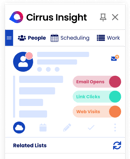
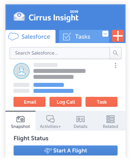
If emails are not logged, meetings are not synced, and engagement signals are not captured, the model forecasts on a partial story. Cirrus automatically captures and syncs sales activity from the inbox into Salesforce, so the CRM reflects reality without reps doing manual data entry. Pair it with any forecasting tool on this list to raise the ceiling on that tool's accuracy.
KEY FEATURES
- Automatic activity capture: emails, meetings, calls synced to Salesforce
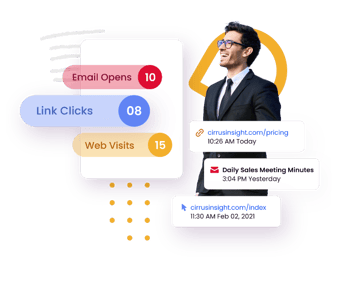
- Buyer engagement signals (opens, clicks, replies) logged to the CRM
- Eliminates manual data entry for reps
- Salesforce sidebar and calendar scheduling
- Meeting AI and conversation intelligence
PROS
- Fixes the number-one cause of bad forecasts: incomplete CRM data
- Works alongside any forecasting engine on this list
- Removes rep data-entry burden, improving CRM adoption
CONS
- Not a forecasting engine; it feeds one rather than replacing it
- Salesforce-centric; less relevant outside a Salesforce stack
- Delivers forecasting value only when paired with a forecasting tool
Pricing: Published tiers on the Cirrus Insight pricing page. Confirm current pricing before publishing.
Best for: guaranteeing the clean activity data every forecast depends on
How to Choose the Right AI Sales Forecasting Tool
There is no universal best. Match the tool to your team and stack:
- On Salesforce and enterprise-scale: start with Salesforce Revenue Intelligence if you want native, or Clari and Aviso if you want a dedicated forecast of record with RevOps behind it.
- On HubSpot: use Breeze forecasting for a native start, or add Forecastio when you have outgrown it and want dedicated accuracy fast.
- Small team on a budget: Pipedrive keeps forecasting in the pipeline reps already use, at the lowest price.
- Complex or usage-based revenue: BoostUp (Terret) handles consumption, renewals, and expansion that CRM-native tools struggle with.
- Forecasting from conversations: Gong Forecast if calls are your richest signal; Salesloft if you want forecasting next to engagement.
- Whatever you pick: fix the data first. A forecasting engine on incomplete CRM data will confidently forecast the wrong number.
The Forecast Is Only as Good as the Data Behind It
Every tool on this list depends on the same thing: complete, current CRM data. Machine-learning models do not fail because the math is wrong. They fail because the inputs are incomplete. If emails are not logged, meetings are not synced, and engagement signals are not captured, even the best forecasting engine is guesswork wrapped in technology.
That is the gap Cirrus Insight closes. It automatically captures and syncs sales activity from the inbox into Salesforce, so your CRM reflects reality in real time and reps never have to stop selling to update records. Pair it with any forecasting tool above and you raise the ceiling on that tool's accuracy. Pick the forecasting engine that fits your team, then make sure it is forecasting on data you can trust.
AI Sales Forecasting: FAQs
What is AI for sales forecasting?
AI for sales forecasting uses machine learning and predictive analytics to analyze historical CRM data, sales activity, and engagement signals in order to predict future revenue more accurately than manual methods.
How does AI improve sales forecasting accuracy?
It analyzes patterns in deal velocity, win rates, email engagement, and pipeline movement to adjust revenue projections dynamically, instead of relying on static stage probabilities or rep estimates.
What data does AI need for sales forecasting?
Clean CRM data: logged emails, meetings, calls, opportunity-stage updates, and engagement signals like email open tracking. Incomplete data is the most common cause of unreliable forecasts.
What is the difference between traditional and AI-powered forecasting?
Traditional forecasting leans on manual updates and subjective estimates. AI-powered forecasting evaluates real-time activity and historical trends to produce probability-based predictions that update continuously.
How does AI help identify at-risk deals?
It reads behavioral signals such as declining communication, slowed pipeline progression, and reduced engagement to flag opportunities that are statistically less likely to close.
Which AI sales forecasting tool is best?
There is no single best. Salesforce and HubSpot teams often start with native forecasting; enterprises with RevOps lean to Clari or Aviso; small teams pick Pipedrive; teams with complex revenue models look at BoostUp. Match the tool to your CRM, team size, and revenue model.
How much does AI sales forecasting software cost?
It ranges widely. CRM-native forecasting starts around $14 to $59 per user per month in higher tiers, while enterprise revenue-intelligence platforms are quote-based and often exceed $100 per user per month with add-ons. Always confirm current pricing directly with the vendor.
Does AI replace sales managers in forecasting?
No. AI provides data-driven insight, but sales leaders still interpret it, coach reps, and adjust strategy for market conditions.
Related Reading


.png?width=18&height=18&name=Vector%20(5).png)