.png?width=18&height=18&name=Vector%20(5).png)

Sales Prospecting Techniques To Double Your Qualified Leads in B2B
The thought of sales prospecting inspires mixed feelings among sales professionals. On the one hand, prospecting is the lifeblood of the sales industry. The more you prospect, the more customers you have. And the more customers you have, the more profit you can earn.
But it’s also the part of the sales process that most reps struggle with. It requires searching for new leads, reaching out to dozens of people, and getting rejected a lot before finally landing a client—it’s tiring but it’s a necessary part of the job.
By refining your prospecting strategy you can pull in more customers with less work. The sales prospecting tips below will help you be more productive, find higher-quality leads, and hopefully make a sale or two.
Read on for our top 12 tips for more effective sales prospecting.
What Is Sales Prospecting?
Sales prospecting is the process of identifying, researching, and engaging potential customers who fit your ideal customer profile. The goal of sales prospecting is to generate qualified leads and build a predictable pipeline of opportunities.
In simple terms, prospecting in sales means finding people who are likely to buy and starting conversations with them.
Unlike lead generation, which often relies on inbound marketing tactics, sales prospecting is proactive. It includes activities such as targeted outreach, social selling, referrals, cold email campaigns, and follow-up sequences designed to convert interest into meetings.
Effective sales prospecting focuses on three core elements:
- Targeting the right accounts
- Delivering relevant, personalized messaging
- Following up consistently
Sales prospecting isn’t about sending more emails or making more calls.
It’s about building a system that consistently generates qualified opportunities.
Below are 12 proven sales prospecting strategies, counting down from foundational planning to advanced execution, that will help you generate more qualified leads and close more B2B deals.
1. Create a Structured Sales Prospecting Plan
Prospecting without a plan leads to inconsistent pipeline.
Instead of “prospect more,” define:
- How many new accounts per week?
- How many outreach attempts per account?
- What channels will you use (email, LinkedIn, phone)?
- What is your follow-up cadence?
Example:
- 20 new accounts researched weekly
- 5-touch sequence over 14 days
- 2 LinkedIn engagements before first email
- 3 structured follow-ups
Break your monthly quota into required meetings. Then reverse-engineer how many prospecting activities it takes to generate those meetings.
Pipeline should be math, not hope.
2. Build a Clear Ideal Customer Profile (ICP)
Sales prospecting improves dramatically when targeting improves.
Define:
- Industry
- Company size
- Revenue range
- Tech stack
- Trigger events (hiring, funding, expansion)
Then define buying roles:
- End user
- Economic buyer
- Influencer
- Evaluator
Example:
If you sell cybersecurity software, your ICP may be:
- Mid-market SaaS companies
- 50–300 employees
- Recently funded
- Hiring DevOps roles
When you narrow targeting, outreach becomes more relevant and conversion increases.

3. Research Before Outreach (But Do It Efficiently)
Personalization doesn’t mean spending 45 minutes per lead.
It means identifying one relevant insight.
Before contacting a prospect:
- Check recent LinkedIn posts
- Look for company announcements
- Review their website positioning
- Identify recent funding or hiring signals
Example outreach hook:
“Saw your team recently expanded into EMEA are you adjusting your infrastructure strategy as you scale?”
That beats:
“Just checking in.”
Relevance drives response.

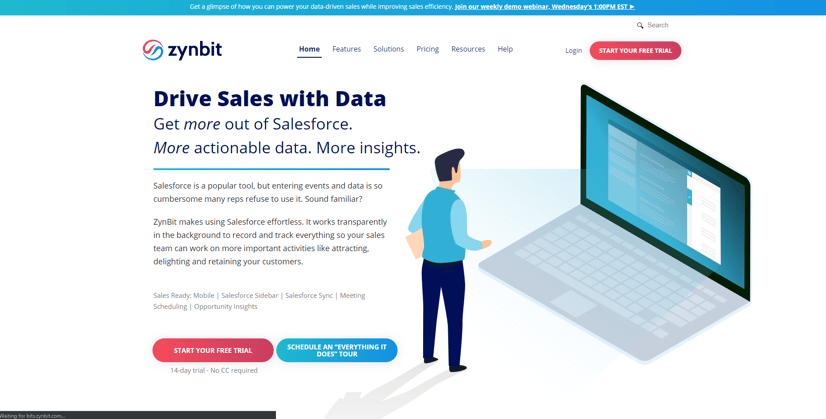
There are lots of resources on the internet that can help you with this. Social media platforms (Facebook, Twitter, LinkedIn) and search engines (Google) are incredibly valuable tools for this. You can also connect data enrichment platforms like ZoomInfo to your CRM to get more data for every prequalified contact. Then bring the data automatically to your fingertips with sales intelligence systems like ZynBit to automate the process.
4. Analyze Lost Deals for Pattern Recognition
Instead of reviewing lost deals emotionally, review them strategically.
Look for patterns:
- Lost to competitor X?
- Budget objections recurring?
- Decision-maker not engaged early?
- Deals stalling at the same stage?
If 60% of lost deals cite “timing,” you may be engaging too early or not creating urgency.
Prospecting improves when qualification improves.
For more detail, explore our reengage lost leads guide.
.jpg?width=826&name=sales-prospecting-business-call%20(1).jpg)
5. Form Strategic Partnerships
Instead of competing for attention alone, collaborate.
Identify non-competing companies serving the same audience.
Examples:
- IT consultants + cybersecurity vendors
- Marketing agencies + CRM providers
- HR tech + payroll software
Create:
- Referral agreements
- Co-hosted webinars
- Joint content
- Shared outreach campaigns
Warm introductions convert significantly higher than cold outreach

6. Prospect Every Day (Pipeline Discipline)
Prospecting should not spike at the end of the quarter.
Block non-negotiable time daily:
- 60–90 minutes of outbound activity
- No meetings
- No internal distractions
Consistency prevents pipeline drought.
Top reps treat prospecting like going to the gym, even when they don’t feel like it.

7. Prioritize by Intent, Not Just Fit
A qualified lead isn’t just someone who fits your ICP.
It’s someone who shows buying signals.
Monitor:
- Email engagement
- Website visits
- Content downloads
- LinkedIn activity
- Funding announcements
- Job postings
Example: If a prospect opens three emails and clicks pricing twice, that’s priority.
Intent beats cold lists.
8. Build Industry Credibility Before You Pitch
Prospecting is easier when your name carries weight.
Instead of only pitching:
- Share insights weekly
- Comment intelligently on industry posts
- Publish short thought pieces
- Offer useful data
When prospects recognize your name before you reach out, reply rates increase.
Visibility reduces skepticism.

9. Tap Into Your Existing Network Strategically
Referrals work best when they’re specific.
Instead of:
“Do you know anyone?”
Try:
“Who else in your network is dealing with [specific challenge]?”
Ask immediately after:
- A successful onboarding
- A strong testimonial
- A positive milestone
Timing matters.
10. Use Content as a Sales Enablement Tool
Content is not just for marketing.
Use it to:
- Address common objections
- Share case studies
- Clarify ROI
- Educate decision-makers
Example:
If pricing objections are common, create a short ROI breakdown asset.
Send it proactively before the objection arises.
Great sales prospecting supports buying decisions, not just booking meetings.
11. Use Technology to Reduce Admin and Increase Prospecting Time
Most reps lose hours to:
- Manual CRM updates
- Email logging
- Scheduling back-and-forth
- Tracking follow-ups
Modern sales prospecting tools automate:
- CRM syncing
- Email tracking
- Calendar booking
- Lead scoring
The goal is simple:
- More time in conversations
- Less time updating systems
- Productivity amplifies prospecting results
12. Make Social Selling Part of Your Prospecting System
Buyers research before replying.
Social selling includes:
- Engaging with prospects’ content
- Sharing relevant insights
- Participating in industry discussions
- Monitoring competitor conversation
Instead of leading with a pitch, lead with familiarity.
When your outreach feels like a continuation of an interaction, not a cold interruption, conversion improves.
Simplify Sales Prospecting with Cirrus Insight at the Center of Your Workflow
Sales prospecting doesn’t have to feel chaotic or time-consuming.
When your targeting is precise and your outreach is consistent, pipeline growth becomes predictable. But even the best sales prospecting techniques fall apart when reps lose hours to manual CRM updates, scattered data, and switching between systems.
That’s where workflow efficiency becomes your competitive advantage.
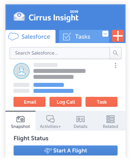
Cirrus Insight connects your inbox directly to Salesforce, eliminating the friction that slows prospecting down and helping reps focus on revenue-generating conversations.
With Cirrus Insight, sales teams can:
- Automatically log, sync emails and attachments to Salesforce
- Sync meetings and calendar activity in real time
- Create leads, contacts, and opportunities directly from Gmail or Outlook
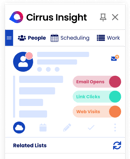
- Track email opens and engagement signals inside the inbox
- Access Salesforce data without leaving email
- Reduce manual data entry and improve CRM accuracy
- Accelerate follow-ups using real-time prospect engagement insights
Instead of juggling tabs and updating records manually, reps stay in the tools they already use, email and calendar, while Salesforce updates in the background.
Because successful sales prospecting isn’t just about generating more leads.
It’s about creating more time for selling.
Sales Prospecting: FAQs
What is sales prospecting?
Sales prospecting is the process of identifying and reaching out to potential customers who may be a good fit for your product or service. It is the first stage of the sales process and focuses on generating qualified leads for your pipeline.
What is prospecting in sales?
Prospecting in sales refers to researching, contacting, and qualifying potential buyers before moving them into active sales conversations. It helps sales teams focus their efforts on prospects most likely to convert.
Why is sales prospecting important?
Sales prospecting is important because it keeps your pipeline full of qualified opportunities and prevents revenue gaps. Without consistent prospecting, even top-performing sales teams struggle to hit quota.
What are the most effective sales prospecting techniques?
Effective sales prospecting techniques include building an ideal customer profile, researching prospects before outreach, prioritizing high-intent leads, leveraging referrals, using social selling, and maintaining a consistent daily outreach routine.
What are sales prospecting tools?
Sales prospecting tools are software platforms that help sales teams find leads, track engagement, automate outreach, and manage CRM updates. These tools improve efficiency and allow reps to focus more on conversations and less on administrative tasks.
How does AI help with sales prospecting?
AI for sales prospecting helps analyze buyer behavior, identify high-intent prospects, automate personalization at scale, and prioritize leads based on engagement signals. This allows sales teams to prospect smarter and improve response rates.
How much time should reps spend on sales prospecting?
Most high-performing sales reps dedicate time to sales prospecting daily to maintain a consistent pipeline. Even one to two focused hours per day can significantly increase qualified opportunities over time.
What is the difference between sales prospecting and lead generation?
Lead generation typically refers to marketing-driven activities that attract potential customers, while sales prospecting is the direct outreach and qualification process performed by sales teams to convert those leads into opportunities.