.png?width=18&height=18&name=Vector%20(5).png)


We all understand why sales prospecting is important—it helps you scout for new leads and builds a healthy pipeline. Customers are the lifeblood of your business. But that doesn’t stop a whopping 42% of sales reps from struggling with prospecting.
For more detail, explore our sales prospecting guide.
One of the biggest issues that sales professionals face is that prospecting is much harder today than ever before. Customers are busy and hard to reach. They’re smarter about purchasing and more cynical about sales tactics. if they do want to buy a product or service, they don’t go to you for information—they turn to the internet.
All of these challenges make prospecting a dreaded part of the process. Sales prospecting is like having an annoying boss—you may not like it very much, but you have to put up with it if you’re going to get your job done.
Thankfully, we now have access to a wide array of sales tools that make prospecting fun, easy, and super effective.
Read on to find more info about prospecting, our buyer’s guide, and our top 6 sales prospecting tools that are guaranteed to boost your numbers.
What Are Sales Prospecting Tools?
Sales prospecting tools are software platforms that help sales teams identify, research, engage, and qualify potential customers before a deal ever enters the pipeline. They support the earliest and most critical stage of the sales process: finding the right people and starting the right conversations.
Modern sales prospecting tools go far beyond simple lead lists. In 2026, the best tools use AI, automation, and real-time signals to help reps focus on accounts that are most likely to convert and engage them at the right moment.
Sales prospecting tools are commonly used to:
- Discover new leads using firmographic, technographic, and intent data
- Prioritize prospects based on fit and buying signals
- Automate outbound outreach across email, phone, and social channels
- Track engagement and surface signals like opens, clicks, and replies
- Reduce manual research and data entry by syncing with CRM systems
Instead of relying on cold lists and guesswork, sales teams use prospecting tools to build repeatable, data-driven outbound motions. When combined with inbox- and CRM-based execution tools, these platforms help turn early interest into real sales conversations—and, ultimately, revenue.
Best Sales Prospecting Tools for Sales Teams (2026)
Sales prospecting in 2026 is no longer about blasting cold lists, it’s about using data, intent, and AI to focus effort where it actually pays off. The tools below represent the most modern, widely adopted sales prospecting platforms, each excelling at a different part of the prospecting workflow, from discovery to engagement to execution.
1. Cirrus Insight
Best for Salesforce-Based Prospecting & Execution
Cirrus Insight is built for the moment after a lead is identified, when execution, timing, and follow-through matter most.
Rather than replacing data or intent platforms, Cirrus Insight helps sales teams turn prospecting signals into action by embedding engagement and productivity directly into Gmail or Outlook.
Why it’s valuable
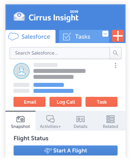
- Centralizes email, calendar, and Salesforce activity in the inbox
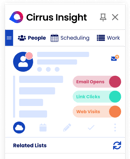
- Surfaces buyer signals (email opens, clicks, replies) in real time
- Automates CRM logging to eliminate admin work
- Uses AI to suggest follow-ups and prep reps for conversations
Pros
- Inbox-first workflow reps actually adopt
- Deep, reliable Salesforce integration
- Strong at converting intent into real engagement
- Reduces manual CRM work significantly
Cons
- Does not provide lead lists or contact data
- Best suited for Salesforce-based teams
Best for: Teams that prospect using multiple data sources but want a frictionless way to execute, engage, and follow up inside Salesforce
Pricing: Flexible pricing that allows you to choose only the features you want. Free trial available.
2. Outreach
Best for Outbound Sequencing at Scale
Outreach is designed for teams running high-volume, structured outbound motions across email, phone, and social channels.
It shines in environments where consistency and repeatability matter more than inbox flexibility.
Why it’s valuable
- Robust sequencing and cadence management
- Engagement analytics across large outbound campaigns
- Strong Salesforce integration for activity tracking
Pros
- Excellent for standardized outbound processes
- Strong reporting for managers and ops
- Scales well for large teams
Cons
- Less flexible for one-off or relationship-driven outreach
- Requires setup, maintenance, and admin support
- Can feel heavy for smaller teams
Pricing: Custom enterprise pricing; commonly reported in the mid-to-high hundreds per user per year, depending on modules and team size.
3. Apollo.io
Best for Data + Outbound in One Platform
Apollo combines prospecting data with outbound execution, making it popular with lean teams that want fewer tools.
Why it’s valuable
- Large B2B contact database
- Built-in email sequencing and dialer
- Filters for ICP, intent, and buying signals
Pros
- All-in-one platform for prospecting and outreach
- Affordable entry point compared to enterprise tools
- Good for fast-moving teams
Cons
- Data quality can vary by segment
- Outreach personalization can feel templated
- Less depth in analytics than specialized platforms
Pricing: Free plan available; paid plans typically start around $49 per user/month, with higher tiers for data volume and automation.
4. Persana AI
Best for Intent-Based Prospect Discovery
Persana focuses on identifying who to prospect by analyzing intent, firmographics, and behavioral signals.
Why it’s valuable
- Uses AI to surface accounts showing buying intent
- Continuously refines ICPs based on closed deals
- Prioritizes prospects automatically
Pros
- Strong at uncovering warm accounts
- Reduces time spent on low-fit leads
- Helpful for ICP-driven teams
Cons
- Limited outbound execution features
- Requires clean CRM data to perform best
- Custom pricing may limit accessibility
Pricing: Custom pricing based on usage, data sources, and intent coverage.
5. ZoomInfo
Best for Enterprise-Scale Data & Intent
ZoomInfo remains a cornerstone for enterprise prospecting due to its data depth and reach.
Why it’s valuable
- Extensive company and contact database
- Intent signals across industries
- Integrates with most sales engagement platforms
Pros
- Broad coverage across industries and regions
- Strong account-level insights
- Trusted by large enterprises
Cons
- Expensive and contract-heavy
- Data freshness can vary
- Requires enablement to use effectively
Pricing: Custom enterprise pricing; generally one of the higher-cost options due to data depth and contract structure.
6. Salesloft
Best for Cadence-Based Prospecting
Salesloft helps reps execute consistent outbound motions through structured cadences.
Why it’s valuable
- Email and call tracking within cadences
- Engagement analytics tied to outreach performance
- Strong coaching and manager visibility
Pros
- Clear structure for SDR and outbound teams
- Good visibility into rep activity
- Strong coaching tools
Cons
- Less flexible for custom workflows
- Heavier UI than inbox-native tools
- Best value comes at enterprise scale
Pricing: Custom pricing, typically positioned for mid-market and enterprise sales teams.
7. 6sense
Best for Account-Based Prospecting
6sense is designed to identify in-market accounts before they raise their hand.
Why it’s valuable
- Predictive intent modeling
- Account prioritization based on behavior
- Alignment across sales, marketing, and RevOps
Pros
- Excellent for ABM and enterprise sales
- Strong intent accuracy at account level
- Helps align GTM teams
Cons
- Long implementation cycles
- High cost
- Not rep-level execution focused
Pricing: Custom enterprise pricing; best suited for larger organizations running account-based motions.
8. LeadIQ
Best for LinkedIn-Based Prospecting
LeadIQ helps reps capture and enrich leads while prospecting on LinkedIn.
Why it’s valuable
- One-click lead capture via Chrome extension
- Automatic CRM syncing
- Reduces manual data entry for SDRs
Pros
- Very easy to use
- Great for hands-on prospecting
- Saves time on data entry
Cons
- Limited analytics and insights
- Not a full prospecting platform
- Best used alongside other tools
Pricing: Free plan available; paid plans typically start around $75 per user/month.
9. Cognism
Best for Compliant Global Prospecting
Cognism specializes in high-quality, GDPR-compliant contact data.
Why it’s valuable
- Strong EMEA and mobile number coverage
- Compliance-first data sourcing
- Intent and firmographic filters
Pros
- Trusted for regulated markets
- High-quality contact data
- Strong international reach
Cons
- Premium pricing
- Less focus on engagement or execution
- UI is data-first, not rep-first
Pricing: Custom pricing, usually positioned at the enterprise level due to compliance and data coverage.
10. Clay
Best for Custom Prospecting Workflows
Clay is a powerful enrichment and automation engine for teams that want full control.
Why it’s valuable
- Pulls data from dozens of sources
- Automates complex prospecting logic
- AI-assisted personalization at scale
Pros
- Extremely flexible
- Powerful for advanced workflows
- Ideal for experimentation
Cons
- Steep learning curve
- Not rep-friendly out of the box
- Costs scale with usage
Pricing: Plans typically start around $134 per month, with costs scaling based on enrichment volume and usage.
11. Regie.ai
Best for AI-Generated Outbound Messaging
Regie.ai focuses on creating and optimizing outbound messaging using generative AI.
Why it’s valuable
- Generates sequences and emails based on ICP
- Optimizes messaging using engagement data
- Reduces manual copywriting effort
Pros
- Saves time on outbound creation
- Helpful for scaling personalization
- Strong AI writing capabilities
Cons
- Limited prospect discovery features
- Requires human review for quality
- Primarily outbound-focused
Pricing: Custom pricing; often reported around $30,000+ annually for larger teams.
Prospecting: The Step By Step Process
Prospecting in sales isn’t just one activity; it’s actually broken down into several stages. In this section, we’re going to address each stage of the prospecting journey, from start to finish.
Identifying Your Ideal Prospect Profile
Before you can begin prospecting, you need to understand what kind of prospects you’re looking for. The first stage of prospecting involves the creation of an “ideal customer profile” a.k.a. who you are trying to sell to. Is it the thriving local startup business owner? Is it the marketing executive at a Fortune 500? Capturing the persona of your target clientele will help you focus your energy on the leads that matter the most.
Building & Qualifying Your List Of Leads
Once you have your customer criteria, it’s time to collect as much customer information as possible. Build your list of leads with your prospect profile in mind. Get their contact info. Narrow it down to key decision makers and do your research on them to develop a personalized approach. Prioritize the ones you’ve identified as a potentially good fit for the product or service you’re selling. Your highest-value leads should be at the top of your list.
Engage With Your Prospect
Client meetings are your ticket to an actual sale. Set up a call or in-person to discuss your product/service and build the foundation for a long-term customer relationship. Continue to engage with your prospect over several days or weeks, whatever it takes to get a clear answer from them on the sale. Remember that sales is, more often than not, a long game. If you’ve picked the right prospects, persistence is the key to overcoming your prospect’s initial objections and turning them into a satisfied customer.

What To Consider When Buying A Sales Prospecting Tool
Purpose Of The Tool
As we covered earlier, there are many different stages involved in prospecting, and you’ll need different tools to address the challenges that each stage presents. Some will help you mine for leads while others will make scheduling meetings a breeze. Others tackle the whole prospecting journey in one convenient tool.
Ease Of Use
The whole point of using tools for sales is to make your job easier, not harder. It’s natural for a new program or app to have a learning curve, but if you find yourself struggling to use it, you might be better off with something else. A good prospecting tool should be intuitive, easy to use, and require less effort compared to what you were doing before.
Integration With Other Tools
You probably use a CRM or other kinds of software in your day-to-day, so why add another one? Having more than one sales tool means opening multiple programs, syncing data, and updating information endlessly.
That is, unless you have a tool that integrates with your other software.
Then you’ll be able to multitask from just one program!
Sales Support
While you’re busy prospecting for sales, you should be able to rely on your tools. But there will be times that something doesn’t work the way it should. In those cases, it’s great to have a support line to the company behind the tool, so that you can get help when you need it.
Price Of The Sales Tool
Everything you do—from prospecting to closing sales—is to earn money. And because you work hard for every dollar, we understand that you don’t want to waste any of it on unnecessary tools or programs. There are many affordable or even free sales prospecting tools that do the job, but you also don’t have to shy away from paying a premium if it’s worth the investment.

Why Sales Teams Choose Cirrus Insight for Sales Prospecting
Cirrus Insight’s unique value lies in how it connects sales prospecting, Salesforce data, and AI guidance into one seamless workflow, without forcing reps to leave their inbox.
Cirrus Insight stands out because it helps sales teams:
- Sell directly from the inbox: Reps track emails, schedule meetings, send email blasts and update Salesforce from Gmail or Outlook, no tab switching required
- Act on real buyer signals: Real-time alerts for email opens, clicks, and replies help reps prioritize prospects who are actively engaging
- Prepare smarter for every conversation: AI Meeting Prep automatically surfaces account history, past interactions, and relevant CRM details before every call
- Reduce CRM busywork automatically: Emails, meetings, and activities sync to Salesforce in the background, keeping records clean without manual entry
- Follow up with confidence: AI-driven next-step suggestions guide reps on when and how to re-engage prospects based on actual behavior
If your prospect opened up your email, you’ll know. If they clicked on this particular link, you’ll know. If the email is sitting in their inbox unopened, you’ll know. All this gives you insight into how well you’re performing and what else you’ll need to do to snag that customer.
Start a 14-day free trial - No credit card required ►
Sales Prospecting Tools: FAQs
What is Cirrus Insight used for in sales prospecting?
Cirrus Insight helps sales teams execute prospecting more effectively by turning email engagement, calendar activity, and Salesforce data into actionable next steps directly inside the inbox.
How does Cirrus Insight support sales prospecting without providing lead data?
Cirrus Insight focuses on execution and follow-through, helping reps act on leads sourced from other tools by prioritizing engagement, automating CRM updates, and guiding timely outreach.
Is Cirrus Insight a sales prospecting tool or a sales productivity tool?
Cirrus Insight sits at the intersection of both. It supports sales prospecting by improving outreach, follow-ups, and engagement, while also increasing productivity through inbox-based workflows and automation.
How does Cirrus Insight work with Salesforce?
Cirrus Insight is built specifically for Salesforce, automatically syncing emails, meetings, and activities while surfacing CRM context directly in Gmail or Outlook.
Can Cirrus Insight replace sales engagement platforms like Outreach or Salesloft?
Cirrus Insight is not designed to replace sequencing platforms. Instead, it complements them by helping reps execute one-to-one outreach, manage relationships, and follow up on engaged prospects more effectively.
Does Cirrus Insight use AI for sales prospecting?
Yes, Cirrus Insight uses AI to surface buyer signals, prepare reps for meetings, recommend next steps, and reduce manual CRM work, helping teams prospect with better timing and context.
Who benefits most from using Cirrus Insight?
Cirrus Insight is best suited for Salesforce-based sales teams that want to streamline prospecting execution, reduce admin work, and keep reps focused inside their inbox.
Is Cirrus Insight easy for sales reps to adopt?
Yes, because Cirrus Insight lives directly in Gmail and Outlook, reps can start using it immediately without learning a new interface or changing how they work.