.png?width=18&height=18&name=Vector%20(5).png)


Sales today isn’t a volume game. It’s an information game.
Your buyers are researching competitors before you ever reach out. They’re reading reviews, comparing pricing pages, and forming opinions long before your first email lands in their inbox. If your reps are still prospecting with outdated lists and generic outreach, they’re already behind.
That’s where sales intelligence tools come in.
The best sales intelligence tools don’t just give you contact data, they tell you who to reach out to, when to reach out, and why they’re likely to care. From verified B2B contact databases to AI-powered buying signals and real-time engagement insights, modern platforms turn raw data into revenue opportunity.
In this guide, we’ll break down what sales intelligence tools actually are, how they work, and which platforms lead the market in 2026, so your team can stop guessing and start targeting the right prospects with confidence.
For more detail, explore our sales team tools guide.
What Are Sales Intelligence Tools?
Sales intelligence tools are platforms that collect, analyze, and deliver actionable data about prospects, accounts, and buying behavior to help sales teams target the right opportunities at the right time.
At a basic level, they provide B2B contact data, names, job titles, email addresses, company information. But modern sales intelligence tools go much further. They layer in:
- Buying intent signals
- Technographic and firmographic data
- Engagement tracking
- Competitive insights
- AI-powered lead scoring and prioritization
In short, they turn raw data into sales direction.
Instead of manually researching prospects or relying on outdated spreadsheets, reps can see which accounts are actively researching solutions, which stakeholders are involved, and which opportunities are worth prioritizing.
It’s also important to distinguish sales intelligence tools from other systems:
- CRM software stores relationship data.
- Sales engagement tools automate outreach.
- Sales intelligence tools provide the data and insight layer that makes outreach smarter.
The best B2B sales intelligence tools don’t just help you find contact information, they help you understand buyer behavior, shorten sales cycles, and improve pipeline quality with data-backed decisions.
15 Best Sales Intelligence Tools for B2B Contact Data in 2026
Sales intelligence tools aren’t all built the same. Some specialize in massive B2B contact databases. Others focus on AI-driven buying intent.
Below is a detailed breakdown of the leading sales intelligence tools in 2026, starting with a CRM-native option that connects intelligence directly to execution.
1. Cirrus Insight
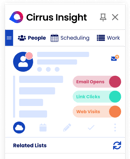
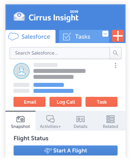
While most sales intelligence tools focus on external prospect data, Cirrus Insight turns live sales activity into actionable intelligence inside Salesforce. It connects meetings, emails, engagement signals, and AI summaries directly to opportunities, giving teams operational intelligence, not just contact data.
Best for: Salesforce-driven revenue teams that want intelligence embedded inside their CRM
Core strength: CRM-native activity intelligence + meeting AI
Data coverage:
- Email and calendar activity
- Sales meeting recordings and transcripts
- Buyer engagement signals
- Opportunity-level activity data
AI capabilities:
- AI-powered meeting summaries (Conversational Insights)
- Action item extraction
- Buyer signal tracking
- Lead routing automation
CRM integrations: Native Salesforce integration
Pricing tier: Completely flexible, so you only pay for the features you actually use.
Pros:
- Automatically syncs sales activity to Salesforce
- Provides real-time deal intelligence
- Reduces manual CRM updates
- Improves pipeline visibility and forecasting accuracy
Limitations:
- Not a standalone contact database
- Best suited for Salesforce ecosystems

2. ZoomInfo
ZoomInfo is one of the largest B2B contact data providers in the market.
Best for: Enterprise prospecting and outbound teams
Core strength: Massive B2B contact database
Data coverage:
- Contact and company data
- Firmographics and technographics
- Buying intent signals
AI capabilities:
- Intent scoring
- Predictive lead prioritization
CRM integrations: Salesforce, HubSpot, others
Pricing tier: Enterprise pricing (custom quotes)
Pros:
- Large data volume
- Strong intent data
- Enterprise scalability
Limitations:
- Expensive
- Data accuracy can vary
3. Apollo.io
Apollo combines contact data with outbound automation tools.
Best for: SMB and mid-market outbound teams
Core strength: Affordable B2B contact database + outreach
Data coverage:
- Email and phone data
- Company firmographic
- Intent data
AI capabilities:
- Lead scoring
- Outreach automation
CRM integrations: Salesforce, HubSpot
Pricing tier: Free plan; paid plans start around $39/user/month
Pros:
- Budget-friendly
- Combines data + outreach
- Easy to use
Limitations:
- Data depth lower than enterprise tools
- Limited advanced AI intelligence
4. LinkedIn Sales Navigator
LinkedIn Sales Navigator provides professional network-based prospect insights.
Best for: Account-based selling and relationship building
Core strength: LinkedIn-based prospect intelligence
Data coverage:
- Professional profiles
- Job changes
- Company updates
AI capabilities:
- Lead recommendations
- Relationship insights
CRM integrations: Salesforce, HubSpot
Pricing tier: Starts around $99/user/month
Pros:
- Reliable professional data
- Strong social insights
Limitations:
- Limited direct contact data
- No built-in outbound automation
5. Clearbit
Clearbit focuses on data enrichment and website visitor identification.
Best for: Marketing-led B2B teams
Core strength: Real-time data enrichment
Data coverage:
- Firmographics
- Technographics
- Website visitor identification
AI capabilities:
- Automated lead enrichment
- Audience segmentation
CRM integrations: Salesforce, HubSpot
Pricing tier: Custom pricing
Pros:
- Strong enrichment
- Marketing alignment
Limitations:
- Not primarily outbound-focused
- Premium pricing
6. Cognism
Cognism emphasizes compliant global B2B data.
Best for: EMEA and global outbound teams
Core strength: GDPR-compliant contact data
Data coverage:
- Verified phone numbers
- Global B2B contacts
AI capabilities:
- Intent data
- Data validation
CRM integrations: Salesforce, HubSpot
Pricing tier: Enterprise pricing
Pros:
- Strong compliance focus
- International coverage
Limitations:
- Higher cost
- Smaller U.S. dataset vs ZoomInfo
7. Seamless.ai
Seamless.ai offers real-time contact discovery.
Best for: High-volume outbound prospecting
Core strength: AI-powered contact lookup
Data coverage:
- Email addresses
- Direct dials
AI capabilities:
- Real-time contact search
CRM integrations: Salesforce, HubSpot
Pricing tier: Free tier; paid plans vary
Pros:
- Easy contact search
- Affordable entry
Limitations:
- Data accuracy concerns reported by users
- Limited deeper intelligence
8. Lusha
Lusha focuses on simple, browser-based contact discovery.
Best for: SDR teams needing quick contact access
Core strength: Direct dials and emails
Data coverage:
- Contact-level data
- Company insights
AI capabilities: Basic enrichment
CRM integrations: Salesforce, HubSpot
Pricing tier: Free plan; paid tiers available
Pros:
- Simple setup
- Chrome extension
Limitations:
- Limited enterprise capabilities
- Smaller database
9. 6sense
6sense is an account-based marketing and intent intelligence platform.
Best for: Enterprise ABM teams
Core strength: Predictive account-based intelligence
Data coverage:
- Buying intent signals
- Account-level engagement
AI capabilities:
- Predictive deal scoring
- AI-driven segmentation
CRM integrations: Salesforce
Pricing tier: Enterprise pricing
Pros:
- Advanced predictive AI
- Strong ABM focus
Limitations:
- High cost
- Complex implementation
10. Leadfeeder
Leadfeeder identifies anonymous website visitors.
Best for: Inbound-focused teams
Core strength: Website visitor tracking
Data coverage:
- Company-level web visits
AI capabilities: Lead scoring
CRM integrations: Salesforce, HubSpot
Pricing tier: Starts around $139/month
Pros:
- Identifies warm accounts
- Easy implementation
Limitations:
- No direct contact data
- Limited outbound features
11. Demandbase
Demandbase combines ABM with account intelligence.
Best for: Enterprise ABM programs
Core strength: Account-level buying signals
Data coverage:
- Intent data
- Account insights
AI capabilities: Predictive analytics
CRM integrations: Salesforce
Pricing tier: Enterprise pricing
Pros:
- Strong enterprise focus
- Deep account intelligence
Limitations:
- High complexity
- Premium pricing
12. UpLead
UpLead provides verified B2B contact data with transparency.
Best for: Budget-conscious B2B teams
Core strength: Verified email accuracy
Data coverage:
- B2B contacts
- Firmographic filters
AI capabilities: Basic filtering and enrichment
CRM integrations: Salesforce, HubSpot
Pricing tier: Starts around $74/month
Pros:
- Transparent pricing
- Email verification
Limitations:
- Smaller database
- Limited advanced AI
13. Hunter.io
Hunter specializes in email discovery.
Best for: Email-focused prospecting
Core strength: Domain-based email search
Data coverage:
- Professional email addresses
AI capabilities: Verification automation
CRM integrations: Limited
Pricing tier: Free plan; paid plans start ~$49/month
Pros:
- Simple
- Affordable
Limitations:
- Narrow functionality
- No broader sales intelligence layer
14. Gong
Gong provides conversation-driven sales intelligence.
Best for: Enterprise sales coaching and performance analytics
Core strength: Conversation intelligence
Data coverage:
- Call recordings
- Email interactions
AI capabilities:
- Objection detection
- Sentiment analysis
- Deal risk identification
CRM integrations: Salesforce, HubSpot
Pricing tier: ~$1,200–$1,600 per user/year
Pros:
- Deep conversation analytics
- Enterprise insights
Limitations:
- Expensive
- Heavy implementation
15. Clari
Clari focuses on forecast-driven revenue intelligence.
Best for: Forecast-focused enterprise revenue teams
Core strength: Pipeline and forecast analytics
Data coverage:
- CRM opportunity data
- Sales activity
AI capabilities:
- Forecast prediction
- Deal inspection
CRM integrations: Salesforce
Pricing tier: Enterprise pricing
Pros:
- Strong forecasting visibility
- Revenue predictability
Limitations:
- Less prospecting intelligence
- Enterprise-focused pricing
|
Tool |
Implementation complexity |
Ideal revenue stage |
Data ownership model |
|
Cirrus Insight |
Low–Moderate (native Salesforce deployment) |
Scaling Salesforce-driven teams |
Fully CRM-native (data lives in Salesforce) |
|
ZoomInfo |
Moderate–High |
Enterprise outbound orgs |
External proprietary database |
|
Apollo.io |
Low |
Early-stage & SMB growth teams |
Platform-managed contact database |
|
LinkedIn Sales Navigator |
Low |
Relationship-led sellers |
LinkedIn ecosystem data |
|
Clearbit |
Moderate |
Marketing-led growth orgs |
External enrichment layer |
|
Cognism |
Moderate |
International & compliance-heavy teams |
External verified database |
|
Seamless.ai |
Low |
High-volume prospecting teams |
Platform-managed database |
|
Lusha |
Low |
Small SDR teams |
External contact database |
|
6sense |
High |
Enterprise ABM organizations |
Account-level intent data platform |
|
Leadfeeder |
Low |
Inbound-focused sales teams |
Website visitor identification |
|
Demandbase |
High |
Large enterprise revenue teams |
Enterprise ABM + intent stack |
|
UpLead |
Low |
Budget-conscious outbound teams |
Verified contact database |
|
Hunter.io |
Very Low |
Individual prospectors |
Domain-based email database |
|
Gong |
High |
Enterprise coaching-driven teams |
Conversation intelligence platform |
|
Clari |
High |
Forecast-driven revenue orgs |
Revenue analytics platform |
How to Choose the Best Sales Intelligence Tool for Your Team
There’s no universal “best” sales intelligence tool, only the one that fits how your team actually sells. The wrong choice adds dashboards. The right one adds revenue. Here’s a simple way to think it through.
Are You an SMB or an Enterprise Team?
If you’re a growing SMB, you likely need fast setup, flexible pricing, and immediate prospecting value. Tools like Apollo, UpLead, or CRM-native intelligence layers can deliver quick wins without months of onboarding.
Enterprise teams, on the other hand, may prioritize global data coverage, compliance controls, intent modeling, and layered reporting. That usually means a more complex (and expensive) platform like ZoomInfo or 6sense.
Match the tool to your operational maturity, not your ambition.
Is Your Motion Prospecting-Heavy or Account-Based?
If your team lives in outbound lists and cold email, prioritize:
- Verified contact data
- High export limits
- Enrichment APIs
If you're running ABM or strategic enterprise deals, focus on:
- Account-level intent data
- Buying group visibility
- Multi-touch engagement tracking
Different sales motions require different intelligence depth.
What’s Your Real Budget, Not Just for Licenses?
Consider total cost of ownership:
- Per-seat licensing
- Add-ons for intent data or enrichment
- Implementation time
- Required integrations
Sometimes a lower sticker price becomes expensive once add-ons stack up. Make sure pricing aligns with usage, not just user count.
How Mature Does Your AI Need to Be?
Some tools offer basic enrichment. Others layer predictive scoring, intent modeling, and conversation intelligence on top of raw data.
Ask yourself:
- Do you just need contact data?
- Or do you need AI insights that prioritize accounts automatically?
- Do you want intelligence embedded in your CRM workflow?
More AI isn’t always better, it has to fit your workflow.
How Dependent Are You on Your CRM?
If Salesforce is your source of truth, look for:
- Deep native sync
- Automatic activity capture
- No data silos
External databases are powerful, but CRM-native intelligence keeps forecasting clean and adoption high.
The tighter the integration, the better the data hygiene.
Why Cirrus Insight Turns Sales Intelligence Into Revenue Intelligence
Sales intelligence is powerful, but only if it lives where your team works.
Most platforms give you data. Some give you intent. A few give you dashboards.
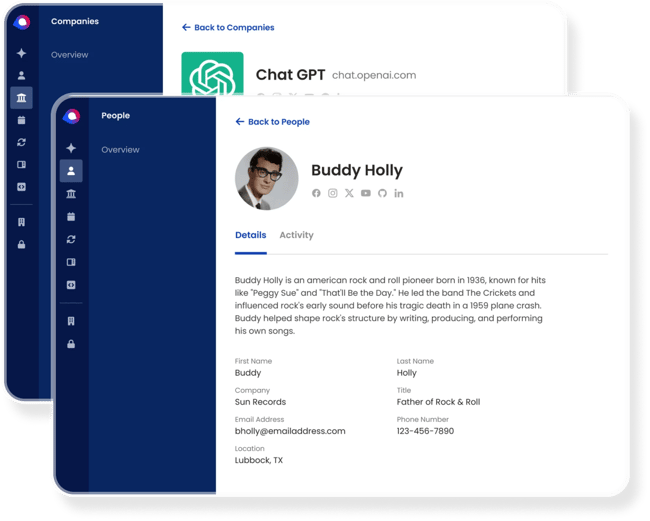
Cirrus Insight does something different: it turns everyday sales activity into structured, actionable intelligence directly inside Salesforce and your inbox.
Instead of exporting contacts or toggling between tools, your team gets:
- Automatic email & meeting sync keeps Salesforce 100% up to date
- AI-powered meeting summaries generate action items instantly
- Conversational Insights surface deal signals inside your pipeline
- Buyer engagement tracking highlights momentum shifts
- Smart Scheduler accelerates deal progression
- Sales cadences ensure structured follow-up
- Live coaching nudges guide reps during active deals
That means cleaner CRM data, better forecasting accuracy, and fewer deals slipping through the cracks.
If your sales intelligence strategy depends on adoption, automation, and real pipeline movement, not just another dashboard, Cirrus Insight bridges the gap between insight and execution.
Because intelligence isn’t valuable until it helps you close.

Sales Intelligence Tools: FAQs
What are sales intelligence tools?
Sales intelligence tools are platforms that collect, analyze, and surface data about prospects, accounts, and buying signals to help revenue teams prioritize opportunities and close deals faster. They combine contact data, behavioral insights, and sometimes AI to guide smarter outreach.
What is the best B2B sales intelligence tool?
The best B2B sales intelligence tool depends on your sales motion. Prospecting-heavy teams often prefer large contact databases like ZoomInfo or Apollo, while Salesforce-driven teams may benefit more from CRM-native intelligence solutions like Cirrus Insight that focus on real activity and engagement data.
How do sales intelligence tools improve sales performance?
Sales intelligence tools improve performance by helping reps focus on high-intent prospects, personalize outreach, and identify deal risks earlier. By replacing guesswork with data, they shorten sales cycles and improve conversion rates.
What’s the difference between sales intelligence and CRM software?
CRM software stores and organizes customer data, while sales intelligence tools analyze and enrich that data with insights like buyer intent, engagement activity, and predictive scoring. Some modern platforms, like Cirrus Insight, blend both by turning CRM activity into actionable intelligence.
Are sales intelligence tools worth the investment?
For teams running outbound campaigns or complex B2B sales motions, sales intelligence tools can significantly increase pipeline efficiency and forecasting accuracy. The ROI often comes from better prioritization, cleaner data, and fewer missed opportunities.
How does Cirrus Insight work as a sales intelligence tool?
Cirrus Insight works inside Salesforce and your inbox to automatically capture emails, meetings, buyer engagement signals, and AI-generated summaries. Instead of relying solely on external databases, it transforms real sales interactions into structured intelligence that improves forecasting and pipeline visibility.
Do sales intelligence tools integrate with Salesforce?
Most leading sales intelligence tools offer Salesforce integrations, but the depth of sync varies. CRM-native solutions like Cirrus Insight provide automatic activity capture and real-time pipeline updates, reducing manual data entry and improving data accuracy.